 Call
Call Patient Reports
Best Hospital for Below Knee Angioplasty Procedure with Advanced Vascular Care
Below knee angioplasty at Medicover Hospitals is performed using minimally invasive techniques by our skilled vascular and endovascular surgeons with qualifications such as MS, DNB, and MCh. This procedure helps improve blood flow in the lower limbs and often results in shorter hospital stays.
Expert Surgeons
Yearly Surgeries
Patient Satisfaction
What is Below Knee Angioplasty?
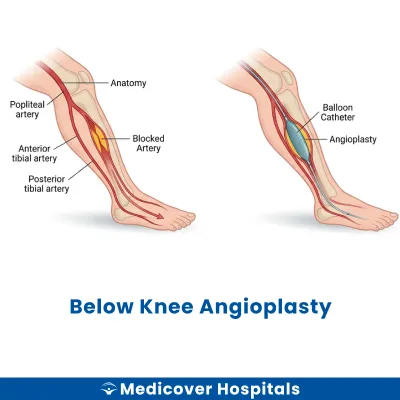
Below knee angioplasty is a medical procedure to open narrowed or blocked blood vessels below the knee. These blood vessels, known as arteries, supply blood to the lower leg and foot. The procedure involves using a small balloon (angioplasty) to widen the artery and improve blood flow. Sometimes, a stent (a small mesh tube) is placed to keep the artery open.
This surgery is needed for conditions like peripheral artery disease (PAD) or critical limb ischemia. These conditions cause reduced blood flow to the legs and feet. If untreated, they can lead to pain, ulcers, or even amputation. Modern surgical approaches include balloon angioplasty and stenting. These methods help restore blood flow and reduce symptoms effectively.
Below Knee Angioplasty Doctors Near You
Find experienced vascular-endovascular-surgeons at Medicover Hospitals across India. Choose your city and book a consultation to discuss below knee angioplasty options tailored to your needs.
Why Choose Medicover Hospitals for Below Knee Angioplasty Procedure?
Get a second opinion from trusted experts and makeconfident, informed decisions.
 Get Second Opinion
Complete Guide To Below Knee Angioplasty
Everything you need to know about the procedure, preparation, and recovery
Below knee angioplasty procedure Indications
Doctors recommend below-knee angioplasty when blood flow to the lower leg is compromised. This procedure helps restore circulation, especially when symptoms impact daily life or conservative treatments are ineffective.
Peripheral Artery Disease (PAD)
Patients may experience leg pain while walking, known as claudication. On examination, doctors find reduced pulses in the foot. Imaging shows narrowed or blocked arteries. When lifestyle changes and medications do not relieve symptoms, angioplasty is considered.
Critical Limb Ischemia
Severe pain in the foot or toes, even at rest, is a common symptom. Doctors may notice non-healing wounds or ulcers. Tests reveal significantly reduced blood flow. Angioplasty is recommended when these symptoms persist despite medical management.
Diabetic Foot Ulcers
Patients with diabetes might develop ulcers that do not heal. Examination shows poor blood supply to the affected area. Imaging confirms narrowed arteries below the knee. When wound care and medications fail, angioplasty may be necessary.
Rest Pain
Persistent pain in the lower leg or foot, especially at night, can indicate severe artery narrowing. Doctors find diminished pulses and abnormal ankle-brachial index results. When pain relief is not achieved through medication, angioplasty is advised.
Non-Healing Wounds
Chronic wounds on the lower leg that do not respond to standard treatment suggest poor circulation. Examination and imaging reveal arterial blockages. Angioplasty is considered when wound healing is stalled despite conservative efforts.
How to Prepare for Below knee angioplasty?
Proper preparation for below knee angioplasty is crucial to ensure a smooth procedure and recovery. It helps minimise risks and enhances the effectiveness of the treatment.
- Medication Review: Inform your doctor about all medications. You may need to stop NSAIDs, anticoagulants, and herbal supplements a few days before the procedure.
- Fasting Guidelines: Follow the fasting instructions provided by your doctor. Typically, you should not eat or drink anything for 6-8 hours before the procedure.
- Clothing: Wear loose, comfortable clothing on the day of the procedure. This will make it easier to change and reduce discomfort.
- Transportation: Arrange for someone to drive you home after the procedure, as you may not be able to drive yourself.
- Medication List: Bring a list of your current medications, including dosages, to the hospital for reference.
- Pre-procedure Tests: Complete any required blood tests or imaging studies as instructed by your healthcare provider.
- Hydration: Stay well-hydrated the day before the procedure, unless otherwise directed by your doctor.
- Smoking and Alcohol: Avoid smoking and alcohol for at least 24 hours before the procedure to reduce complications.
Below knee angioplasty procedure (Step-by-Step)
This procedure is performed by a vascular-endovascular surgeon. It typically lasts 1-2 hours and is usually done under local anaesthesia.
- Preparation: The patient is positioned comfortably. The surgical area is cleaned and sterilised. Local anaesthesia is administered to numb the area.
- Access: A small incision, about 1-2 cm, is made near the groin or the knee. A sheath is inserted to provide access to the blood vessels.
- Catheter Insertion: A guidewire is carefully threaded through the sheath into the affected artery. A catheter with a balloon at its tip is then advanced over the guidewire.
- Balloon Inflation: The balloon is positioned at the site of the blockage. It is inflated to widen the artery, compressing the plaque against the artery walls.
- Stent Placement (if needed): If necessary, a stent may be placed to keep the artery open. The stent is expanded with the balloon and left in place.
- Removal: The balloon and catheter are deflated and removed. The incision site is closed with a small bandage.
- Recovery: The patient is monitored for a short period. Most can return home the same day, experiencing minimal discomfort.
Who Performs Below knee angioplasty procedure?
A vascular-endovascular surgeon performs this procedure. They specialise in treating conditions affecting blood vessels. Their expertise ensures precise handling of delicate vascular structures. Please contact the hospital for current details as insurance panels may change.
Recovery After Below Knee Angioplasty Procedure
Recovery from a below knee angioplasty involves careful monitoring and gradual resumption of activities. Patients can expect some discomfort initially, but it typically improves over time. Adhering to dietary and activity guidelines is crucial for a smooth recovery.
Day 1-3:
- Rest is essential. Keep the leg elevated to reduce swelling.
- Light walking around the house is encouraged to promote circulation.
- Consume a light diet. Include soft foods like curd, dal-rice, and soups.
Day 4-7:
- Gradually increase walking duration as tolerated.
- Avoid strenuous activities and heavy lifting.
- Continue with a balanced diet. Incorporate khichdi and moong dal for easy digestion.
Week 2:
- Most patients can resume light work or school activities.
- Walking should be comfortable, but avoid standing for long periods.
- Maintain a heart-healthy diet. Include fruits, vegetables, and whole grains.
Phase 3 (Week 3-4):
- Resume normal activities gradually, but listen to your body.
- Continue avoiding high-impact exercises until cleared by a doctor.
- Regular follow-ups are important to monitor recovery progress.
When to Seek Urgent Help:
- Severe pain or swelling in the leg.
- Signs of infection such as redness, warmth, or discharge at the incision site.
- Sudden shortness of breath or chest pain.
- Persistent numbness or weakness in the leg.
Please contact the hospital for current details as insurance panels may change.
Benefits of Below knee angioplasty procedure
Below knee angioplasty is a minimally invasive procedure aimed at improving blood flow in the lower leg.
- Improved Circulation: Helps restore blood flow to the affected area, reducing symptoms like pain and cramping.
- Minimally Invasive: Requires only a small incision, leading to quicker recovery compared to open surgery.
- Symptom Relief: Alleviates symptoms of peripheral artery disease, enhancing mobility and quality of life.
- Short Hospital Stay: Often performed as a day procedure, allowing patients to return home the same day.
Risks and Complications of Below knee angioplasty procedure
While generally safe, below knee angioplasty carries some risks and potential complications.
- Common: Bruising or bleeding at the catheter insertion site.
- Common: Allergic reaction to contrast dye used during the procedure.
- Rare: Blood vessel damage, which may require further treatment.
- Rare: Blood clots forming in the treated artery.
- Rare: Infection at the incision site.
- Rare: Kidney damage due to contrast dye, especially in patients with pre-existing kidney issues.
Cost of Below Knee Angioplasty Procedure
The cost of a below knee angioplasty procedure in India typically ranges from ₹1,00,000 to ₹3,00,000. The overall cost can vary depending on several factors, including the surgical approach, duration of hospital stay, room category, diagnostics, and post-operative care. At Medicover Hospitals, we offer transparent pricing to help you plan your healthcare expenses effectively.
We support insurance and TPA services, including CGHS, ESI, and major TPAs, with a cashless facility available for your convenience. Please contact the hospital for the latest insurance panel details, as these may change periodically.
Frequently Asked Questions
1. How much does Below knee angioplasty cost?
The cost of a below-knee angioplasty procedure in India typically ranges from ₹1,00,000 to ₹3,00,000, depending on the complexity of the condition, hospital stay, diagnostic tests, and post-procedure care. Please contact Medicover Hospitals for the current cost of the Below Knee Angioplasty procedure, as prices may vary.
2. Is Below knee angioplasty covered by insurance?
Below knee angioplasty may be covered by CGHS, ESI, and major TPAs. Please contact the hospital for current panel details.
3. Will I need special footwear after angioplasty?
Yes, wearing comfortable and supportive footwear is recommended to aid recovery and improve blood circulation in the leg.
4. Can I walk immediately after the procedure?
Walking is encouraged soon after the procedure to promote blood flow, but follow your doctor's advice on activity levels.
5. Will I experience leg swelling post-procedure?
Some leg swelling is common after the procedure. Elevate your leg and consult your doctor if swelling persists.
6. Are there dietary restrictions post-angioplasty?
A balanced diet including fruits, vegetables, and Indian staples like dal-rice is recommended. Avoid high-fat and high-sodium foods.
7. Can I drive after a Below knee angioplasty?
Driving is generally not advised immediately after the procedure. Consult your doctor about when it's safe to resume driving.
8. How long after leg angioplasty can you walk?
Most patients can start walking within 6 to 24 hours after leg angioplasty, depending on their condition and doctor’s advice. Early walking is encouraged to improve blood circulation and recovery.
9. Is angioplasty a major or minor surgery?
Leg angioplasty is considered a minimally invasive (minor) procedure, as it does not require large incisions. It is performed using a catheter inserted through a small puncture in the skin.
10. How painful is leg angioplasty?
The procedure is usually not very painful, as it is done under local anesthesia. Patients may feel mild pressure during the procedure and some soreness or discomfort at the insertion site afterward.
11. What is the success rate of leg angioplasty?
Leg angioplasty has a high success rate, typically ranging from 85% to 95%, depending on the severity and location of the blockage. Success is higher in less complex cases and when performed early.


