 Call
Call Patient Reports
Basket Mechanical Lithotripsy for Pancreatic Stones Procedure Hospital
Basket Mechanical Lithotripsy for Pancreatic Stones at Medicover Hospitals is performed using an endoscopic approach. Our team of gastroenterologists, with qualifications like MS, DNB, and MCh, ensures precise treatment. This method often results in shorter hospital stays and quicker recovery.
Expert Surgeons
Yearly Surgeries
Patient Satisfaction
What is Basket Mechanical Lithotripsy for Pancreatic Stones?
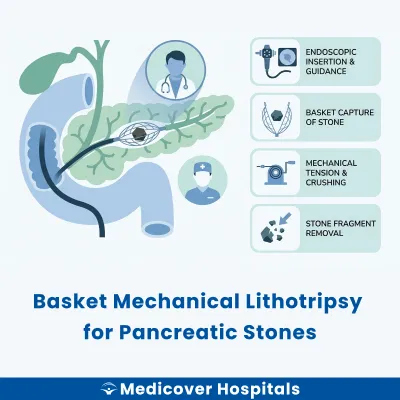
Basket Mechanical Lithotripsy is a procedure used to remove pancreatic stones. The pancreas is an organ located behind the stomach. It plays a crucial role in digestion and blood sugar regulation. During this procedure, a basket-like device is inserted into the pancreatic duct. It captures and removes stones that are causing blockages.
This surgery is needed when pancreatic stones cause pain or block the flow of digestive enzymes. Conditions like chronic pancreatitis can lead to the formation of these stones. If left untreated, it can result in severe pain and digestive issues. Modern approaches include endoscopic techniques, which are minimally invasive. These methods help in effectively managing pancreatic stones.
Basket Mechanical Lithotripsy for Pancreatic Stones Doctors Near You
Explore expert gastroenterologists for basket mechanical lithotripsy for pancreatic stones at Medicover Hospitals across India. Choose your city and book a consultation to address your health needs.
Why Choose Medicover Hospitals for Basket Mechanical Lithotripsy for Pancreatic Stones?
Get a second opinion from trusted experts and makeconfident, informed decisions.
 Get Second Opinion
Complete Guide To Basket Mechanical Lithotripsy For Pancreatic Stones
Everything you need to know about the procedure, preparation, and recovery
Basket Mechanical Lithotripsy for Pancreatic Stones procedure Indications
Doctors may recommend Basket Mechanical Lithotripsy for patients with pancreatic stones causing significant symptoms. This procedure is often considered when non-invasive treatments do not provide relief.
Severe Abdominal Pain
Patients often experience intense abdominal pain due to obstructed pancreatic ducts. Imaging tests like CT scans may show stones blocking the ducts. When pain persists despite medication, lithotripsy may be advised.
Recurrent Pancreatitis
Frequent episodes of pancreatitis can indicate pancreatic stones. Symptoms include nausea, vomiting, and abdominal tenderness. If episodes continue despite dietary changes and medications, lithotripsy might be necessary.
Jaundice
Some patients develop jaundice due to bile duct obstruction by pancreatic stones. This results in yellowing of the skin and eyes. If jaundice persists and imaging confirms stone presence, lithotripsy is considered.
Pancreatic Duct Dilation
Doctors may find dilated pancreatic ducts on imaging, indicating stone obstruction. Patients might report digestive issues. When dilation persists despite conservative measures, lithotripsy is an option.
Failed Endoscopic Treatment
Endoscopic procedures sometimes fail to remove stones. Patients may continue to experience symptoms like pain and digestive problems. In such cases, lithotripsy is recommended to break down the stones.
How to Prepare for Basket Mechanical Lithotripsy for Pancreatic Stones?
Proper preparation is crucial for a successful Basket Mechanical Lithotripsy procedure. It helps minimise risks and ensures a smoother recovery.
- Medication Review: Stop NSAIDs, anticoagulants, and herbal supplements a week before. Consult your doctor for guidance.
- Fasting: Do not eat or drink anything for at least 6-8 hours before the procedure to ensure safety during anaesthesia.
- Hydration: Stay well-hydrated the day before, but avoid liquids on the day of the procedure.
- Clothing: Wear loose, comfortable clothing on the day of the procedure for ease and comfort.
- Transport: Arrange for someone to drive you home after the procedure, as you may feel drowsy from the anaesthesia.
- Medication List: Bring a list of all medications you are currently taking, including dosages, to share with the medical team.
- Pre-Procedure Tests: Complete any required blood tests or imaging studies as advised by your doctor.
- Personal Items: Leave valuables at home and bring only essentials to the hospital.
Basket Mechanical Lithotripsy for Pancreatic Stones procedure (Step-by-Step)
Overview: This procedure is performed by gastroenterologists. It typically lasts 30 to 60 minutes and is done under general anaesthesia.
- Preparation: The patient is positioned comfortably. General anaesthesia is administered to ensure they are asleep and pain-free.
- Endoscope Insertion: An endoscope is gently inserted through the mouth, passing through the stomach and into the duodenum to reach the pancreatic duct.
- Guidewire Placement: A guidewire is carefully navigated into the pancreatic duct. This helps in positioning the necessary instruments.
- Basket Introduction: A specialised basket is introduced over the guidewire. It is manoeuvred to capture the pancreatic stones.
- Stone Capture and Fragmentation: The basket is manipulated to ensnare the stones. Mechanical force is applied to break the stones into smaller fragments.
- Stone Removal: The fragmented stones are carefully extracted through the endoscope. The duct is checked to ensure complete stone removal.
- Completion: The endoscope and instruments are withdrawn. The patient is moved to recovery, where they are monitored as they wake from anaesthesia.
Who Performs Basket Mechanical Lithotripsy for Pancreatic Stones procedure?
This procedure is performed by gastroenterologists who specialise in endoscopic techniques. They are trained to handle instruments like endoscopes and specialised baskets for stone removal. Please contact the hospital for current details as insurance panels may change.
Recovery After Basket Mechanical Lithotripsy for Pancreatic Stones procedure
Recovery from Basket Mechanical Lithotripsy for pancreatic stones involves gradual healing and lifestyle adjustments. Patients can expect some discomfort initially, but it typically subsides as healing progresses.
Day 1-3:
- Rest is crucial. Avoid strenuous activities.
- Stick to a liquid diet initially. Include clear soups and coconut water.
- Stay hydrated. Drink plenty of water.
Day 4-7:
- Gradually introduce soft foods like khichdi, moong dal, and curd.
- Avoid spicy and oily foods to prevent irritation.
- Light activities like walking are encouraged.
Day 8-14:
- Resume normal diet with easily digestible foods such as dal-rice and steamed vegetables.
- Continue avoiding heavy lifting and intense exercise.
- Most can return to work or school by the end of this period, depending on individual recovery.
Phase 3 (Week 3 onwards):
- Gradually return to regular activities, including exercise, as comfort allows.
- Maintain a balanced diet to support digestive health.
When to Seek Urgent Help:
- Severe abdominal pain or persistent vomiting.
- Fever or chills indicating possible infection.
- Jaundice or yellowing of the skin and eyes.
- Signs of bleeding, such as blood in vomit or stools.
Benefits of Basket Mechanical Lithotripsy for Pancreatic Stones procedure
Basket Mechanical Lithotripsy is a minimally invasive technique used to remove pancreatic stones. It offers several benefits for patients.
- Minimally Invasive: This procedure involves less trauma compared to traditional surgery.
- Quick Recovery: Patients often experience a faster recovery time.
- Effective Stone Removal: It efficiently removes stones, alleviating symptoms.
- Reduced Hospital Stay: Patients may spend less time in the hospital.
- Improved Quality of Life: Relief from symptoms can enhance daily living.
Risks and Complications of Basket Mechanical Lithotripsy for Pancreatic Stones procedure
While generally safe, Basket Mechanical Lithotripsy carries some risks. Patients should be aware of potential complications.
- Common: Mild abdominal pain or discomfort post-procedure.
- Common: Temporary inflammation of the pancreas (pancreatitis).
- Rare: Bleeding at the site of stone removal.
- Rare: Infection, requiring antibiotics.
- Rare: Perforation of the pancreatic duct.
- Rare: Allergic reaction to sedatives or contrast dye.
Cost of Basket Mechanical Lithotripsy for Pancreatic Stones procedure
The cost of Basket Mechanical Lithotripsy for Pancreatic Stones at Medicover Hospitals ranges from Rs. 56,500 to Rs. 1,60,000, depending on the ward category chosen. This pricing ensures transparency and varies based on the type of accommodation selected.
Medicover Hospitals offers support for insurance and TPA, including CGHS, ESI, and major TPAs, with a cashless facility available. Please contact the hospital for the latest insurance panel details as these may change periodically.
Frequently Asked Questions
1. How much does Basket Mechanical Lithotripsy for Pancreatic Stones procedure cost at Medicover Hospitals?
The cost ranges from Rs. 56,500 to Rs. 1,60,000 across Medicover Hospitals. Prices vary based on room type and location.
2. Is Basket Mechanical Lithotripsy for Pancreatic Stones procedure covered under health insurance at Medicover?
Yes, it is covered by CGHS, ESI, and major TPAs, with cashless options available. Please contact the hospital for current panel details.
3. Will I need a special diet after pancreatic stone removal?
Yes, a low-fat diet including curd, dal-rice, and khichdi is recommended. Avoid oily and spicy foods for optimal recovery.
4. Can pancreatic stones recur after lithotripsy?
There is a possibility of recurrence if dietary and lifestyle changes are not maintained. Regular follow-ups are advised to monitor health.
5. How soon can I resume normal activities post-procedure?
Most patients can resume light activities within a week. Strenuous activities should be avoided for at least two weeks.
6. Are there any complications specific to pancreatic lithotripsy?
Potential complications include pancreatitis and infection. Immediate medical attention is required if severe abdominal pain or fever occurs.
7. Will my digestion be affected after the procedure?
Temporary digestive changes like bloating or mild discomfort may occur. These usually resolve within a few days post-procedure.


