 Call
Call Patient Reports
Balloon Sinuplasty Procedure Hospital by Expert Ent
Balloon Sinuplasty at Medicover Hospitals is an advanced endoscopic procedure performed by skilled ENT specialists with qualifications such as MS and DNB. This minimally invasive technique offers benefits like reduced blood loss and shorter recovery time, enhancing patient comfort and outcomes across India.
Expert Surgeons
Yearly Surgeries
Patient Satisfaction
What is Balloon Sinuplasty?
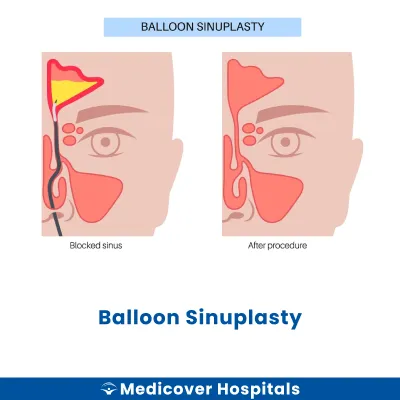
Balloon Sinuplasty is a minimally invasive procedure used to treat blocked sinuses. It involves the paranasal sinuses, which are air-filled spaces around the nasal cavity. During the procedure, a small balloon is inserted into the sinus passage and inflated. This helps to open up the blocked sinuses and restore normal drainage.
This surgery is needed for individuals suffering from chronic sinusitis (long-term inflammation of the sinuses) that does not respond to medication. Conditions like nasal polyps or deviated septum can lead to sinus blockages. If left untreated, it can cause persistent headaches, facial pain, and breathing difficulties. Modern approaches such as endoscopic sinus surgery are also available, offering less discomfort and quicker recovery.
Balloon Sinuplasty Doctors Near You
Discover experienced ENT specialists for balloon sinuplasty at Medicover Hospitals across India. Choose your city and book a consultation to explore effective sinus treatment options near you.
Why Choose Medicover Hospitals for Balloon Sinuplasty?
Get a second opinion from trusted experts and makeconfident, informed decisions.
 Get Second Opinion
Complete Guide To Balloon Sinuplasty
Everything you need to know about the procedure, preparation, and recovery
Balloon Sinuplasty Procedure Indications
Doctors recommend Balloon Sinuplasty when patients suffer from chronic sinusitis that does not respond to medication. This minimally invasive procedure helps to open blocked sinus passages, improving drainage and relieving symptoms.
Chronic Sinusitis
Patients experience persistent nasal congestion, facial pain, and pressure. Imaging may show blocked sinus passages. When antibiotics and nasal sprays fail, Balloon Sinuplasty may be considered.
Recurrent Sinus Infections
Frequent sinus infections cause symptoms like headache, nasal discharge, and fever. CT scans reveal sinus blockage. If infections recur despite treatment, this procedure may be advised.
Sinus-Related Headaches
Severe headaches linked to sinus issues can be debilitating. Patients often have tenderness around the eyes and forehead. When pain persists despite medication, Balloon Sinuplasty might be recommended.
Nasal Obstruction
Difficulty breathing through the nose due to sinus blockage is common. Examination shows swollen nasal passages. When decongestants and steroids don't help, this procedure may be an option.
Facial Pain and Pressure
Patients report constant facial pain and pressure, especially around the cheeks and eyes. Imaging shows inflamed sinuses. If symptoms persist despite conservative measures, Balloon Sinuplasty may be suggested.
How to Prepare for Balloon Sinuplasty?
Proper preparation for Balloon Sinuplasty ensures a smoother procedure and recovery. It helps reduce risks and enhances the effectiveness of the surgery.
- Medication Review: Stop NSAIDs, anticoagulants, and herbal supplements at least a week before surgery.
- Fasting Guidelines: If general anaesthesia is used, fast for at least 6-8 hours before the procedure.
- Nasal Preparation: Use prescribed nasal sprays as directed to reduce inflammation and clear nasal passages.
- Comfortable Clothing: Wear loose, comfortable clothing on the day of the procedure for ease of movement.
- Transportation: Arrange for someone to drive you home post-procedure due to the effects of anaesthesia.
- Medication List: Bring a list of all medications with dosages for the medical team to review.
- Pre-Surgery Rest: Ensure you get a good night's sleep before the procedure to aid recovery.
- Hydration: Stay well-hydrated in the days leading up to the procedure, unless advised otherwise.
Balloon Sinuplasty procedure (Step-by-Step)
Overview: Balloon Sinuplasty is performed by an ENT specialist. The procedure typically lasts between 1 to 2 hours. It is usually done under local anaesthesia.
- Preparation: The patient is made comfortable in the operating room. Local anaesthesia is administered to numb the nasal area.
- Insertion: A small, flexible catheter with a balloon is gently inserted into the nasal passage. The patient may feel slight pressure but no pain.
- Balloon Inflation: The balloon is carefully inflated to expand the sinus opening. This helps to drain the mucus and relieve congestion.
- Deflation and Removal: Once the sinus is opened, the balloon is deflated and removed. The patient might feel a temporary sensation of relief as the pressure decreases.
- Rinsing: A saline solution is used to rinse the sinus cavity. This helps to clear any remaining mucus or debris.
- Completion: The procedure is completed without any incisions or tissue removal. The patient can usually return home the same day.
Who Performs Balloon Sinuplasty procedure?
An ENT (Ear, Nose, and Throat) specialist performs the Balloon Sinuplasty. These specialists are trained in managing conditions of the sinus and nasal passages. They use specific instruments like the balloon catheter to ensure the procedure is effective and safe. Please contact the hospital for current details as insurance panels may change.
Recovery After Balloon Sinuplasty procedure
Recovery from Balloon Sinuplasty is generally quick and smooth. Most patients experience minimal discomfort and can resume normal activities within a few days. However, it's important to follow post-procedure guidelines to ensure a smooth recovery.
Day 1-2:
- Expect mild congestion and nasal discharge. Use saline sprays as recommended.
- Rest is crucial. Avoid strenuous activities.
- Stick to a soft diet. Include foods like curd, dal-rice, and soups to stay nourished.
Day 3-5:
- Congestion may decrease. Continue using saline sprays.
- Light activities can be resumed, but avoid bending or heavy lifting.
- Maintain a balanced diet. Opt for khichdi and moong dal for easy digestion.
Day 6-7:
- Most patients feel significantly better. Nasal passages may feel clearer.
- Gradually return to normal activities. Avoid swimming and dusty environments.
- Continue with a healthy diet. Hydration is key.
Phase 2: Week 2 and Beyond
- Resume work or school unless advised otherwise by your doctor.
- Continue avoiding activities that may strain the nasal passages.
- Regular follow-up appointments are important to monitor healing.
When to Seek Urgent Help:
- Severe headache or facial pain
- High fever or persistent nosebleeds
- Vision changes or swelling around the eyes
Benefits of Balloon Sinuplasty procedure
Balloon Sinuplasty is a minimally invasive procedure used to treat chronic sinusitis. It offers several advantages for patients.
- Minimally Invasive: The procedure involves no cutting of nasal tissues or bones.
- Quick Recovery: Patients often experience a faster recovery time compared to traditional sinus surgery.
- Reduced Bleeding: The technique typically results in less bleeding during and after the procedure.
- Improved Breathing: Many patients report significant improvement in nasal breathing post-procedure.
- Outpatient Procedure: It is usually performed on an outpatient basis, allowing patients to return home the same day.
Risks and Complications of Balloon Sinuplasty procedure
While Balloon Sinuplasty is generally safe, it is important to be aware of potential risks and complications.
- Common: Mild nasal bleeding may occur after the procedure.
- Common: Some patients experience temporary facial swelling or discomfort.
- Rare: Infection is a potential risk, though uncommon.
- Rare: There is a small risk of damage to surrounding tissues or structures.
- Rare: Allergic reactions to anaesthesia or other medications may occur.
Cost of Balloon Sinuplasty procedure
The cost of Balloon Sinuplasty at Medicover Hospitals ranges from Rs. 112,500 to Rs. 261,000. Prices vary based on the ward category chosen. We offer transparent pricing to ensure clarity for our patients. Insurance and TPA support, including CGHS, ESI, and major TPAs, are accepted. A cashless facility is also available to ease the financial process. Please contact the hospital for the latest insurance panel details as these may change periodically.
Frequently Asked Questions
1. How much does Balloon Sinuplasty cost?
The cost of Balloon Sinuplasty at Medicover Hospitals ranges from Rs. 112500 to Rs. 261000, depending on the type of accommodation chosen.
2. Is Balloon Sinuplasty covered under insurance?
Balloon Sinuplasty may be covered under CGHS, ESI, and major TPAs with cashless options. Please contact the hospital for current panel details.
3. Will Balloon Sinuplasty affect my sense of smell?
Some patients may experience temporary changes in their sense of smell. This usually improves as the sinuses heal over a few weeks.
4. Can I breathe normally immediately after?
You may experience nasal congestion initially. Breathing typically improves significantly within a week after Balloon Sinuplasty.
5. What foods should I avoid after Balloon Sinuplasty?
Avoid spicy and hot foods like chilli and pepper initially. Opt for soft foods like curd, dal-rice, or khichdi during recovery.
6. Can Balloon Sinuplasty cause nosebleeds?
Nosebleeds are a possible complication but are usually mild. Contact your doctor if bleeding persists or is heavy.
7. Will I need follow-up visits after Balloon Sinuplasty?
Follow-up visits are essential to monitor healing and sinus function. Your doctor will schedule these visits within the first few weeks.


