 Call
Call Patient Reports
Best Hospital for Axillary Lymph Node Dissection with Advanced Oncology Care
Axillary lymph node dissection at Medicover Hospitals is performed using the open surgical approach. Our oncologists, with qualifications like MS, DNB, and MCh, specialise in comprehensive cancer care. This procedure often results in shorter hospital stays and reduced blood loss for patients across India.
Expert Surgeons
Yearly Surgeries
Patient Satisfaction
What is Axillary Lymph Node Dissection?
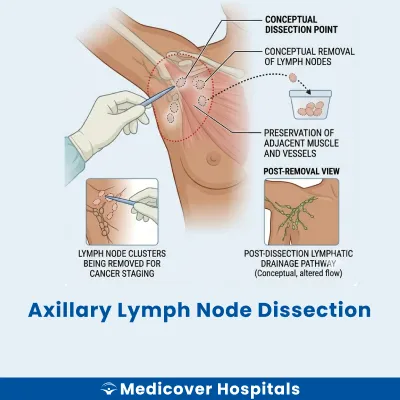
Axillary lymph node dissection is a surgical procedure involving the removal of lymph nodes from the axilla (armpit area). This procedure is primarily performed to assess or treat the spread of breast cancer. The lymph nodes in the axilla are part of the lymphatic system, which helps in filtering harmful substances and fighting infections.
This surgery is needed when cancer cells are suspected to have spread to the lymph nodes. Conditions like breast cancer often necessitate this procedure. If left untreated, cancer can spread further, complicating treatment. Modern surgical approaches for axillary lymph node dissection include minimally invasive techniques, such as sentinel lymph node biopsy, which may reduce recovery time and complications.
Axillary Lymph Node Dissection Doctors Near You
Find experienced oncologists for axillary lymph node dissection at Medicover Hospitals across India. Choose your city and book a consultation to discuss your treatment options and care plan.
Why Choose Medicover Hospitals for Axillary Lymph Node Dissection?
Get a second opinion from trusted experts and makeconfident, informed decisions.
 Get Second Opinion
Complete Guide To Axillary Lymph Node Dissection
Everything you need to know about the procedure, preparation, and recovery
Axillary lymph node dissection Surgery Indications
Doctors recommend axillary lymph node dissection when there is a need to evaluate or treat lymph nodes in the underarm area. This procedure helps in staging cancer and determining the extent of its spread.
Breast Cancer with Lymph Node Involvement
Patients may experience a lump or swelling in the breast or underarm. Imaging tests like mammograms or ultrasounds may show enlarged lymph nodes. When biopsy confirms cancer spread, surgery is considered.
Persistent Lymphadenopathy
Swelling in the underarm that does not subside with antibiotics or other treatments may indicate a need for dissection. Doctors find persistent enlargement on physical exams or imaging, prompting surgical intervention.
Metastatic Cancer
Patients with known cancer elsewhere may develop symptoms like swelling or pain in the underarm. Scans reveal suspicious lymph nodes, and dissection helps assess cancer spread when other treatments are ineffective.
Recurrent Breast Cancer
Patients with previous breast cancer treatment may notice new lumps or swelling. Imaging and biopsy confirm recurrence in lymph nodes, necessitating surgical removal.
Diagnostic Uncertainty
When imaging or biopsies provide inconclusive results, and symptoms persist, dissection helps clarify the diagnosis. This is crucial when non-invasive methods fail to provide clear answers.
How to Prepare for Axillary Lymph Node Dissection?
Proper preparation for axillary lymph node dissection is crucial to ensure a smooth procedure and recovery. It helps in reducing complications and aids in a quicker recovery process.
- Medication Review: Stop NSAIDs, anticoagulants, and herbal supplements as advised by your doctor.
- Fasting Guidelines: Fast for at least 8 hours before the surgery if general anaesthesia is used.
- Pre-Surgery Hygiene: Take a shower with antiseptic soap on the day of the surgery to reduce infection risk.
- Comfortable Clothing: Wear loose-fitting clothes to avoid pressure on the surgical site post-operation.
- Transportation: Arrange for someone to drive you home after the procedure as you may feel drowsy.
- Medication List: Bring a list of your current medications, including dosages, for hospital records.
- Smoking and Alcohol: Avoid smoking and alcohol for at least 24 hours before the surgery.
- Rest and Relaxation: Ensure you get a good night's sleep before the surgery to help your body prepare.
Axillary lymph node dissection Surgery (Step-by-Step)
Axillary lymph node dissection is performed by surgical oncologists. It typically takes 1-3 hours and is done under general anaesthesia.
- Preparation: The patient is positioned on the operating table. General anaesthesia is administered, ensuring the patient is asleep and pain-free.
- Incision: A 3-5 cm incision is made in the armpit area. This allows access to the axillary lymph nodes.
- Exposure: The surgeon uses retractors to gently open the incision site. This provides a clear view of the lymph nodes.
- Dissection: Using instruments like a harmonic scalpel and bipolar cautery, the surgeon carefully removes the lymph nodes. This step requires precision to avoid damage to surrounding tissues.
- Examination: The removed lymph nodes are sent for pathological examination. This helps determine the presence of cancer cells.
- Closure: The incision is closed with sutures or staples. A drain may be placed to prevent fluid accumulation.
- Recovery: The patient is moved to the recovery room. They are monitored as they wake up from anaesthesia, experiencing some soreness in the incision area.
Who Performs Axillary lymph node dissection Surgery?
This surgery is performed by surgical oncologists. They specialise in cancer-related surgeries and have expertise in removing lymph nodes while preserving nearby structures. Their training ensures they handle the procedure with care and precision.
Recovery After Axillary Lymph Node Dissection Surgery
Recovery from axillary lymph node dissection surgery involves managing discomfort and gradually returning to daily activities. It's important to follow your doctor's advice for a smooth recovery.
Day 1-3:
- Rest is crucial. Keep the surgical area clean and dry.
- Pain and swelling are common. Take prescribed medications.
- Consume light meals. Opt for easily digestible foods like curd, dal-rice, and soups.
Day 4-7:
- Begin gentle arm exercises as advised to prevent stiffness.
- Continue with a balanced diet. Include moong dal and khichdi for protein and energy.
- Avoid lifting heavy objects or strenuous activities.
Week 2-4:
- Gradually increase activity levels. Short walks are beneficial.
- Return to work or school may be possible, depending on your job and recovery progress.
- Maintain a nutritious diet to support healing.
Week 4 and Beyond:
- Most daily activities can be resumed. Continue exercises to improve arm mobility.
- Regular follow-ups with your doctor are important for monitoring recovery.
When to Seek Urgent Help
- Fever or chills indicating possible infection.
- Excessive swelling or redness around the incision.
- Sudden increase in pain or fluid leakage from the wound.
- Numbness or tingling in the arm that persists.
Benefits of Axillary lymph node dissection Surgery
Axillary lymph node dissection is a surgical procedure often performed to manage breast cancer. It offers several benefits in the treatment process.
- Accurate Staging: Helps determine the extent of cancer spread.
- Guides Treatment: Provides information to tailor further treatment plans.
- Reduces Recurrence Risk: May lower the chance of cancer returning in the axillary region.
- Improves Prognosis: Contributes to a better understanding of the disease, aiding in prognosis.
Risks and Complications of Axillary lymph node dissection Surgery
While beneficial, axillary lymph node dissection carries certain risks and complications. It's important to be aware of these potential issues.
- Lymphedema: Swelling due to lymph fluid build-up in the arm.
- Numbness: Loss of sensation in the upper arm or armpit area.
- Limited Arm Movement: Reduced range of motion in the shoulder.
- Infection: Risk of infection at the surgical site.
- Seroma Formation: Accumulation of fluid in the area where lymph nodes were removed.
- Nerve Injury: Potential damage to nerves, causing pain or weakness.
What is the Cost of Axillary lymph node dissection Surgery?
The cost of Axillary lymph node dissection surgery at Medicover Hospitals ranges from Rs. 4,500 to Rs. 58,000. The price varies based on the ward category chosen, such as general, twin sharing, or private rooms.
We offer transparent pricing and support for insurance and TPA, including CGHS, ESI, and major TPAs. Cashless facilities are available for a hassle-free experience. Please contact the hospital for the latest insurance panel details as these may change periodically.
Frequently Asked Questions
1. How much does Axillary lymph node dissection cost?
The cost of Axillary lymph node dissection surgery at Medicover Hospitals ranges from Rs. 4,500 to Rs. 58,000, depending on the facility type.
2. Is Axillary lymph node dissection covered by insurance?
Yes, it is often covered by CGHS, ESI, and major TPAs, with cashless options available. Please contact the hospital for current panel details.
3. Will my arm movement be restricted after surgery?
Temporary arm movement restriction is common after Axillary lymph node dissection. Physiotherapy can help regain full mobility within a few weeks.
4. Can I develop lymphedema after Axillary dissection?
Lymphedema is a possible complication after Axillary lymph node dissection. Regular monitoring and exercises can help manage and reduce the risk.
5. Will I need physiotherapy post-surgery?
Yes, physiotherapy is often recommended after Axillary lymph node dissection to restore arm strength and flexibility. It aids in a smoother recovery process.
6. Are there dietary restrictions post-surgery?
Post-surgery, a balanced diet including curd, dal-rice, and khichdi is recommended. Avoid heavy or spicy foods for a few days to aid recovery.
7. Can I resume normal activities after surgery?
You can gradually resume normal activities within a few weeks post-surgery. Avoid heavy lifting and strenuous activities until cleared by your doctor.


