 Call
Call Patient Reports
Autologous PRP and Stem Cell Therapy for Endometrial Regeneration Procedure by Expert Gynecologists
At Medicover Hospitals, our gynecologists with qualifications like MS, DNB, and FMAS offer Autologous PRP and Stem Cell Therapy for Endometrial Regeneration using laparoscopic techniques. This approach ensures smaller incisions and reduced blood loss, enhancing recovery for patients across India.
Expert Specialists
Yearly Treatments
Patient Satisfaction
What is Autologous PRP and Stem Cell Therapy for Endometrial Regeneration?
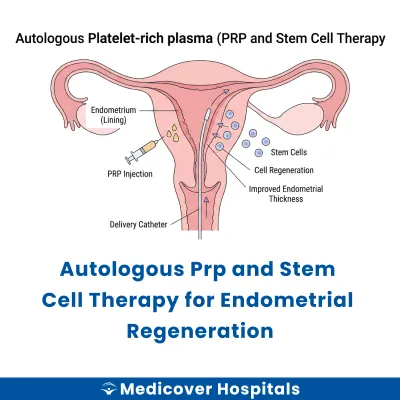
Autologous PRP (Platelet-Rich Plasma) and Stem Cell Therapy for Endometrial Regeneration involves using a patient's own blood components and stem cells to rejuvenate the endometrium (lining of the uterus). PRP is derived from blood and is rich in growth factors. Stem cells have the ability to transform into various cell types. Together, they help repair and regenerate the uterine lining, enhancing its function.
This therapy is needed for women with thin endometrium or Asherman's syndrome (scar tissue in the uterus). These conditions can lead to infertility or menstrual irregularities. If untreated, they may cause complications in conceiving. Modern surgical approaches include minimally invasive techniques like hysteroscopy, combined with PRP and stem cell injections, to promote endometrial health.
Autologous PRP and Stem Cell Therapy for Endometrial Regeneration Doctors Near You
Discover gynecologists offering autologous PRP and stem cell therapy for endometrial regeneration at Medicover Hospitals. Choose your city and book a consultation today to explore your options.
Why Choose Medicover Hospitals for Autologous PRP and Stem Cell Therapy for Endometrial Regeneration?
Get a second opinion from trusted experts and makeconfident, informed decisions.
 Get Second Opinion
Complete Guide To Autologous Prp And Stem Cell Therapy For Endometrial Regeneration
Everything you need to know about the procedure, preparation, and recovery
Autologous PRP and Stem Cell Therapy for Endometrial Regeneration procedure Indications
Doctors recommend Autologous PRP and Stem Cell Therapy for Endometrial Regeneration when traditional treatments fail to restore the endometrial lining. This procedure is considered for specific conditions affecting the uterus.
Thin Endometrium
Patients may experience irregular menstrual cycles or infertility. An ultrasound might show a thin endometrial lining. When hormonal treatments do not improve the lining, this therapy is considered.
Asherman's Syndrome
Women with this condition often report light or absent periods. Hysteroscopy may reveal uterine adhesions. If surgical removal of adhesions does not restore normal menstruation, this therapy may be suggested.
Recurrent Implantation Failure
Patients undergoing IVF may face repeated embryo transfer failures. Doctors might find no obvious cause on imaging or blood tests. When standard IVF protocols do not succeed, this therapy can be an option.
Chronic Endometritis
Symptoms include pelvic pain and abnormal bleeding. Biopsy results may show inflammation of the endometrium. If antibiotics and other treatments do not resolve the condition, this therapy might be recommended.
Unexplained Infertility
Some women face difficulty conceiving with no clear cause. Diagnostic tests may show a normal uterus and ovaries. When other fertility treatments fail, this therapy could be explored.
How to Prepare for Autologous PRP and Stem Cell Therapy for Endometrial Regeneration?
Proper preparation is crucial for the success of Autologous PRP and Stem Cell Therapy for Endometrial Regeneration. It ensures the procedure goes smoothly and aids in optimal recovery.
- Medication Review: Stop NSAIDs, anticoagulants, and herbal supplements at least a week before the procedure.
- Fasting Guidelines: Follow a fasting period of 6-8 hours before the procedure, as advised for local anaesthesia.
- Hydration: Stay well-hydrated in the days leading up to the procedure, unless instructed otherwise.
- Comfortable Clothing: Wear loose, comfortable clothing on the day of the procedure for ease of movement.
- Transportation: Arrange for someone to drive you home after the procedure, as you may feel drowsy.
- Medication List: Bring a list of all medications you are currently taking, including dosages.
- Pelvic Floor Exercises: Engage in recommended pelvic floor exercises to strengthen the area.
- Rest and Relaxation: Ensure you get adequate rest the night before the procedure to help your body prepare.
Autologous PRP and Stem Cell Therapy for Endometrial Regeneration procedure (Step-by-Step)
Overview: This procedure is performed by gynecologists. It typically lasts 1-2 hours and is usually done under local anaesthesia.
- Preparation: The patient is positioned comfortably. Local anaesthesia is administered to minimize discomfort.
- Blood Collection: A small amount of blood is drawn from the patient's arm using a syringe.
- PRP Preparation: The collected blood is processed in a centrifuge. This separates the platelet-rich plasma (PRP) from other blood components.
- Stem Cell Harvesting: Stem cells are collected from the patient's bone marrow or adipose tissue using a trocar. This may involve a small incision of about 1-2 cm.
- PRP and Stem Cell Injection: The prepared PRP and stem cells are injected into the endometrial lining using a fine needle. The patient may feel slight pressure but minimal pain.
- Monitoring: The patient is observed for a short period to ensure stability and comfort. Any immediate reactions are addressed promptly.
- Recovery: The patient is advised on post-procedure care and can usually return home the same day.
Who Performs Autologous PRP and Stem Cell Therapy for Endometrial Regeneration procedure?
This procedure is performed by experienced gynecologists. They specialize in reproductive health and are skilled in minimally invasive techniques. Their expertise ensures the procedure is conducted safely and effectively.
Recovery After Autologous PRP and Stem Cell Therapy for Endometrial Regeneration procedure
Recovery from Autologous PRP and Stem Cell Therapy for Endometrial Regeneration is generally smooth. Patients can expect some mild discomfort, but most can resume normal activities shortly. It's important to follow the doctor's instructions for optimal healing.
Day 1-3:
- Rest is crucial. Avoid strenuous activities.
- Light walking is encouraged to promote circulation.
- Stick to a soft diet. Include foods like curd, dal-rice, and soups.
- Stay hydrated. Drink plenty of water and herbal teas.
Day 4-7:
- Gradually resume normal activities, but avoid heavy lifting.
- Continue with a balanced diet. Add moong dal and khichdi for easy digestion.
- Monitor for any unusual symptoms and maintain follow-up appointments.
Week 2-4:
- Most can return to work or school, depending on individual recovery.
- Introduce more variety in the diet, ensuring it is rich in nutrients.
- Continue avoiding intense physical activities until cleared by the doctor.
Phase 2 (1-3 Months):
- Full recovery is expected. Regular activities can be resumed.
- Maintain a healthy diet to support overall well-being.
- Attend all scheduled follow-ups to monitor progress.
When to Seek Urgent Help:
- Severe abdominal pain or heavy bleeding.
- Fever or signs of infection.
- Unusual discharge or persistent discomfort.
Benefits of Autologous PRP and Stem Cell Therapy for Endometrial Regeneration procedure
This innovative procedure aims to enhance the regeneration of the endometrial lining, offering several potential benefits.
- Improved Endometrial Thickness: May help increase the thickness of the endometrial lining, which is crucial for successful implantation.
- Enhanced Fertility Potential: Can potentially improve fertility outcomes for women with thin endometrial lining.
- Natural Healing Process: Utilises the body's own cells, reducing the risk of rejection or allergic reactions.
- Minimally Invasive: Involves a less invasive approach compared to traditional surgical methods.
Risks and Complications of Autologous PRP and Stem Cell Therapy for Endometrial Regeneration procedure
While generally considered safe, this procedure does carry some risks and potential complications.
Common Risks
- Mild discomfort or pain at the injection site.
- Temporary swelling or bruising in the treated area.
Rare Risks
- Infection at the injection site.
- Allergic reaction to the injected materials.
- Unintended tissue growth or scarring.
- Ineffectiveness, where the desired endometrial regeneration is not achieved.
Cost of Autologous PRP and Stem Cell Therapy for Endometrial Regeneration procedure
The cost for Autologous PRP and Stem Cell Therapy for Endometrial Regeneration at Medicover Hospitals ranges from ₹25,000 to ₹60,000 per cycle. The price varies depending on the ward category chosen. We offer transparent pricing and support for insurance and TPA, including CGHS, ESI, and major TPAs. Cashless facilities are available for your convenience. Please contact the hospital for the latest insurance panel details as these may change periodically.
Frequently Asked Questions
1. How much does Autologous PRP and Stem Cell Therapy for Endometrial Regeneration procedure cost at Medicover Hospitals?
The cost for Autologous PRP and Stem Cell Therapy for Endometrial Regeneration at Medicover Hospitals ranges from ₹25,000 to ₹60,000 per cycle depending on the type of accommodation.
2. Is Autologous PRP and Stem Cell Therapy for Endometrial Regeneration procedure covered under health insurance at Medicover?
Coverage may be available under CGHS, ESI, and major TPAs. Please contact the hospital for current panel details.
3. Can this therapy improve my endometrial lining?
Yes, Autologous PRP and Stem Cell Therapy aims to improve the thickness and health of the endometrial lining, enhancing fertility potential.
4. Will I need bed rest after the procedure?
Minimal bed rest is usually recommended for a day post-procedure. Regular activities can typically resume within a week.
5. Are there any dietary restrictions post-therapy?
A balanced diet including curd, dal-rice, and khichdi is recommended. Avoid processed foods and excessive caffeine for optimal recovery.
6. Can I experience any hormonal changes post-therapy?
Hormonal changes are uncommon with this therapy as it focuses on endometrial regeneration. Consult your doctor if you experience any unusual symptoms.
7. Is there a risk of infection after the procedure?
Infection risk is minimal but possible. Follow your doctor's advice on hygiene and report any signs of infection immediately.


