 Call
Call Patient Reports
Arthrotomy with Joint Lavage: Expert Orthopedic Surgeons & Minimally Invasive Care
At Medicover Hospitals, our orthopaedic team, with qualifications like MS and DNB, specialises in arthrotomy and joint lavage using the open surgical approach. This procedure effectively addresses joint issues, often resulting in reduced blood loss and a quicker recovery period for patients.
Expert Surgeons
Yearly Surgeries
Patient Satisfaction
What is Arthrotomy and Joint Lavage?
Arthrotomy and joint lavage is a surgical procedure involving the opening of a joint (arthrotomy) and washing it out (lavage). This procedure is typically performed on joints such as the knee, hip, or shoulder. It involves making an incision to access the joint, allowing for the removal of debris, infected material, or excess fluid. This helps in reducing inflammation and improving joint function.
This surgery is often needed for conditions like septic arthritis, where infection causes joint inflammation. It is also used for severe joint pain due to debris or inflammation. If left untreated, these conditions can lead to joint damage and loss of function. Modern surgical approaches include arthroscopic techniques, which use smaller incisions and specialised instruments for less invasive treatment.
Arthrotomy and Joint Lavage Surgery Doctors Near You
Discover expert orthopedics for arthrotomy and joint lavage at Medicover Hospitals across India. Choose your city and book a consultation to explore effective treatment options tailored to your needs.
Why Choose Medicover Hospitals for Arthrotomy and Joint Lavage Surgery?
Get a second opinion from trusted experts and makeconfident, informed decisions.
 Get Second Opinion
Complete Guide To Arthrotomy And Joint Lavage
Everything you need to know about the procedure, preparation, and recovery
Arthrotomy and Joint Lavage Surgery Indications
Doctors recommend arthrotomy and joint lavage when non-surgical treatments fail to relieve joint issues. This procedure helps in diagnosing and treating various joint conditions by removing debris or infection.
Septic Arthritis
Patients often experience severe joint pain, swelling, and fever. Lab tests may show elevated white blood cell count and inflammatory markers. When antibiotics and aspiration do not resolve the infection, surgery is considered.
Intra-articular Fractures
Patients may have intense pain and restricted movement after a trauma. X-rays or CT scans reveal fracture lines extending into the joint. If immobilization and medication do not improve the condition, surgery is advised.
Synovial Chondromatosis
Symptoms include joint pain, swelling, and limited range of motion. Imaging may show loose bodies within the joint. When these symptoms persist despite medication and physical therapy, surgical intervention is needed.
Rheumatoid Arthritis with Joint Effusion
Patients experience chronic pain, swelling, and stiffness. Blood tests and imaging confirm inflammation and fluid accumulation. If medication and drainage fail to provide relief, surgery is recommended.
Osteoarthritis with Debris
Chronic joint pain and stiffness are common symptoms. X-rays may show joint space narrowing and debris. When conservative treatments like physiotherapy and medication are ineffective, surgery becomes necessary.
How to Prepare for Arthrotomy and Joint Lavage Surgery?
Proper preparation is crucial for a successful arthrotomy and joint lavage. It helps minimise complications and ensures a smoother recovery.
- Medication Review: Stop NSAIDs, anticoagulants, and herbal supplements 7 days before surgery. Consult your doctor.
- Fasting: Do not eat or drink anything for at least 8 hours before the procedure if general anaesthesia is used.
- Clothing: Wear loose, comfortable clothing on the day of the procedure for easy dressing post-surgery.
- Transport Arrangements: Arrange for someone to drive you home after the procedure as you may feel drowsy.
- Medication List: Bring a list of all medications you take, including dosages, for the medical team to review.
- Pre-Surgery Instructions: Follow any additional instructions given by your doctor specific to your condition.
- Hygiene: Bathe with an antiseptic soap as advised to reduce infection risk.
- Rest: Ensure you get adequate rest the night before the procedure for optimal recovery.
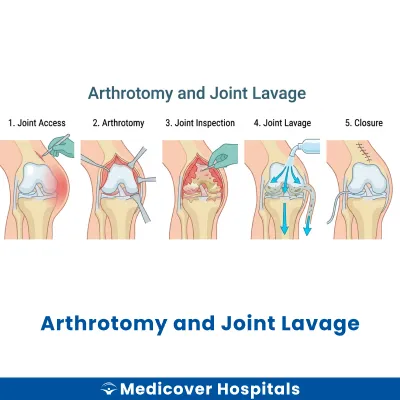
Arthrotomy and Joint Lavage Surgery (Step-by-Step)
Arthrotomy and joint lavage are performed by experienced specialists from the Orthopedics department. The procedure usually takes 1-2 hours and is carried out under general or regional anaesthesia.
- Preparation: The patient is positioned on the operating table. Anaesthesia is administered to ensure comfort and pain-free surgery.
- Incision: A small incision, usually 1-2 cm, is made over the joint area. This allows access to the joint space.
- Joint Exposure: Surgical instruments like retractors are used to expose the joint. This helps in visualising the area needing treatment.
- Cleaning and Debridement: Instruments such as curettes or harmonic scalpels are used to remove debris or damaged tissue from the joint. This step helps in reducing inflammation and pain.
- Lavage: The joint is thoroughly washed with saline. This helps in flushing out loose particles and inflammatory mediators.
- Closure: The incision is closed with sutures or staples. A sterile dressing is applied to protect the wound.
- Recovery: The patient is moved to the recovery room. Monitoring continues until the effects of anaesthesia wear off.
Who Performs Arthrotomy and Joint Lavage Surgery?
This surgery is performed by orthopedic surgeons. They specialize in diagnosing and treating musculoskeletal disorders. Their expertise ensures precise execution of the procedure. Please contact the hospital for current details, as insurance panels may change.
Recovery After Arthrotomy and Joint Lavage Surgery
Recovery from arthrotomy and joint lavage surgery involves gradual healing and regaining mobility. Patients can expect some initial discomfort and swelling, but these symptoms typically improve over time. Adhering to post-operative instructions is crucial for a smooth recovery.
Day 1-3:
- Rest is essential. Keep the affected joint elevated to reduce swelling.
- Apply ice packs as advised to manage pain and swelling.
- Begin with a light diet including curd, dal-rice, and soups to aid digestion.
- Follow medication instructions for pain relief.
Day 4-7:
- Gradually increase mobility with guided physiotherapy exercises.
- Continue a balanced diet with soft foods like khichdi and moong dal.
- Avoid strenuous activities and heavy lifting.
Week 2-4:
- Swelling and pain should decrease significantly.
- Resume light activities as tolerated, but avoid high-impact exercises.
- Return to work or school may be possible, depending on the nature of the activity.
Phase 2 (Week 4-6):
- Continue with physiotherapy to improve joint function.
- Incorporate greater variety into the diet, focusing on nutritious meals.
- Gradually resume normal activities, but consult the doctor before engaging in sports.
When to Seek Urgent Help:
- Persistent or worsening pain and swelling.
- Fever or signs of infection at the surgical site.
- Inability to move the joint or sudden severe pain.
Benefits of Arthrotomy and Joint Lavage Surgery
Arthrotomy and joint lavage are surgical procedures aimed at relieving joint pain and improving mobility.
- Pain Relief: Helps alleviate chronic joint pain by removing debris and inflammatory substances.
- Improved Mobility: Enhances joint movement by cleaning the joint space.
- Diagnosis Aid: Provides direct visualisation of the joint for accurate diagnosis.
- Reduced Inflammation: Decreases inflammation by flushing out irritants from the joint.
Risks and Complications of Arthrotomy and Joint Lavage Surgery
While generally safe, arthrotomy and joint lavage do carry some risks. It's important to be aware of these potential complications.
- Infection (Common): Risk of infection at the surgical site or within the joint.
- Bleeding (Common): Possible bleeding during or after the procedure.
- Nerve Damage (Rare): Potential for nerve injury leading to numbness or weakness.
- Blood Clots (Rare): Risk of developing blood clots post-surgery.
- Joint Stiffness (Common): Temporary stiffness in the joint post-procedure.
- Allergic Reactions (Rare): Possible allergic reactions to anaesthesia or medications used.
How much does arthrotomy and joint lavage surgery cost?
The cost of Arthrotomy and Joint Lavage Surgery at Medicover Hospitals varies by selected ward category. Prices typically range from ₹2,53,000 to ₹4,05,000 for standard care, with higher charges applicable for deluxe and suite accommodations. We maintain transparent pricing and provide support for insurance and third-party administrators (TPAs), including CGHS, ESI, and other major providers.
Cashless treatment options are available for added convenience. For the most up-to-date information on insurance empanelment, we recommend contacting the hospital directly, as the list may change periodically.
Frequently Asked Questions
1. How much does Arthrotomy and Joint Lavage Surgery cost at Medicover Hospitals?
The cost ranges from Rs. 253,000 to Rs. 405,000 across Medicover Hospitals. Prices depend on room type and care level.
2. Is Arthrotomy and Joint Lavage Surgery covered under health insurance at Medicover?
Coverage is available under CGHS, ESI, and major TPAs with cashless options. Please contact the hospital for current panel details.
3. Will I need crutches after Arthrotomy and Joint Lavage Surgery?
Yes, crutches may be needed for a few weeks post-surgery. It helps in reducing weight on the joint during recovery.
4. Can I drive immediately after Arthrotomy and Joint Lavage Surgery?
Driving is generally not advised immediately after surgery. You may resume driving once your doctor confirms it's safe.
5. Will I experience joint stiffness after Arthrotomy and Joint Lavage?
Some joint stiffness is common after the procedure. Physiotherapy can help improve flexibility and reduce stiffness.
6. What foods should I avoid after Arthrotomy and Joint Lavage?
Avoid processed foods and high-sugar items. Opt for nutritious options like dal-rice and fruits to aid recovery.
7. Can Arthrotomy and Joint Lavage cause infection?
Infection is a potential risk, though rare. Follow post-operative care instructions to minimise this risk.
8. What is the recovery time for knee washout?
Recovery after a knee washout (joint lavage and debridement) usually takes about 2 to 6 weeks, depending on the severity of infection or damage. Initial improvement in pain and swelling is often seen within a few days, but full recovery may take longer with physiotherapy.
9. Can I walk after knee debridement?
Yes, most patients can start walking within a day or two after knee debridement, often with support such as crutches. Gradual weight-bearing is encouraged as pain decreases and healing progresses.
10. What is the difference between arthroplasty and arthrotomy?
Arthroplasty is a joint replacement surgery, where a damaged joint is replaced with an artificial implant. Arthrotomy, on the other hand, is a surgical opening of a joint to treat conditions like infection or injury without replacing the joint.


