 Call
Call Patient Reports
Best Hospital for Arthroscopy with Advanced Orthopedic Care
At Medicover Hospitals, our orthopedic experts, with qualifications like MS and DNB, employ advanced arthroscopic techniques for diagnosing and treating joint issues. This minimally invasive approach ensures smaller incisions and reduced blood loss, leading to quicker recovery and shorter hospital stays for patients across India.
Expert Surgeons
Yearly Surgeries
Patient Satisfaction
What is Arthroscopy?
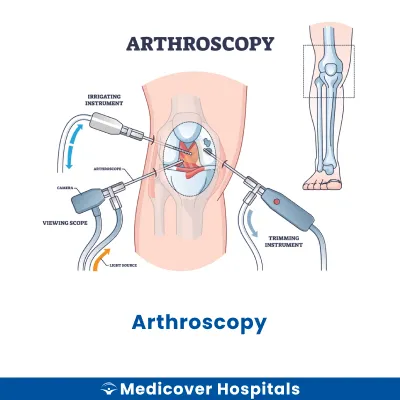
Arthroscopy is a minimally invasive surgical procedure used to diagnose and treat joint problems. It involves the use of an arthroscope (a small camera) to view the inside of a joint, such as the knee, shoulder, or hip. This allows doctors to see the joint without making large incisions. The procedure helps in identifying issues like torn cartilage, ligament damage, or inflammation.
Arthroscopy is often needed for conditions like arthritis, torn meniscus, or rotator cuff tears. If left untreated, these conditions can lead to chronic pain or joint dysfunction. Modern surgical approaches include keyhole surgery and advanced imaging techniques. These methods help in precise diagnosis and treatment. Early intervention can prevent further joint damage and improve mobility.
Arthroscopy Doctors Near You
Discover skilled orthopedics for arthroscopy at Medicover Hospitals across India. Choose your city and book a consultation to address your joint concerns with our experienced specialists.
Why Choose Medicover Hospitals for Arthroscopy?
Get a second opinion from trusted experts and makeconfident, informed decisions.
 Get Second Opinion
Complete Guide To Arthroscopy
Everything you need to know about the procedure, preparation, and recovery
Arthroscopy Surgery Indications
Doctors recommend arthroscopy when joint problems persist despite conservative treatments. This minimally invasive procedure helps diagnose and treat joint issues effectively.
Persistent Joint Pain
Patients often experience ongoing joint pain that does not improve with rest, medication, or physical therapy. Doctors may find inflammation or damage in the joint through imaging tests. When pain persists despite non-surgical treatments, arthroscopy can help identify and address the underlying issue.
Swelling and Stiffness
Swelling and stiffness in the joint can limit movement and daily activities. Physical examination may reveal fluid accumulation or restricted motion. If these symptoms do not resolve with medication or physiotherapy, arthroscopy can be used to explore and treat the cause.
Joint Instability
Patients may feel their joint is unstable or gives way during movement. Clinical tests might show ligament tears or cartilage damage. When bracing or rehabilitation fails to restore stability, arthroscopy can repair or reconstruct the affected structures.
Locking or Catching Sensation
A locking or catching sensation in the joint can be distressing. This may be due to loose bodies or torn cartilage, visible on MRI or X-rays. If these symptoms persist and hinder function, arthroscopy can remove or repair the problematic tissue.
Unexplained Joint Symptoms
Sometimes, patients experience joint symptoms without a clear diagnosis. Imaging may show abnormalities, but the cause remains uncertain. Arthroscopy allows direct visualization of the joint, aiding in diagnosis and treatment when other methods fail.
How to Prepare for Arthroscopy?
Proper preparation for arthroscopy ensures a smoother procedure and recovery. It helps reduce risks and enhances the effectiveness of the surgery.
- Medication Review: Stop NSAIDs, anticoagulants, and herbal supplements at least a week before surgery. Consult your doctor for specific guidance.
- Fasting: Do not eat or drink anything for at least 8 hours before the procedure if general anaesthesia is used.
- Clothing: Wear loose, comfortable clothing on the day of the surgery to accommodate bandages or braces post-procedure.
- Transportation: Arrange for someone to drive you home after the surgery, as you may feel drowsy from anaesthesia.
- Medication List: Bring a list of your current medications, including dosages, to share with the medical team.
- Pre-Surgery Instructions: Follow any specific instructions given by your doctor, such as exercises or skin preparation.
- Health Status: Inform your doctor of any recent illnesses or changes in health before the procedure.
- Insurance: Check with the hospital about insurance coverage. Please contact the hospital for current details as insurance panels may change.
Arthroscopy Surgery (Step-by-Step)
Arthroscopy is performed by orthopaedic surgeons. The procedure typically lasts 30 minutes to 2 hours. It is done under general or regional anaesthesia.
- Preparation: The patient is positioned to allow easy access to the joint. Anaesthesia is administered for comfort and to prevent pain.
- Incision: Small incisions, about 1-2 cm, are made near the joint. These allow the insertion of surgical instruments.
- Insertion of Arthroscope: An arthroscope, a small camera, is inserted through one of the incisions. This provides a clear view of the joint on a monitor.
- Examination and Diagnosis: The surgeon examines the joint using the arthroscope. Any issues are identified and assessed.
- Use of Surgical Instruments: Instruments like curettes, trocars, and bipolar cautery are used through other incisions to repair or remove damaged tissue.
- Closure: Once the procedure is complete, the instruments are removed. The incisions are closed with stitches or steri-strips.
- Recovery: The patient is moved to a recovery area. They may feel some discomfort as the anaesthesia wears off.
Who Performs Arthroscopy Surgery?
Arthroscopy is performed by orthopaedic surgeons. These specialists are trained in diagnosing and treating joint disorders. They use minimally invasive techniques to ensure effective treatment.
Recovery After Arthroscopy Surgery
Arthroscopy surgery is minimally invasive, leading to a quicker recovery. However, it's essential to follow your doctor's advice for a smooth healing process. Here's a general timeline to help you understand what to expect during recovery.
Day 1-3:
- Rest is crucial. Keep the operated limb elevated to reduce swelling.
- Apply ice packs as advised to manage pain and swelling.
- Stick to a soft diet. Include foods like curd, dal-rice, and soups.
Day 4-7:
- Gradually increase mobility as per your doctor's guidance.
- Continue with a nutritious diet. Add khichdi and moong dal for protein.
- Attend follow-up appointments for dressing changes and check-ups.
Day 8-14:
- Begin gentle physiotherapy exercises if recommended.
- Monitor the surgical site for any unusual changes.
- Return to light work or school activities if you feel comfortable.
Phase 3 (Week 3-6):
- Increase activity levels gradually. Avoid strenuous activities.
- Maintain a balanced diet to support healing.
- Continue physiotherapy to regain full range of motion.
When to Seek Urgent Help:
- Severe pain unrelieved by medication.
- Excessive swelling or redness around the incision.
- Fever or chills indicating possible infection.
- Sudden inability to move the limb.
If you experience any of these symptoms, contact us immediately.
Benefits of Arthroscopy Surgery
Arthroscopy is a minimally invasive procedure used to diagnose and treat joint problems. It offers several advantages over traditional surgery.
- Less Pain: Smaller incisions typically result in less post-operative pain.
- Quicker Recovery: Patients often experience faster recovery times compared to open surgery.
- Reduced Scarring: Smaller cuts mean less visible scarring.
- Lower Infection Risk: Minimally invasive techniques can reduce the risk of infection.
- Improved Joint Function: Effective in restoring joint function and mobility.
Risks and Complications of Arthroscopy Surgery
While arthroscopy is generally safe, it does carry some risks and potential complications.
- Swelling and stiffness in the joint post-surgery.
- Temporary numbness or tingling around the incision site.
- Infection at the incision site.
- Blood clots forming in the treated area.
- Damage to surrounding tissues or nerves.
- Persistent pain or discomfort in the joint.
What is the Cost of Arthroscopy Surgery?
The cost of arthroscopy surgery at Medicover Hospitals ranges from Rs. 40,000 to Rs. 4,00,000. The price varies based on the ward category chosen, ensuring options for different preferences and budgets. We offer transparent pricing to help you plan your treatment effectively.
Insurance and TPA support is available, with acceptance of CGHS, ESI, and major TPAs, along with a cashless facility for a hassle-free experience. Please contact the hospital for the latest insurance panel details as these may change periodically.
Frequently Asked Questions
1. How much does Arthroscopy surgery cost at Medicover Hospitals?
The cost for Arthroscopy surgery at Medicover Hospitals ranges from Rs. 40,000 to Rs. 4,00,000, depending on the type of room selected.
2. Is Arthroscopy surgery covered under health insurance at Medicover?
Arthroscopy surgery is often covered by CGHS, ESI, and major TPAs, offering cashless options. Please contact the hospital for current panel details.
3. Will I need crutches after knee arthroscopy?
Yes, crutches are often needed for a few days post-surgery to aid mobility. Your doctor will guide you on when to stop using them.
4. Can I drive after shoulder arthroscopy?
Driving is usually not recommended for at least two weeks after shoulder arthroscopy. Consult your doctor for a personalised timeline based on your recovery.
5. What exercises are safe after hip arthroscopy?
Gentle exercises like walking and stretching are safe after hip arthroscopy. Avoid high-impact activities until your doctor advises otherwise.
6. Will I experience swelling after wrist arthroscopy?
Swelling is common after wrist arthroscopy and usually subsides within a week. Elevating your hand and applying ice can help reduce it.
7. Can I eat spicy food after knee arthroscopy?
It's advisable to avoid spicy food immediately after surgery. Opt for a bland diet like curd, dal-rice, or khichdi for the first few days.


