 Call
Call Patient Reports
Arthroscopic Subacromial Decompression Surgery by Expert Orthopedics
Arthroscopic Subacromial Decompression at Medicover Hospitals is performed using advanced arthroscopic techniques by our skilled orthopaedic surgeons with MS and DNB qualifications. This minimally invasive procedure results in smaller incisions and a shorter recovery time, enhancing patient comfort and outcomes across India.
Expert Surgeons
Yearly Surgeries
Patient Satisfaction
What is Arthroscopic Subacromial Decompression?
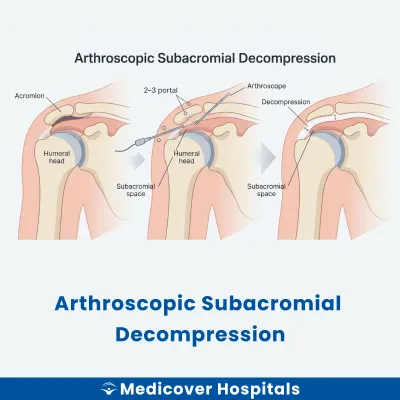
Arthroscopic Subacromial Decompression is a minimally invasive surgical procedure. It involves the shoulder joint, specifically the subacromial space. This space is located beneath the acromion, which is a part of the shoulder blade. The procedure aims to relieve pressure and reduce inflammation by removing bone spurs or soft tissue. This helps in increasing the space for the rotator cuff tendons.
This surgery is needed for conditions like shoulder impingement syndrome. It occurs when the rotator cuff tendons are compressed. If left untreated, it can lead to pain and restricted movement. Modern surgical approaches include arthroscopy, which uses small incisions and a camera. This allows for precise treatment with minimal tissue damage.
Arthroscopic Subacromial Decompression Doctors Near You
Discover experienced orthopedics for arthroscopic subacromial decompression at Medicover Hospitals across India. Choose your city and book a consultation to address your shoulder concerns effectively.
Why Choose Medicover Hospitals for Arthroscopic Subacromial Decompression?
Get a second opinion from trusted experts and makeconfident, informed decisions.
 Get Second Opinion
Complete Guide To Arthroscopic Subacromial Decompression
Everything you need to know about the procedure, preparation, and recovery
Arthroscopic Subacromial Decompression Surgery Indications
Doctors recommend arthroscopic subacromial decompression when non-surgical treatments fail to relieve shoulder pain. This procedure is often suggested for patients experiencing persistent discomfort and limited shoulder movement.
Chronic Shoulder Impingement
Patients often report persistent shoulder pain, especially when lifting the arm. Doctors may find narrowing of the subacromial space on imaging. Surgery is considered when physical therapy and medications do not improve symptoms.
Rotator Cuff Tendinitis
Individuals experience pain and tenderness in the shoulder, often worsening at night. Imaging may show inflammation or thickening of the rotator cuff tendons. Surgery is an option when rest and anti-inflammatory treatments are ineffective.
Subacromial Bursitis
Patients complain of shoulder pain and swelling, with difficulty in overhead activities. Examination and imaging can reveal fluid accumulation in the bursa. Surgery is advised if injections and physiotherapy do not provide relief.
Calcific Tendinitis
Severe shoulder pain and stiffness are common, with calcium deposits visible on X-rays. When conservative treatments like ultrasound therapy fail, surgery may be necessary to remove the deposits.
Partial Rotator Cuff Tears
Patients may have shoulder weakness and pain, with MRI showing partial tears. If strengthening exercises and pain management do not help, surgical intervention is considered to prevent further damage.
How to Prepare for Arthroscopic Subacromial Decompression?
Proper preparation for arthroscopic subacromial decompression ensures a smoother surgery and recovery. Following these steps can help minimise risks and enhance outcomes.
- Medication Review: Stop NSAIDs, anticoagulants, and herbal supplements 7-10 days before surgery. Consult your doctor for specific guidance.
- Fasting Instructions: Do not eat or drink anything for at least 8 hours before the procedure due to anaesthesia requirements.
- Medical History: Bring a list of all medications you take, including dosages, to the hospital.
- Comfortable Clothing: Wear loose-fitting clothes on the day of surgery for ease and comfort post-procedure.
- Transportation: Arrange for someone to drive you home after the surgery, as you will not be able to drive yourself.
- Pre-Surgery Hygiene: Bathe with an antiseptic soap the night before or the morning of the surgery to reduce infection risk.
- Smoking and Alcohol: Avoid smoking and alcohol for at least 24 hours before the surgery to improve recovery.
- Insurance and Documentation: Ensure all necessary paperwork and insurance details are in order. Please contact the hospital for current details as insurance panels may change.
Arthroscopic Subacromial Decompression Surgery (Step-by-Step)
Overview: This procedure is performed by orthopaedic surgeons. It typically takes 1-2 hours. General anaesthesia is commonly used, ensuring the patient is asleep and pain-free.
- Preparation: The patient is positioned to allow easy access to the shoulder. The area is cleaned and sterilised.
- Incision: Small incisions, about 1-2 cm, are made around the shoulder. These allow the insertion of surgical instruments.
- Insertion of Arthroscope: An arthroscope, a small camera, is inserted through one of the incisions. It provides a clear view of the shoulder joint on a monitor.
- Debridement: Using instruments like a curette or coblation wand, the surgeon removes inflamed tissue and bone spurs. This relieves pressure on the rotator cuff.
- Subacromial Space Enlargement: A harmonic scalpel or bipolar cautery may be used to shave down the acromion bone. This increases the space for tendons to move freely.
- Closure: The instruments are removed. The incisions are closed with sutures or sterile strips. A dressing is applied to protect the area.
- Recovery: The patient is moved to a recovery area. They may feel groggy as the anaesthesia wears off. Pain management and post-operative instructions are provided.
Who Performs Arthroscopic Subacromial Decompression Surgery?
Orthopaedic specialists in musculoskeletal conditions, perform this surgery. They are trained in minimally invasive techniques to treat shoulder issues effectively.
Recovery After Arthroscopic Subacromial Decompression Surgery
Recovery from arthroscopic subacromial decompression surgery involves gradual healing and regaining shoulder function. It's important to follow your doctor's advice and attend all follow-up appointments for a smooth recovery.
Day 1-3:
- Rest is crucial. Keep the arm in a sling as advised.
- Apply ice packs to reduce swelling.
- Stick to a soft diet like curd, dal-rice, or soups to avoid discomfort from medication.
Day 4-7:
- Begin gentle shoulder movements as instructed by your physiotherapist.
- Continue with a balanced diet including moong dal and khichdi for energy and healing.
- Avoid lifting heavy objects or strenuous activities.
Week 2-4:
- Gradually increase shoulder exercises to improve range of motion.
- Resume light activities and desk work if comfortable.
- Maintain a nutritious diet to support recovery.
Week 5-8:
- Progress to strengthening exercises under guidance.
- Most can return to regular work or school by the end of this phase.
- Continue avoiding heavy lifting or overhead activities.
When to Seek Urgent Help
Contact your doctor if you experience severe pain, excessive swelling, fever, or any signs of infection like redness or discharge from the incision site. Early intervention can prevent complications.
Benefits of Arthroscopic Subacromial Decompression Surgery
This minimally invasive procedure helps relieve shoulder pain and improve mobility.
- Pain Relief: Reduces shoulder pain caused by impingement.
- Improved Mobility: Enhances range of motion in the shoulder joint.
- Quick Recovery: Shorter recovery time compared to open surgery.
- Less Scarring: Small incisions lead to minimal scarring.
Risks and Complications of Arthroscopic Subacromial Decompression Surgery
While generally safe, this surgery carries certain risks and potential complications.
Common Risks
- Infection at the incision site.
- Shoulder stiffness post-surgery.
Rare Risks
- Damage to surrounding nerves or blood vessels.
- Persistent pain despite surgery.
- Allergic reaction to anaesthesia.
- Blood clots forming in the arm.
Cost of Arthroscopic Subacromial Decompression Surgery
The cost of Arthroscopic Subacromial Decompression Surgery at Medicover Hospitals varies depending on the ward category chosen. Prices range from ₹80,000 and ₹2,50,000. This ensures that patients can select options that best suit their needs and budget.
Medicover Hospitals offers transparent pricing with support for insurance and TPA services. We accept CGHS, ESI, and major TPAs, providing a cashless facility for convenience. Please contact the hospital for the latest insurance panel details as these may change periodically.
Frequently Asked Questions
1. How much does Arthroscopic Subacromial Decompression surgery cost at Medicover Hospitals?
The cost of Arthroscopic Subacromial Decompression surgery at Medicover Hospitals ranges from ₹80,000 and ₹2,50,000, depending on the type of room chosen.
2. Is Arthroscopic Subacromial Decompression surgery covered under health insurance at Medicover?
Yes, Arthroscopic Subacromial Decompression surgery may be covered by CGHS, ESI, and major TPAs with cashless options. Please contact the hospital for current panel details.
3. Will I regain full shoulder mobility post-surgery?
Post-surgery, patients often regain significant shoulder mobility. Full recovery may take several weeks with physiotherapy.
4. Can I lift heavy objects after shoulder surgery?
Avoid lifting heavy objects for at least six weeks post-surgery. Gradual return to normal activities is recommended under medical guidance.
5. Is shoulder pain normal after decompression surgery?
Mild shoulder pain is common in the initial weeks after surgery. Pain management and physiotherapy can help alleviate discomfort.
6. Will I need physiotherapy after shoulder decompression?
Yes, physiotherapy is essential for regaining strength and mobility. It aids in a smoother and faster recovery process.
7. Can I drive immediately after shoulder surgery?
Driving is not recommended immediately after surgery. Patients should wait until they have full control and are pain-free, typically after a few weeks.


