 Call
Call Patient Reports
Hospital for Arthroscopic Rotator Cuff Repair with Revo Suture Anchor Surgery: Safe & Faster Recovery
Arthroscopic Rotator Cuff Repair with Revo Suture Anchor at Medicover Hospitals utilises an advanced endoscopic approach. Our team, with qualifications like MS and DNB, ensures precise surgical intervention. This technique often results in smaller incisions and reduced blood loss, enhancing patient recovery.
Expert Surgeons
Yearly Surgeries
Patient Satisfaction
What is Arthroscopic Rotator Cuff Repair With Revo Suture Anchor?
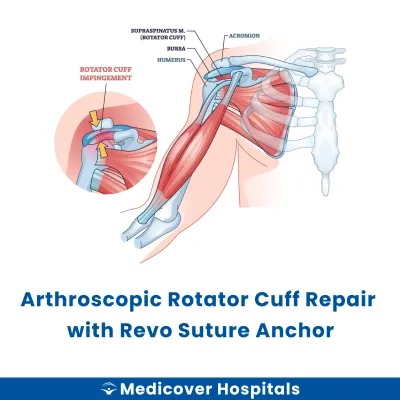
Arthroscopic Rotator Cuff Repair with Revo Suture Anchor is a minimally invasive surgery. It addresses tears in the rotator cuff, a group of muscles and tendons stabilising the shoulder joint. The procedure uses a Revo Suture Anchor, a small device that helps reattach the torn tendons to the bone. This method allows for precise repair with minimal incision.
This surgery is needed for rotator cuff tears caused by injury, overuse, or age-related wear. Untreated tears can lead to shoulder pain, weakness, and limited movement. Modern surgical approaches include arthroscopic techniques, which offer quicker recovery and less scarring compared to open surgery. These methods are effective in restoring shoulder function and reducing discomfort.
Arthroscopic Rotator Cuff Repair With Revo Suture Anchor Doctors Near You
Discover skilled orthopedics for arthroscopic rotator cuff repair with Revo suture anchors at Medicover Hospitals. Choose your city and book a consultation to explore effective treatment options.
Why Choose Medicover Hospitals for Arthroscopic Rotator Cuff Repair With Revo Suture Anchor?
Get a second opinion from trusted experts and makeconfident, informed decisions.
 Get Second Opinion
Complete Guide To Arthroscopic Rotator Cuff Repair With Revo Suture Anchor
Everything you need to know about the procedure, preparation, and recovery
Arthroscopic Rotator Cuff Repair with Revo Suture Anchor Surgery Indications
Doctors recommend arthroscopic rotator cuff repair with Revo suture anchor when non-surgical treatments do not relieve shoulder pain or restore function. This procedure is often suggested for patients with significant tears affecting daily activities.
Persistent Shoulder Pain
Patients experience ongoing shoulder pain, especially at night or during overhead activities. Doctors may find tenderness and weakness in the shoulder. When pain persists despite rest, physical therapy, and medication, surgery is considered.
Limited Shoulder Mobility
Patients report difficulty in moving the shoulder, such as lifting the arm or reaching behind. Examination may reveal reduced range of motion. If mobility does not improve with conservative treatments, surgical intervention is recommended.
Rotator Cuff Tear on Imaging
Imaging tests like MRI or ultrasound show a significant tear in the rotator cuff. Patients might have pain and weakness. When the tear is large or symptoms worsen, surgery becomes necessary.
Weakness in the Shoulder
Patients feel weakness when lifting objects or performing daily tasks. Physical examination shows decreased strength. If strengthening exercises and other treatments fail, surgery is advised.
Failure of Conservative Treatment
Despite months of physical therapy, medications, and lifestyle changes, symptoms persist. Doctors may recommend surgery when non-surgical options do not yield improvement.
How to Prepare for Arthroscopic Rotator Cuff Repair with Revo Suture Anchor?
Proper preparation is crucial for a smooth arthroscopic rotator cuff repair using the Revo Suture Anchor. It helps minimise complications and ensures a quicker recovery.
- Medication Review: Stop NSAIDs, anticoagulants, and herbal supplements as advised by your doctor.
- Fasting Instructions: Fast for at least 8 hours before the procedure due to general anaesthesia.
- Clothing: Wear loose, comfortable clothing on the day of surgery for easy dressing post-procedure.
- Transportation: Arrange for someone to drive you home after the surgery as you may feel drowsy.
- Medication List: Bring a list of your current medications, including dosages, for the medical team.
- Pre-Operative Testing: Complete any required blood tests or imaging studies as directed by your healthcare provider.
- Home Preparation: Set up a comfortable recovery area at home with essentials within easy reach.
- Consultation: Discuss any allergies or previous reactions to anaesthesia with your doctor.
Arthroscopic Rotator Cuff Repair with Revo Suture Anchor Surgery (Step-by-Step)
This procedure is performed by orthopaedic surgeons. It typically lasts 1-2 hours. General anaesthesia is commonly used.
- Preparation: The patient is positioned on the operating table. General anaesthesia is administered to ensure comfort and pain-free experience.
- Incision: Small incisions, about 1-2 cm, are made around the shoulder area. These allow access for the arthroscope and surgical instruments.
- Insertion of Arthroscope: An arthroscope, a small camera, is inserted through one of the incisions. It provides a clear view of the shoulder joint on a monitor.
- Debridement: Instruments like a curette or coblation wand are used to clean the damaged tissue and prepare the rotator cuff for repair.
- Anchor Placement: The Revo Suture Anchor is inserted into the bone. It serves as a secure point to attach the torn tendon.
- Suturing: Sutures are passed through the tendon and secured to the anchor. This reattaches the tendon to the bone, restoring function.
- Closure: The incisions are closed with sutures or surgical tape. A sterile dressing is applied. The patient is monitored as they wake from anaesthesia.
Who Performs Arthroscopic Rotator Cuff Repair with Revo Suture Anchor Surgery?
This surgery is performed by orthopaedic surgeons. They specialise in diagnosing and treating musculoskeletal conditions. Their expertise ensures precise execution of the procedure.
Recovery After Arthroscopic Rotator Cuff Repair with Revo Suture Anchor Surgery
Recovery from arthroscopic rotator cuff repair with Revo Suture Anchor involves gradual healing and rehabilitation. Expect some discomfort initially, but this will improve over time. Following your surgeon's advice is crucial for a smooth recovery.
Day 1-3:
- Rest and keep the arm immobilised in a sling.
- Apply ice packs to reduce swelling.
- Consume light, easily digestible foods like curd, dal-rice, and soups.
Day 4-7:
- Begin gentle finger and wrist movements as advised by your physiotherapist.
- Continue with a soft diet, including khichdi and moong dal.
- Maintain arm support with the sling.
Day 8-14:
- Start passive shoulder exercises under guidance.
- Introduce more solid foods into your diet, ensuring they are nutritious.
- Continue wearing the sling, especially during sleep.
Phase 2 (Week 3-6):
- Gradually increase the range of motion exercises.
- Incorporate more protein-rich foods like paneer and lentils.
- Resume light activities and desk work if comfortable.
Phase 3 (Week 7-12):
- Begin strengthening exercises as per physiotherapy protocol.
- Return to normal diet, focusing on balanced nutrition.
- Gradually return to regular activities, avoiding heavy lifting.
When to Seek Urgent Help
- Severe pain unrelieved by medication.
- Signs of infection such as fever, redness, or discharge at the incision site.
- Numbness or tingling in the arm or hand.
Benefits of Arthroscopic Rotator Cuff Repair with Revo Suture Anchor Surgery
This procedure offers several advantages for individuals with rotator cuff injuries.
- Minimally Invasive: The arthroscopic approach results in smaller incisions, leading to reduced scarring.
- Enhanced Precision: Revo Suture Anchors provide secure fixation, improving repair stability.
- Faster Recovery: Patients often experience quicker rehabilitation compared to traditional open surgery.
- Reduced Pain: Smaller incisions and advanced techniques typically result in less postoperative discomfort.
Risks and Complications of Arthroscopic Rotator Cuff Repair with Revo Suture Anchor Surgery
While generally safe, this surgery carries certain risks and potential complications.
- Common: Infection at the incision site, which may require antibiotics.
- Common: Shoulder stiffness, potentially needing physical therapy for improvement.
- Rare: Nerve injury, which could lead to temporary or permanent weakness.
- Rare: Re-tear of the rotator cuff, necessitating further intervention.
- Rare: Allergic reaction to materials used in the procedure.
Cost of Arthroscopic Rotator Cuff Repair with Revo Suture Anchor Surgery
The cost of Arthroscopic Rotator Cuff Repair with Revo Suture Anchor Surgery at Medicover Hospitals varies from Rs.12,299 to Rs. 530,000 based on the ward category. While specific pricing for this procedure is not listed, costs for similar orthopaedic surgeries range widely. Patients can expect transparent pricing, with support for insurance and TPA, including CGHS, ESI, and major TPAs. Cashless facilities are available to ease the payment process. Please contact the hospital for the latest insurance panel details as these may change periodically.
Frequently Asked Questions
1. How much does Arthroscopic Rotator Cuff Repair with Revo Suture Anchor surgery cost at Medicover Hospitals?
The cost of Arthroscopic Rotator Cuff Repair with Revo Suture Anchor surgery at Medicover Hospitals ranges from Rs.12,299 to Rs. 530,000, depending on the facility and services.
2. Is Arthroscopic Rotator Cuff Repair with Revo Suture Anchor surgery covered under health insurance at Medicover?
Yes, this surgery is often covered by CGHS, ESI, and major TPAs, with cashless options available. Please contact the hospital for current panel details.
3. Will I regain full shoulder mobility after surgery?
Full shoulder mobility is often achievable with proper rehabilitation. Regular physiotherapy is crucial for optimal recovery.
4. Can I drive after Arthroscopic Rotator Cuff Repair?
Driving is generally not recommended for at least 6 weeks post-surgery. Consult your doctor for specific advice based on your recovery.
5. What are the risks of re-injury post-surgery?
Re-injury can occur if the shoulder is overused or strained too soon. Follow your rehabilitation plan closely to minimise this risk.
6. Will I need physiotherapy after the surgery?
Yes, physiotherapy is essential for restoring strength and mobility. It typically starts a few weeks after surgery and continues for several months.
7. Can I lift weights after rotator cuff repair?
Lifting weights is usually restricted for several months post-surgery. Gradual reintroduction is advised under professional supervision.
8. Is a rotator cuff repair a major surgery?
Yes, rotator cuff repair is generally considered a major surgery because it involves repairing torn tendons in the shoulder. However, many procedures are done using minimally invasive arthroscopic surgery, which can reduce recovery time and complications.
9. Do suture anchors get removed?
No, suture anchors are usually left in place permanently after surgery. They are designed to stay in the bone and help the tendon heal securely.
10. How long is recovery from arthroscopic rotator cuff repair?
Recovery typically takes about 4 to 6 months for most daily activities, though full healing may take up to 9–12 months. Physiotherapy plays a key role in regaining strength and movement after rotator cuff repair.


