 Call
Call Patient Reports
Arthroscopic Meniscectomy Surgery by Expert Orthopedics
Arthroscopic Meniscectomy at Medicover Hospitals is performed using advanced arthroscopic techniques. Our team of skilled orthopaedic surgeons, with qualifications like MS and DNB, specialise in treating knee injuries. This minimally invasive procedure ensures smaller incisions and a shorter hospital stay for patients across India.
Expert Surgeons
Yearly Surgeries
Patient Satisfaction
What is Arthroscopic Meniscectomy?
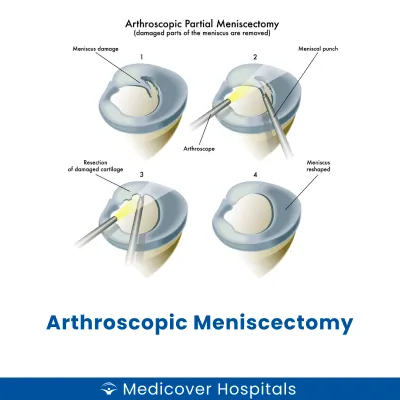
Arthroscopic Meniscectomy is a surgical procedure involving the knee joint. It focuses on removing a damaged meniscus, which is a C-shaped cartilage that cushions the knee. The procedure is performed using an arthroscope, a small camera that allows surgeons to see inside the joint without making large incisions. This minimally invasive technique helps in reducing recovery time and improving outcomes.
This surgery is often needed when the meniscus is torn due to injury or degeneration. Conditions like meniscal tears can cause pain, swelling, and limited knee movement. If untreated, it may lead to chronic knee problems or arthritis. Modern surgical approaches for Arthroscopic Meniscectomy include partial or total meniscectomy, depending on the extent of the damage.
Arthroscopic Meniscectomy Doctors Near You
Discover expert orthopedics for arthroscopic meniscectomy at Medicover Hospitals across India. Choose your city to find specialists and book a consultation for your knee care needs today.
Why Choose Medicover Hospitals for Arthroscopic Meniscectomy?
Get a second opinion from trusted experts and makeconfident, informed decisions.
 Get Second Opinion
Complete Guide To Arthroscopic Meniscectomy
Everything you need to know about the procedure, preparation, and recovery
Arthroscopic Meniscectomy Surgery Indications
Doctors recommend arthroscopic meniscectomy when a patient has a meniscus tear that does not heal with conservative treatments. This procedure helps relieve pain and restore knee function.
Persistent Knee Pain
Patients often experience sharp or aching knee pain, especially during movement. Doctors may find tenderness along the joint line. When pain persists despite rest, physiotherapy, and medication, surgery may be advised.
Locking or Catching Sensation
Some patients report a locking or catching sensation in the knee, making it difficult to fully straighten or bend the leg. Imaging tests like MRI can show a displaced meniscus fragment. If these symptoms interfere with daily activities, surgery might be necessary.
Swelling and Stiffness
Recurrent swelling and stiffness in the knee can occur, often worsening after physical activity. Examination may reveal fluid accumulation. When these symptoms do not improve with conservative measures, surgical intervention is considered.
Limited Range of Motion
Patients may notice a reduced ability to move the knee freely. Physical exams and imaging can show mechanical blockages. If exercises and other treatments fail, surgery is an option.
Failed Conservative Treatment
Conservative treatments like rest, ice, compression, elevation, and physiotherapy may not always alleviate symptoms. When these methods do not provide relief, arthroscopic meniscectomy may be recommended.
How to Prepare for Arthroscopic Meniscectomy?
Proper preparation for an arthroscopic meniscectomy can help ensure a smooth procedure and recovery. It helps reduce risks and improve outcomes.
- Medication Review: Stop NSAIDs, anticoagulants, and herbal supplements as advised by your doctor.
- Fasting Instructions: Do not eat or drink for at least 8 hours before the surgery due to anaesthesia requirements.
- Clothing: Wear loose, comfortable clothing on the day of the surgery for ease of dressing and undressing.
- Transportation: Arrange for someone to drive you home after the procedure as you may feel drowsy.
- Medication List: Bring a list of all medications you take, including dosages, for the medical team.
- Pre-Surgery Bathing: Follow any specific instructions given for bathing or cleaning the surgical area.
- Home Preparation: Prepare your home for easy access and comfort during recovery, such as setting up a resting area.
- Communication: Discuss any allergies or previous reactions to anaesthesia with your healthcare provider.
Arthroscopic Meniscectomy Surgery (Step-by-Step)
Overview: Arthroscopic meniscectomy is performed by orthopaedic surgeons. The procedure typically lasts 30 to 60 minutes. It is usually done under regional or general anaesthesia.
- Preparation: The patient is positioned on the operating table. Anaesthesia is administered to ensure comfort throughout the procedure.
- Incision: Small incisions (1-2 cm) are made around the knee. These allow the insertion of surgical instruments.
- Insertion of Arthroscope: An arthroscope, a small camera, is inserted through one of the incisions. It provides a clear view of the knee joint on a monitor.
- Examination: The surgeon examines the meniscus and surrounding structures. This helps in assessing the extent of the damage.
- Meniscus Removal: Using instruments like a curette or coblation wand, the damaged part of the meniscus is carefully removed. This helps in relieving pain and restoring function.
- Closure: The incisions are closed with sutures or surgical tape. A sterile dressing is applied to protect the area.
- Recovery: The patient is moved to a recovery area. They are monitored as the anaesthesia wears off. Instructions for post-operative care are provided.
Who Performs Arthroscopic Meniscectomy Surgery?
Arthroscopic meniscectomy is performed by orthopaedic surgeons. These specialists are trained in diagnosing and treating joint issues. They use minimally invasive techniques to ensure effective treatment and quicker recovery. Please contact the hospital for current details as insurance panels may change.
Recovery After Arthroscopic Meniscectomy Surgery
Recovery from arthroscopic meniscectomy surgery is generally smooth, with most patients resuming normal activities within a few weeks. However, individual recovery times may vary. Following your surgeon's advice and adhering to a rehabilitation plan is crucial for optimal healing.
Day 1-3:
- Rest and elevate your leg to reduce swelling.
- Apply ice packs as recommended by your doctor.
- Begin gentle knee movements as advised.
- Stick to a light diet with foods like curd, dal-rice, and soups to aid digestion.
Day 4-7:
- Continue with prescribed physiotherapy exercises.
- Gradually increase walking with support if needed.
- Include protein-rich foods like moong dal and khichdi in your diet for muscle repair.
- Avoid strenuous activities and heavy lifting.
Week 2-4:
- Increase activity levels as tolerated, focusing on strengthening exercises.
- Most patients can return to work or school by the end of this phase, depending on the job's physical demands.
- Maintain a balanced diet to support healing.
Phase 2 (Month 1-2):
- Engage in low-impact activities like swimming or cycling.
- Avoid high-impact sports until cleared by your doctor.
- Continue with a nutritious diet to maintain energy levels.
When to Seek Urgent Help
- Severe pain unrelieved by medication.
- Excessive swelling or redness around the knee.
- Fever or chills indicating possible infection.
- Sudden inability to move the knee.
Benefits of Arthroscopic Meniscectomy Surgery
Arthroscopic meniscectomy is a minimally invasive procedure aimed at treating meniscus tears in the knee. It offers several benefits for patients.
- Quick Recovery: Patients often experience a faster recovery compared to open surgery.
- Reduced Pain: Many patients report significant pain relief post-surgery.
- Improved Mobility: The procedure can enhance knee function and mobility.
- Minimally Invasive: Smaller incisions lead to less scarring and quicker healing.
Risks and Complications of Arthroscopic Meniscectomy Surgery
While generally safe, arthroscopic meniscectomy carries certain risks and potential complications. It is important to be aware of these before undergoing the procedure.
- Common: Swelling and stiffness in the knee post-surgery.
- Common: Temporary pain or discomfort during the recovery period.
- Rare: Infection at the site of incision.
- Rare: Blood clots forming in the leg.
- Rare: Damage to surrounding nerves or blood vessels.
- Rare: Persistent knee pain or instability.
Cost of Arthroscopic Meniscectomy Surgery
The cost of Arthroscopic Meniscectomy Surgery at Medicover Hospitals varies depending on the ward category chosen. Prices range from Rs. 12,299 to Rs. 39,589 across different ward types. Our transparent pricing ensures you know what to expect. We offer insurance and TPA support, accepting CGHS, ESI, and major TPAs. A cashless facility is also available for your convenience. Please contact the hospital for the latest insurance panel details as these may change periodically.
Frequently Asked Questions
1. How much does Arthroscopic Meniscectomy surgery cost at Medicover Hospitals?
The cost of Arthroscopic Meniscectomy surgery at Medicover Hospitals ranges from Rs. 12,299 to Rs. 39,589, depending on the type of care and room chosen.
2. Is Arthroscopic Meniscectomy surgery covered under health insurance at Medicover?
Arthroscopic Meniscectomy surgery is often covered by CGHS, ESI, and major TPAs. Please contact the hospital for current panel details.
3. Will I need crutches after meniscectomy?
Yes, crutches are typically needed for a few days to a week after surgery to aid mobility and reduce knee strain.
4. Can I kneel after meniscectomy?
Kneeling may be uncomfortable initially and should be avoided for a few weeks post-surgery to allow proper healing of the knee.
5. Will I have knee stiffness after meniscectomy?
Some knee stiffness is common after surgery, but physical therapy helps improve flexibility and reduce stiffness over time.
6. Can I practice yoga after meniscectomy?
You can resume gentle yoga after 4-6 weeks, focusing on low-impact poses that do not strain the knee.
7. Is swelling normal after meniscectomy?
Swelling is normal and can last for a few weeks. Ice packs and elevation help reduce swelling effectively.


