 Call
Call Patient Reports
Arthroscopic Capsular Release Surgery by Expert Orthopedics
At Medicover Hospitals, Arthroscopic Capsular Release is performed using advanced arthroscopic techniques by our experienced orthopaedic surgeons with qualifications like MS and DNB. This minimally invasive procedure results in smaller incisions and a shorter hospital stay, enhancing patient recovery across India.
Expert Surgeons
Yearly Surgeries
Patient Satisfaction
What is Arthroscopic Capsular Release?
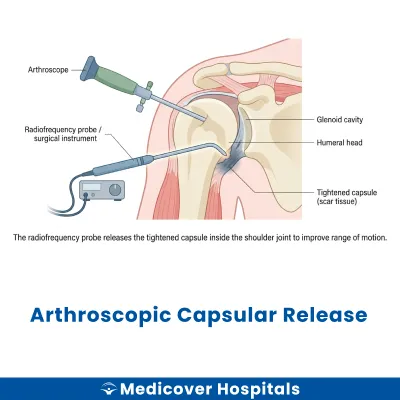
Arthroscopic Capsular Release is a minimally invasive surgical procedure. It involves the shoulder joint. The procedure uses an arthroscope (a small camera) to view and release the tight capsule (the tissue surrounding the joint). This helps improve movement and reduce pain. The surgery is performed through small incisions, allowing for quicker recovery.
This surgery is needed for conditions like adhesive capsulitis (frozen shoulder). It occurs when the shoulder capsule thickens and tightens. This restricts movement and causes pain. If untreated, it can lead to chronic stiffness and discomfort. Modern surgical approaches include arthroscopic techniques, which are less invasive. They offer faster recovery and less post-operative pain compared to traditional methods.
Arthroscopic Capsular Release Doctors Near You
Find expert orthopedics for arthroscopic capsular release at Medicover Hospitals across India. Choose your city and book a consultation to discuss your treatment options today.
Why Choose Medicover Hospitals for Arthroscopic Capsular Release?
Get a second opinion from trusted experts and makeconfident, informed decisions.
 Get Second Opinion
Complete Guide To Arthroscopic Capsular Release
Everything you need to know about the procedure, preparation, and recovery
Arthroscopic Capsular Release Surgery Indications
Doctors recommend arthroscopic capsular release when shoulder movement is severely restricted. This procedure is often considered after conservative treatments fail to improve symptoms.
Frozen Shoulder
Patients experience persistent shoulder stiffness and pain, limiting daily activities. On examination, doctors find reduced range of motion. When physiotherapy and medications do not relieve symptoms, surgery is suggested.
Chronic Shoulder Pain
Patients report ongoing shoulder pain that worsens with movement. Imaging may show thickened joint capsule. If pain persists despite medication and physical therapy, surgery may be necessary.
Adhesive Capsulitis
Patients have difficulty moving their shoulder due to adhesions. Doctors observe restricted joint movement and confirm with imaging. When non-surgical methods fail, capsular release is considered.
Post-Traumatic Stiffness
After shoulder injury, patients may develop stiffness and pain. Examination reveals limited motion and scar tissue formation. If rehabilitation does not restore function, surgery is advised.
Failed Conservative Treatment
Patients who do not respond to physical therapy, medications, or injections may need surgery. Doctors recommend it when other treatments do not improve shoulder mobility or reduce pain.
How to Prepare for Arthroscopic Capsular Release?
Proper preparation is crucial for a smooth Arthroscopic Capsular Release. It helps reduce risks and ensures a quicker recovery.
- Medication Review: Stop NSAIDs, anticoagulants, and herbal supplements as advised by your doctor.
- Fasting: Fast for at least 8 hours before the surgery if general anaesthesia is used.
- Pre-Surgery Exercises: Perform any recommended shoulder exercises to maintain mobility.
- Clothing: Wear loose, comfortable clothing on the day of surgery for easy dressing post-operation.
- Transport: Arrange for someone to drive you home after the procedure, as you won't be able to drive.
- Medication List: Bring a list of your current medications with dosages for the medical team.
- Smoking and Alcohol: Avoid smoking and alcohol for at least 24 hours before surgery.
- Pre-Op Instructions: Follow any specific instructions given by your healthcare provider.
Arthroscopic Capsular Release Surgery (Step-by-Step)
Overview: Arthroscopic Capsular Release is performed by orthopaedic surgeons. The procedure typically lasts 1-2 hours. It is usually done under general anaesthesia, ensuring the patient is asleep and pain-free.
- Preparation: The patient is positioned comfortably. The surgical area is sterilised to prevent infection.
- Incision: Small incisions, about 1-2 cm, are made around the shoulder. These allow the insertion of surgical instruments.
- Insertion of Arthroscope: An arthroscope, a small camera, is inserted through one of the incisions. It provides a clear view of the shoulder joint on a monitor.
- Capsular Release: Using instruments like a coblation wand or harmonic scalpel, the surgeon carefully cuts and releases the tight shoulder capsule. This increases joint mobility.
- Inspection and Repair: The surgeon inspects the joint for any additional issues. If necessary, repairs are made using tools such as a curette or bipolar cautery.
- Closure: The instruments are removed. The incisions are closed with sutures or sterile strips. A dressing is applied to protect the area.
- Recovery: The patient is moved to a recovery room. As the anaesthesia wears off, they are monitored for any immediate post-operative concerns.
Who Performs Arthroscopic Capsular Release Surgery?
Orthopaedic Surgeons with expertise in minimally invasive procedures perform Arthroscopic Capsular Release. They are trained to handle complex joint issues and use specialised instruments for precise surgical intervention.
Recovery After Arthroscopic Capsular Release Surgery
Recovery from arthroscopic capsular release surgery involves gradual improvement in shoulder mobility and reduction in pain. It's essential to follow your doctor's advice for a smooth recovery process.
Day 1-3:
- Rest and keep the shoulder elevated to reduce swelling.
- Apply ice packs as recommended to manage pain and inflammation.
- Start with light shoulder movements as advised by your physiotherapist.
Day 4-7:
- Continue with prescribed physiotherapy exercises to improve range of motion.
- Introduce soft foods like curd, dal-rice, and khichdi to maintain nutrition and aid recovery.
- Avoid lifting heavy objects or strenuous activities.
Week 2-4:
- Gradually increase the intensity of physiotherapy exercises.
- Incorporate protein-rich foods like moong dal and soups into your diet.
- Most patients can resume light work or school activities, depending on comfort and doctor's advice.
Week 5-8:
- Focus on strengthening exercises to regain full shoulder function.
- Continue a balanced diet to support healing.
- Consult your doctor before resuming sports or heavy physical activities.
When to Seek Urgent Help
- Severe pain unrelieved by medication.
- Signs of infection like fever, redness, or discharge at the incision site.
- Sudden inability to move the shoulder.
Benefits of Arthroscopic Capsular Release Surgery
Arthroscopic capsular release is a minimally invasive procedure aimed at relieving pain and restoring movement in a stiff shoulder.
- Pain Relief: This procedure can significantly reduce shoulder pain.
- Improved Mobility: It helps restore a greater range of motion in the shoulder joint.
- Quick Recovery: Being minimally invasive, it often allows for a faster recovery compared to open surgery.
- Outpatient Procedure: It is typically performed as an outpatient surgery, allowing patients to return home the same day.
Risks and Complications of Arthroscopic Capsular Release Surgery
While generally safe, arthroscopic capsular release carries some risks and potential complications.
Common Risks
- Swelling and bruising around the shoulder area.
- Temporary pain or discomfort post-surgery.
Rare Risks
- Infection at the incision site.
- Damage to surrounding nerves or blood vessels.
- Stiffness or recurrence of shoulder immobility.
- Adverse reaction to anaesthesia.
Cost of Arthroscopic Capsular Release Surgery
The cost of Arthroscopic Capsular Release Surgery at Medicover Hospitals varies based on the ward category chosen. Prices range from ₹70,000 to ₹2,50,000 across different ward types. Our pricing is transparent, and we offer support for insurance and TPA, including CGHS, ESI, and major TPAs. A cashless facility is also available for your convenience. Please contact the hospital for the latest insurance panel details as these may change periodically.
Frequently Asked Questions
1. How much does Arthroscopic Capsular Release cost?
The cost of Arthroscopic Capsular Release surgery at Medicover Hospitals ranges from ₹70,000 to ₹2,50,000 depending on the type of room and care.
2. Is Arthroscopic Capsular Release covered by insurance?
Arthroscopic Capsular Release surgery may be covered by CGHS, ESI, and major TPAs, offering cashless options. Please contact the hospital for current panel details.
3. Will I regain full shoulder movement post-surgery?
Post-surgery, many patients experience improved shoulder movement. Full recovery may take a few months with physiotherapy and regular exercises.
4. Can I drive immediately after shoulder surgery?
Driving is not recommended immediately after Arthroscopic Capsular Release. Patients should wait until advised by their doctor, typically a few weeks.
5. Will I need physiotherapy after the surgery?
Yes, physiotherapy is crucial after Arthroscopic Capsular Release to restore shoulder function. It helps in regaining strength and range of motion.
6. Can I lift heavy objects post-surgery?
Lifting heavy objects should be avoided immediately after surgery. Gradual return to such activities is advised, usually after consulting with your doctor.
7. What foods aid recovery after shoulder surgery?
A balanced diet with curd, dal-rice, and khichdi can aid recovery. These foods provide essential nutrients for healing and energy.


