 Call
Call Patient Reports
Arthrodesis of Major Joints Surgery Hospital with Expert Joint Reconstruction Care
Arthrodesis of major joints at Medicover Hospitals is performed using open surgical techniques by our skilled orthopaedic surgeons with qualifications like MS and DNB. This procedure is crucial for stabilising joints affected by severe arthritis or injury, often resulting in reduced pain and improved joint function.
Expert Surgeons
Yearly Surgeries
Patient Satisfaction
What is Arthrodesis of Major Joints?
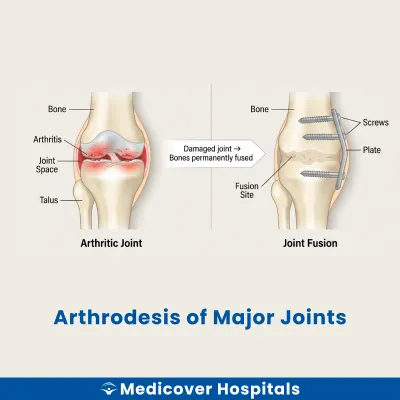
Arthrodesis of major joints is a surgical procedure that fuses bones in a joint, eliminating movement. This procedure is commonly performed on joints like the ankle, knee, or hip. By fusing the bones, arthrodesis (joint fusion) provides stability and alleviates pain in the affected area.
This surgery is often needed for severe arthritis, joint infections, or significant joint damage. Conditions like osteoarthritis or rheumatoid arthritis may lead to this procedure. If left untreated, these conditions can cause chronic pain and impaired mobility. Modern surgical approaches for arthrodesis include open surgery and minimally invasive techniques like arthroscopy. These methods aim to reduce recovery time and improve outcomes.
Arthrodesis of Major Joints Doctors Near You
Discover orthopedics for arthrodesis of major joints at Medicover Hospitals across India. Choose your city and book a consultation to explore treatment options with our experienced specialists.
Why Choose Medicover Hospitals for Arthrodesis of Major Joints?
Get a second opinion from trusted experts and makeconfident, informed decisions.
 Get Second Opinion
Complete Guide To Arthrodesis Of Major Joints
Everything you need to know about the procedure, preparation, and recovery
Arthrodesis of Major Joints Surgery Indications
Doctors recommend arthrodesis of major joints when joint pain and dysfunction severely impact daily life. This procedure is considered when other treatments fail to provide relief.
Severe Osteoarthritis
Patients often experience chronic joint pain and stiffness, limiting mobility. X-rays may show significant joint space narrowing and bone spurs. When medications and physical therapy no longer alleviate symptoms, surgery may be advised.
Rheumatoid Arthritis
Persistent joint swelling and pain are common, with possible deformities. Blood tests may reveal elevated inflammatory markers. If disease-modifying drugs and biologics fail to control symptoms, arthrodesis might be necessary.
Post-Traumatic Arthritis
After a joint injury, patients may suffer from ongoing pain and instability. Imaging may show joint surface irregularities. When conservative treatments like braces and injections do not help, surgery could be the solution.
Joint Infection
Patients may have severe pain, redness, and swelling in the joint. Lab tests might show elevated white blood cell counts and positive cultures. If antibiotics and drainage do not resolve the infection, arthrodesis can stabilize the joint.
Failed Joint Replacement
Patients may experience pain and limited function after a joint replacement. Imaging might reveal loosening or misalignment of the prosthesis. When revision surgery is not feasible, arthrodesis may be considered.
How to Prepare for Arthrodesis of Major Joints?
Proper preparation is crucial for arthrodesis of major joints to ensure a smooth surgery and recovery. It helps in reducing complications and aids in faster healing.
- Medication Review: Stop NSAIDs, anticoagulants, and herbal supplements as advised by your doctor.
- Fasting Instructions: Fast for at least 8 hours before the surgery if general anaesthesia is planned.
- Pre-Surgery Tests: Complete any required blood tests, X-rays, or other imaging tests as scheduled.
- Clothing: Wear loose, comfortable clothing on the day of the surgery for ease of movement post-procedure.
- Transportation: Arrange for someone to drive you home after the surgery, as you will not be able to drive yourself.
- Medication List: Bring a list of all medications you are currently taking, including dosages, to the hospital.
- Home Preparation: Prepare your home for easy access and movement during recovery, such as removing obstacles.
- Smoking and Alcohol: Avoid smoking and alcohol for a few weeks before and after the surgery to promote healing.
Arthrodesis of Major Joints Surgery (Step-by-Step)
Arthrodesis of major joints is performed by orthopaedic surgeons. The procedure typically lasts 2-4 hours. It is done under general or regional anaesthesia.
- Preparation: The patient is positioned to allow access to the joint. The area is cleaned and sterilised. Anaesthesia is administered to ensure the patient is comfortable and pain-free.
- Incision: A 1-2 cm incision is made over the joint. This allows the surgeon to access the joint space.
- Joint Surface Preparation: The surgeon uses a curette to remove any remaining cartilage from the joint surfaces. This helps in achieving bone fusion.
- Bone Grafting: Bone graft material is placed between the joint surfaces. This promotes fusion and stability. The graft can be taken from the patient or a donor.
- Fixation: The joint is stabilised using screws, plates, or rods. These instruments hold the bones in place until fusion occurs.
- Closure: The incision is closed with sutures or staples. A sterile dressing is applied to protect the wound.
- Recovery: The patient is moved to a recovery area. Pain management and monitoring are provided as the anaesthesia wears off.
Who Performs Arthrodesis of Major Joints Surgery?
Orthopaedic surgeons perform arthrodesis of major joints. They specialise in diagnosing and treating musculoskeletal conditions. These specialists have extensive training in surgical techniques and joint fusion procedures.
Recovery After Arthrodesis of Major Joints Surgery
Recovery from arthrodesis of major joints surgery involves a gradual process where the joint is allowed to heal and fuse. It requires patience and adherence to medical advice to ensure optimal healing.
Day 1-3:
- Hospital stay is common. Pain management and monitoring are priorities.
- Begin with a liquid diet, gradually introducing soft foods like curd and soups.
Day 4-7:
- Discharge from the hospital may occur. Continue pain management at home.
- Introduce light meals such as dal-rice and khichdi. Stay hydrated.
- Limited movement with assistance. Avoid putting weight on the affected joint.
Week 2-4:
- Follow-up appointments to check healing progress.
- Gradual introduction of moong dal and other easily digestible foods.
- Begin gentle physiotherapy as advised by your doctor.
- Work or school may resume if it involves minimal physical activity.
Month 2-3:
- Increased mobility with continued physiotherapy.
- Normal diet can be resumed, focusing on balanced nutrition.
- Gradual return to daily activities, avoiding strenuous tasks.
When to Seek Urgent Help:
- Severe pain unrelieved by medication.
- Fever or signs of infection at the surgical site.
- Sudden swelling or redness around the joint.
- Numbness or loss of movement in the limb.
Benefits of Arthrodesis of Major Joints Surgery
Arthrodesis of major joints can provide significant relief and improve function for patients with severe joint issues.
- Pain Relief: This procedure can significantly reduce chronic joint pain.
- Stability Improvement: It enhances joint stability, which can aid in better mobility.
- Increased Functionality: Patients may experience improved joint functionality post-surgery.
- Long-term Solution: It offers a durable solution for joint conditions that do not respond to other treatments.
Risks and Complications of Arthrodesis of Major Joints Surgery
While arthrodesis can be beneficial, it also carries certain risks and potential complications.
- Infection: There is a risk of infection at the surgical site.
- Non-union: The bones may not fuse as expected, requiring additional treatment.
- Nerve Damage: There is a possibility of nerve injury during the procedure.
- Blood Clots: Surgery can increase the risk of developing blood clots.
- Hardware Complications: Issues with surgical hardware may occur, necessitating further intervention.
Cost of Arthrodesis of Major Joints Surgery
The cost of Arthrodesis of Major Joints surgery at Medicover Hospitals varies depending on the ward category. Prices range from Rs.54,000 to Rs.84,500 across different ward types. This ensures that patients can choose a suitable option based on their preferences and budget.
Medicover Hospitals offers transparent pricing with support for insurance and TPA, including CGHS, ESI, and major TPAs. A cashless facility is also available for a hassle-free experience. Please contact the hospital for the latest insurance panel details as these may change periodically.
Frequently Asked Questions
1. How much does arthrodesis of major joints surgery cost at Medicover Hospitals?
The cost of arthrodesis of major joints surgery ranges from Rs.54,000 to Rs.84,500 across Medicover Hospitals, depending on the specifics of your case.
2. Is arthrodesis of major joints surgery covered under health insurance at Medicover?
arthrodesis of major joints surgery is often covered by CGHS, ESI, and major TPAs. Please contact the hospital for current panel details.
3. Will I need crutches after arthrodesis?
Yes, you may need crutches for support after arthrodesis surgery. This helps in healing and prevents stress on the joint.
4. Can I bend the joint after arthrodesis?
No, arthrodesis results in the joint being permanently fixed. Bending will not be possible after the surgery.
5. Will arthrodesis affect my mobility?
Arthrodesis can limit the movement of the affected joint. However, it aims to relieve pain and improve overall function.
6. What foods help in recovery after arthrodesis?
Include protein-rich foods like dal and curd, and fibre-rich options like khichdi. These support bone healing and overall recovery.
7. Is there a risk of infection after arthrodesis?
Yes, there is a risk of infection, as with any surgery. Proper wound care and hygiene can help mitigate this risk.


