 Call
Call Patient Reports
Application of Plaster of Paris Cast Procedure at Medicover Hospitals
At Medicover Hospitals, our orthopaedic specialists, with qualifications like MS and DNB, expertly apply Plaster of Paris casts using the open surgical approach. This technique stabilises fractures and injuries, promoting effective healing. Patients often experience shorter hospital stays due to efficient treatment.
Expert Specialists
Yearly Treatments
Patient Satisfaction
What is Application of Plaster of Paris Cast?
The application of a Plaster of Paris cast is a medical procedure used to immobilise a fractured bone. It is commonly applied to limbs, such as the arm (humerus, radius, ulna) or leg (femur, tibia, fibula). The cast is made from a bandage soaked in water and Plaster of Paris, which hardens to hold the bone in place. This allows proper healing by keeping the bone aligned.
This procedure is essential for treating fractures and preventing complications. Conditions like broken bones or severe sprains require immobilisation to heal correctly. Without treatment, improper healing can lead to deformity or chronic pain. Modern approaches include fibreglass casts and air casts, which are lighter and more comfortable. However, Plaster of Paris remains a reliable choice for certain fractures.
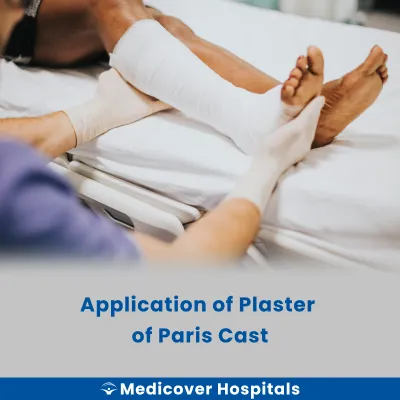
Application of Plaster of Paris Cast Doctors Near You
Find expert orthopedics for Plaster of Paris cast application at Medicover Hospitals across India. Choose your city and book a consultation to ensure proper care and recovery.
Why Choose Medicover Hospitals for Application of Plaster of Paris Cast?
Get a second opinion from trusted experts and makeconfident, informed decisions.
 Get Second Opinion
Complete Guide To Application Of Plaster Of Paris Cast
Everything you need to know about the procedure, preparation, and recovery
Application of Plaster of Paris Cast procedure Indications
Doctors recommend the application of a Plaster of Paris cast to immobilize and support injured limbs. This procedure is often necessary when fractures or severe sprains occur, ensuring proper healing and alignment.
Fractures
Patients with fractures often experience intense pain, swelling, and inability to move the affected limb. X-rays reveal broken bones that require stabilization. When conservative treatments like splinting do not suffice, a cast is applied to ensure proper healing.
Severe Sprains
Severe sprains cause significant pain, swelling, and bruising. Physical examination may show joint instability. If symptoms persist despite rest and physiotherapy, a cast may be used to immobilize the joint and promote recovery.
Ligament Tears
Ligament tears result in joint pain, swelling, and limited movement. MRI scans can confirm the extent of the tear. When non-surgical interventions fail to restore function, a cast helps immobilize the area for healing.
Post-Surgical Immobilization
After certain orthopedic surgeries, patients may need immobilization to protect surgical repairs. Doctors use casts to ensure the operated area remains stable during the initial healing phase.
Bone Realignment
When bones are misaligned due to injury, patients may experience deformity and pain. X-rays confirm misalignment. A cast helps maintain correct positioning after manual realignment procedures.
How to Prepare for Application of Plaster of Paris Cast?
Proper preparation is crucial for the effective application of a Plaster of Paris cast. It ensures comfort and reduces complications during the procedure.
- Medication Review: Stop NSAIDs, anticoagulants, and herbal supplements as advised by your doctor.
- Fasting Guidelines: If sedation is required, fast for at least 6 hours before the procedure.
- Skin Preparation: Clean the affected area thoroughly to prevent infection.
- Clothing Choice: Wear loose-fitting clothes for easy access to the injury site.
- Transportation: Arrange for someone to drive you home after the procedure.
- Medication List: Bring a list of current medications with dosages for reference.
- Comfort Measures: Consider bringing a pillow or cushion for support during the procedure.
- Communication: Inform the medical team of any allergies or previous reactions to materials used in casting.
Application of Plaster of Paris Cast procedure (Step-by-Step)
Overview: The application of a Plaster of Paris cast is performed by orthopaedic specialists. It typically takes about 30 to 60 minutes. The procedure usually requires no anaesthesia, but local anaesthesia may be used if needed.
- Preparation: The affected area is cleaned and dried. The patient is positioned comfortably. Protective padding is applied to prevent skin irritation.
- Application of Stockinette: A stockinette is placed over the area to be cast. It acts as a protective layer between the skin and the cast.
- Padding Application: Soft padding is wrapped around the stockinette. This padding provides cushioning and helps in moulding the cast.
- Mixing Plaster: Plaster of Paris bandages are soaked in water. This activates the plaster, making it ready for application.
- Applying Plaster Bandages: The wet plaster bandages are wrapped around the padded area. The orthopaedic specialist moulds the plaster to fit the limb's shape.
- Smoothing and Setting: The plaster is smoothed out to ensure evenness. The patient remains still while the plaster sets, which takes about 10-15 minutes.
- Final Adjustments: Once set, the cast is checked for comfort and fit. Any rough edges are trimmed for patient comfort.
Who Performs Application of Plaster of Paris Cast procedure?
Orthopaedic specialists perform the application of Plaster of Paris casts. These professionals have expertise in bone and joint care. They ensure the cast is applied correctly to aid in proper healing and provide support to the injured area.
Recovery After Application of Plaster of Paris Cast procedure
After the application of a Plaster of Paris cast, it's important to allow the affected area to heal properly. Recovery involves managing discomfort, ensuring proper nutrition, and gradually resuming daily activities.
Day 1-3:
- Keep the cast elevated to reduce swelling.
- Avoid getting the cast wet. Use a plastic cover during showers.
- Rest and limit movement of the affected limb.
Day 4-7:
- Continue elevating the limb as needed.
- Engage in light activities that do not stress the cast.
- Include calcium-rich foods like curd and paneer in your diet to support bone healing.
Week 2-4:
- Gradually increase activity levels, but avoid strenuous tasks.
- Consume balanced meals with dal-rice, khichdi, and moong dal to maintain energy levels.
- Most individuals can return to work or school, depending on the nature of their activities.
Week 4-6:
- Follow up with your doctor to assess healing progress.
- Continue with a nutritious diet, including soups and vegetables.
- Begin gentle exercises as advised by your healthcare provider.
When to Seek Urgent Help
- Severe pain or swelling that does not improve with elevation.
- Foul odour or discharge from the cast.
- Numbness or tingling in the fingers or toes.
- Difficulty moving the fingers or toes.
Please contact the hospital for current details as insurance panels may change.
Benefits of Application of Plaster of Paris Cast procedure
Plaster of Paris casts are commonly used to immobilise broken bones and support healing.
- Effective Immobilisation: Provides strong support to keep the bone in place.
- Custom Fit: Moulds easily to the shape of the limb for a snug fit.
- Cost-Effective: Generally more affordable than other immobilisation options.
- Widely Available: Easily accessible at most healthcare facilities.
Risks and Complications of Application of Plaster of Paris Cast procedure
While generally safe, there are some risks associated with plaster casts.
Common Risks
- Skin Irritation: Can cause itching or rashes under the cast.
- Swelling: May lead to discomfort or tightness if swelling occurs.
- Odour: Moisture trapped inside can cause unpleasant smells.
Rare Risks
- Compartment Syndrome: Increased pressure can cause severe pain and tissue damage.
- Allergic Reaction: Some individuals may react to the plaster material.
- Circulation Issues: Improper application can affect blood flow.
Cost of Application of Plaster of Paris Cast procedure
The cost for the Application of Plaster of Paris Cast procedure across Medicover Hospitals ranges from ₹1,000 to ₹10,000 per bandage. The price varies depending on the ward category chosen, such as outpatient, day care, or private rooms.
We offer transparent pricing with support for insurance and TPA, including CGHS, ESI, and major TPAs. A cashless facility is also available for your convenience. Please contact the hospital for the latest insurance panel details as these may change periodically.
Frequently Asked Questions
1. How much does Application of Plaster of Paris Cast procedure cost at Medicover Hospitals?
The cost ranges from ₹1,000 to ₹10,000 per bandage across Medicover Hospitals, depending on the type of cast and care setting.
2. Is Application of Plaster of Paris Cast procedure covered under health insurance at Medicover?
Many insurance plans, including CGHS and ESI, may cover this procedure. Please contact the hospital for current panel details.
3. Can I shower with a Plaster of Paris cast?
No, you should avoid getting the cast wet as it can weaken and lose its shape. Use a waterproof cover while bathing.
4. Will I need physiotherapy after cast removal?
Yes, physiotherapy is often recommended to restore strength and mobility. It typically involves exercises tailored to your specific injury.
5. Can I drive with a Plaster of Paris cast?
Driving is generally not advised with a cast, especially if it affects your arms or legs. Consult your doctor for specific guidance.
6. What should I do if my cast feels tight?
If your cast feels tight, it could be due to swelling. Elevate the limb and contact your doctor if discomfort persists.
7. Can I play sports after cast removal?
You should gradually return to sports, starting with light activities. Full participation is usually advised after 4-6 weeks, based on recovery.


