 Call
Call Patient Reports
Antrostomy Procedure Hospital with Advanced Care
Antrostomy at Medicover Hospitals is performed using advanced endoscopic techniques by our skilled ENT surgeons with qualifications like MS and DNB. This minimally invasive approach ensures smaller incisions and reduced blood loss, promoting a quicker recovery for patients across India.
Expert Surgeons
Yearly Surgeries
Patient Satisfaction
What is Antrostomy?
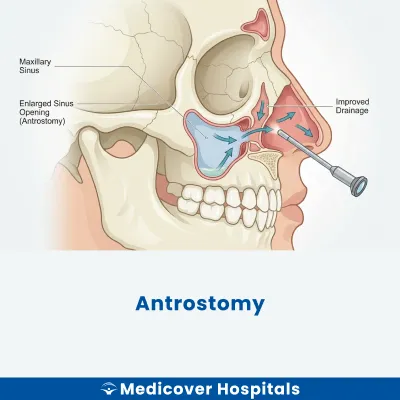
Antrostomy is a surgical procedure involving the maxillary sinus. It involves creating an opening in the sinus to improve drainage. The maxillary sinus is located in the cheek area. This procedure helps alleviate blockages and infections. It is often performed using endoscopic techniques for better precision.
Antrostomy is needed when there is chronic sinusitis or recurrent infections. These conditions can cause pain, swelling, and breathing difficulties. If left untreated, they may lead to more severe infections or complications. Modern surgical approaches for Antrostomy include Functional Endoscopic Sinus Surgery (FESS). This method allows for minimal invasion and quicker recovery.
Antrostomy Doctors Near You
Discover skilled ENT specialists for antrostomy procedures at Medicover Hospitals across India. Choose your city and book a consultation today to address your sinus concerns effectively.
Why Choose Medicover Hospitals for Antrostomy?
Get a second opinion from trusted experts and makeconfident, informed decisions.
 Get Second Opinion
Complete Guide To Antrostomy
Everything you need to know about the procedure, preparation, and recovery
Antrostomy Procedure Indications
Doctors recommend an antrostomy when sinus issues persist despite medication. It helps improve drainage and relieve symptoms by opening the sinus passage.
Chronic Sinusitis
Patients experience persistent nasal congestion, facial pain, and pressure. Imaging shows blocked sinuses with fluid build-up. When antibiotics and nasal sprays fail, antrostomy is considered.
Recurrent Sinus Infections
Frequent sinus infections cause repeated headaches, nasal discharge, and fatigue. CT scans reveal thickened sinus linings. Surgery is advised when infections recur despite treatment.
Nasal Polyps
Patients suffer from nasal obstruction, loss of smell, and breathing difficulty. Endoscopy shows polyps blocking the sinus openings. When medications do not shrink polyps, surgery is needed.
Fungal Sinusitis
Symptoms include severe nasal blockage, facial pain, and dark nasal discharge. Imaging may show fungal masses in the sinuses. Surgery is necessary when antifungal treatments are ineffective.
Mucocele
Patients report facial swelling and pressure. Scans reveal cyst-like growths in the sinuses. When these mucoceles cause discomfort or vision issues, surgical intervention is required.
How to Prepare for Antrostomy?
Proper preparation for an antrostomy is crucial to ensure a smooth procedure and recovery. It helps in minimising risks and enhances the effectiveness of the surgery.
- Medication Review: Stop NSAIDs, anticoagulants, and herbal supplements at least a week before surgery.
- Fasting Guidelines: Fast for at least 6-8 hours before the procedure if general anaesthesia is used.
- Nasal Preparation: Use prescribed nasal sprays as directed to reduce inflammation and congestion.
- Clothing: Wear loose, comfortable clothing on the day of the surgery for ease and comfort.
- Transportation: Arrange for someone to drive you home post-surgery as you may feel drowsy.
- Medication List: Bring a list of all medications with dosages for the medical team to review.
- Health Status: Inform your doctor of any changes in health, like colds or infections, before the procedure.
- Smoking and Alcohol: Avoid smoking and alcohol for at least 24 hours before the surgery.
Antrostomy procedure (Step-by-Step)
Antrostomy is performed by an ENT specialist. It typically lasts 1-2 hours and is usually done under general anaesthesia.
- Preparation: The patient is given general anaesthesia to ensure comfort and prevent pain during the procedure.
- Incision: A small incision, usually 1-2 cm, is made inside the nasal cavity to access the sinus area.
- Accessing the Sinus: The surgeon uses a trocar or a nasal endoscope to reach the maxillary sinus. This provides a clear view of the sinus cavity.
- Removal of Blockage: Using instruments like a curette or coblation wand, the surgeon removes any obstructions or diseased tissue from the sinus.
- Creating an Opening: The surgeon enlarges the natural opening of the sinus using a harmonic scalpel or bipolar cautery. This helps in better drainage and ventilation.
- Closure: The incision is closed, often without stitches, as it is inside the nasal passage. The patient is monitored as they wake up from anaesthesia.
- Recovery: The patient may experience mild discomfort or nasal congestion. They are usually advised to rest and avoid strenuous activities for a few days.
Who Performs Antrostomy procedure?
An Antrostomy is performed by an ENT (Ear, Nose, and Throat) specialist, also known as an otolaryngologist. These specialists are trained to diagnose and treat conditions related to the ear, nose, throat, and related structures. They have expertise in performing surgeries involving the sinus and nasal passages.
Recovery After Antrostomy Procedure
Recovery from an antrostomy procedure can vary but generally involves managing nasal congestion and ensuring proper healing of the sinus area. Patients can expect some discomfort and nasal discharge as part of the healing process.
Day 1-3:
- Rest is crucial. Avoid strenuous activities.
- Expect nasal congestion and mild discomfort.
- Stick to a soft diet. Include foods like curd, dal-rice, and khichdi.
Day 4-7:
- Gradually resume light activities as tolerated.
- Continue with a soft diet. Moong dal and soups can be soothing.
- Avoid blowing your nose to prevent irritation.
Week 2:
- Most patients can return to work or school, depending on recovery.
- Continue to avoid heavy lifting and intense physical activities.
- Maintain a balanced diet to support healing.
Phase 3-4 Weeks:
- Full recovery is expected. Resume normal activities gradually.
- Regular follow-up appointments are essential to monitor healing.
When to Seek Urgent Help
- Severe headache or facial pain not relieved by medication.
- High fever or chills.
- Excessive bleeding or pus-like nasal discharge.
- Difficulty breathing or swelling around the eyes.
If you experience any of these symptoms, contact your healthcare provider immediately.
Benefits of Antrostomy procedure
Antrostomy is a surgical procedure aimed at improving sinus drainage and relieving symptoms of sinusitis.
- Improved Breathing: Helps clear blocked sinuses, enhancing airflow.
- Reduced Sinus Infections: Decreases the frequency of sinus infections by improving drainage.
- Relief from Facial Pain: Alleviates pressure and pain associated with sinus congestion.
- Enhanced Sense of Smell: Can restore or improve the sense of smell affected by chronic sinusitis.
Risks and Complications of Antrostomy procedure
While antrostomy is generally safe, like any surgical procedure, it carries certain risks and complications.
- Common: Bleeding during or after the procedure.
- Common: Infection at the surgical site.
- Rare: Damage to surrounding tissues, including the eye or brain.
- Rare: Recurrence of sinusitis symptoms.
- Rare: Changes in voice or sense of smell.
- Rare: Cerebrospinal fluid leak.
Cost of Antrostomy procedure
The cost of an Antrostomy procedure at Medicover Hospitals ranges from Rs. 15,000 to Rs. 40,000. The price varies based on the ward category selected, such as outpatient, day care, or private rooms. We offer transparent pricing to ensure clarity for our patients.
Insurance and TPA support are available, with acceptance of CGHS, ESI, and major TPAs. A cashless facility is also offered for added convenience. Please contact the hospital for the latest insurance panel details as these may change periodically.
Frequently Asked Questions
1. How much does Antrostomy procedure cost at Medicover Hospitals?
The cost of an Antrostomy procedure ranges from Rs.15000 to Rs.40000 across Medicover Hospitals, depending on the type of accommodation chosen.
2. Is Antrostomy procedure covered under health insurance at Medicover?
Antrostomy may be covered by CGHS, ESI, and major TPAs. Please contact the hospital for current panel details.
3. Will I have sinus pressure after Antrostomy?
Some patients may experience sinus pressure post-Antrostomy. This usually subsides within a few days as the sinuses heal.
4. Can I blow my nose after Antrostomy?
Avoid blowing your nose for at least one week post-Antrostomy. This helps prevent complications and supports proper healing.
5. Will I need antibiotics after Antrostomy?
Antibiotics may be prescribed to prevent infection after Antrostomy. Follow your doctor's instructions carefully for the best recovery.
6. Can I eat spicy food after Antrostomy?
Avoid spicy foods like curries and chilli for a week post-Antrostomy. Opt for bland foods like curd, dal-rice, and khichdi instead.
7. Is nasal congestion common after Antrostomy?
Nasal congestion is common after Antrostomy and should improve over time. Saline sprays may help alleviate this symptom during recovery.
8. What are the side effects of maxillary antrostomy?
A maxillary antrostomy may cause mild pain, nasal congestion, bleeding, and temporary swelling after the procedure. Rare risks include infection, scarring, or recurrence of sinus problems such as sinusitis.
9. What is the difference between an antrostomy and an uncinectomy?
An antrostomy is a procedure that creates or enlarges an opening in a sinus (usually the maxillary sinus) to improve drainage. An uncinectomy involves removing the uncinate process (a thin bone in the nasal cavity) to access the sinus and facilitate better airflow and drainage.


