 Call
Call Patient Reports
Best Hospital for Anterolateral Decompression of Spine with Advanced Neurosurgical Care
At Medicover Hospitals, our neurosurgeons, with qualifications like MS, MCh, and DNB, perform anterolateral decompression of the spine using endoscopic techniques. This approach allows for smaller incisions and reduced blood loss, contributing to a shorter hospital stay for patients across India.
Expert Surgeons
Yearly Surgeries
Patient Satisfaction
What is Anterolateral Decompression of Spine?
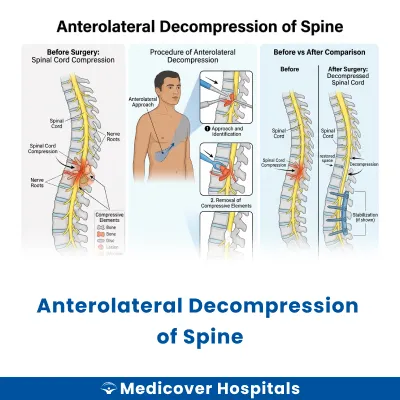
Anterolateral Decompression of Spine is a surgical procedure aimed at relieving pressure on the spinal cord or nerves. It involves the removal of bone or tissue compressing the spinal cord (myelopathy) or nerve roots (radiculopathy) in the spine. This procedure targets the anterior (front) and lateral (side) aspects of the spine, which are crucial for maintaining spinal stability and function.
This surgery is often needed for conditions like herniated discs, spinal stenosis, or tumours that compress the spinal cord or nerves. If untreated, these conditions can lead to pain, numbness, or even paralysis. Modern surgical approaches for Anterolateral Decompression include minimally invasive techniques and endoscopic procedures. These methods aim to reduce recovery time and improve outcomes. Always consult a healthcare professional for advice tailored to your condition.
Anterolateral Decompression of Spine Doctors Near You
Discover expert neurosurgeons for anterolateral decompression of the spine at Medicover Hospitals across India. Choose your city and book a consultation to address your spine health needs today.
Why Choose Medicover Hospitals for Anterolateral Decompression of Spine?
Get a second opinion from trusted experts and makeconfident, informed decisions.
 Get Second Opinion
Complete Guide To Anterolateral Decompression Of Spine
Everything you need to know about the procedure, preparation, and recovery
Anterolateral Decompression of Spine Surgery Indications
Doctors recommend anterolateral decompression of the spine when conservative treatments fail to relieve symptoms. This procedure is often suggested for conditions causing nerve compression in the spine.
Severe Spinal Stenosis
Patients may experience persistent back pain, numbness, or weakness in the legs. Imaging tests like MRI or CT scans show narrowing of the spinal canal. When physiotherapy and medications do not alleviate symptoms, surgery is considered.
Herniated Disc with Nerve Compression
Patients often report sharp, shooting pain radiating down the leg. MRI scans reveal a disc pressing on spinal nerves. If pain persists despite rest and medication, surgical intervention may be necessary.
Spinal Tumours
Patients might experience unexplained back pain or neurological deficits. Imaging studies detect abnormal growths compressing the spinal cord. Surgery is recommended when these tumours cause significant pressure and symptoms.
Traumatic Spine Injury
After an accident, patients may suffer from severe pain or paralysis. X-rays or CT scans show fractures or dislocations compressing the spine. When immobilization and other treatments fail, surgery is required to relieve pressure.
Infectious Spinal Conditions
Patients may have fever, back pain, and neurological issues. Blood tests and imaging reveal infections like spinal abscesses. If antibiotics and drainage are ineffective, decompression surgery is needed to prevent further damage.
How to Prepare for Anterolateral Decompression of Spine?
Proper preparation is crucial for a successful anterolateral decompression of the spine. It helps minimise risks and ensures a smoother recovery.
- Medication Review: Stop NSAIDs, anticoagulants, and herbal supplements as advised by your doctor to reduce bleeding risks.
- Fasting: Follow a fasting period of 8 hours before surgery. This is important for anaesthesia safety.
- Pre-Surgery Tests: Complete all required blood tests, imaging, and other assessments to ensure you're fit for surgery.
- Clothing: Wear loose, comfortable clothing on the day of surgery for ease of changing and comfort post-surgery.
- Transportation: Arrange for someone to drive you home after the procedure, as you will not be able to drive yourself.
- Medication List: Bring a list of all medications you take, including dosages, to inform your healthcare team.
- Smoking and Alcohol: Avoid smoking and alcohol as they can affect healing and anaesthesia.
- Home Preparation: Set up a comfortable recovery area at home with easy access to essentials.
Anterolateral Decompression of Spine Surgery (Step-by-Step)
This procedure is performed by neurosurgeons. It typically lasts 2-4 hours and is done under general anaesthesia.
- Preparation: The patient is positioned on their side. Monitoring devices are attached to track vital signs. General anaesthesia is administered to ensure the patient is asleep and pain-free.
- Incision: A 1-2 cm incision is made on the side of the spine. This allows access to the affected area.
- Exposure: Muscles and tissues are carefully moved aside using retractors. This exposes the spine for the procedure.
- Decompression: The surgeon uses instruments like a curette or harmonic scalpel to remove bone or tissue pressing on the spinal cord or nerves. This relieves pressure and alleviates symptoms.
- Stabilisation: If needed, spinal fusion or implants may be added to stabilise the spine. This helps maintain spine alignment and function.
- Closure: The incision is closed with sutures or staples. A sterile bandage is applied to protect the area.
- Recovery: The patient is moved to a recovery room. They will wake up gradually and be monitored for any immediate complications.
Who Performs Anterolateral Decompression of Spine Surgery?
This surgery is performed by neurosurgeons or orthopaedic spine surgeons. They are trained in complex spine procedures and use specialised instruments to ensure the procedure is done safely and effectively.
Recovery After Anterolateral Decompression of Spine Surgery
Recovery from anterolateral decompression of the spine surgery involves gradual healing and rehabilitation. Patients can expect to follow a structured recovery plan to regain mobility and strength. Adhering to medical advice is crucial for a smooth recovery.
Day 1-3:
- Hospital stay for monitoring and pain management.
- Start with light, easily digestible foods like curd and soups.
- Begin gentle movements as advised by the physiotherapist.
Day 4-7:
- Gradual increase in physical activity, such as short walks.
- Continue a soft diet with options like dal-rice and khichdi.
- Avoid bending, lifting, or twisting the spine.
Week 2-4:
- Transition to normal diet, including moong dal and vegetables.
- Increase walking duration and start light exercises.
- Resume work or school if it involves minimal physical strain.
Week 5-8:
- Engage in physiotherapy sessions to strengthen the back.
- Gradually resume daily activities, avoiding heavy lifting.
- Consult the doctor before returning to strenuous activities.
When to Seek Urgent Help
- Severe or worsening back pain.
- Numbness or weakness in the legs.
- Fever or signs of infection at the incision site.
- Loss of bladder or bowel control.
Contact us immediately if you experience any of these symptoms.
Benefits of Anterolateral Decompression of Spine Surgery
Anterolateral decompression of the spine is a surgical procedure aimed at relieving pressure on the spinal cord or nerves. It offers several benefits for patients experiencing spinal issues.
- Pain Relief: Helps alleviate chronic back and leg pain caused by nerve compression.
- Improved Mobility: Enhances movement and flexibility by reducing nerve pressure.
- Reduced Nerve Damage: Minimises the risk of further nerve damage by addressing the root cause.
- Enhanced Quality of Life: Allows patients to return to daily activities with less discomfort.
Risks and Complications of Anterolateral Decompression of Spine Surgery
While this surgery can be beneficial, it carries certain risks and complications. Understanding these can help in making informed decisions.
- Infection: Risk of infection at the surgical site.
- Bleeding: Possibility of excessive bleeding during or after surgery.
- Nerve Damage: Potential for injury to surrounding nerves.
- Spinal Instability: May lead to instability in the spinal column.
- Blood Clots: Risk of developing blood clots post-surgery.
- Recurrent Symptoms: Symptoms may return over time.
What is the Cost of Anterolateral Decompression of Spine Surgery?
The cost of Anterolateral Decompression of Spine Surgery at Medicover Hospitals ranges from Rs. 1,50,000 to Rs. 5,40,000, based on several factors such as the surgical approach, duration of hospital stay, room category, diagnostics, and post-operative care. At Medicover Hospitals, we offer transparent pricing to ensure clarity for our patients.
We provide support for insurance and TPA, including CGHS, ESI, and major TPAs, with a cashless facility available for convenience. Please contact the hospital for the latest insurance panel details as these may change periodically.
Frequently Asked Questions
1. How much does Anterolateral Decompression of Spine surgery cost at Medicover Hospitals?
The cost of Anterolateral Decompression of Spine surgery ranges from Rs. 1,50,000 to Rs. 5,40,
2. Please contact Medicover Hospitals for detailed pricing information. 2. Is Anterolateral Decompression of Spine surgery covered under health insurance at Medicover?
Many insurance plans, including CGHS and ESI, may cover this surgery. Please contact the hospital for current panel details.
3. Will I experience numbness after spine decompression?
Some patients may experience temporary numbness post-surgery. This usually improves as the nerves heal over time.
4. Can I drive after Anterolateral Decompression surgery?
Driving is usually not recommended for at least a few weeks post-surgery. Consult your doctor for specific guidance based on your recovery.
5. Will I need physiotherapy after spine decompression?
Physiotherapy is often recommended to aid recovery and improve mobility. Your doctor will advise on the appropriate exercises and duration.
6. Can I lift heavy objects after spine surgery?
Lifting heavy objects is generally discouraged for several weeks post-surgery. Follow your doctor's advice to avoid complications.
7. What foods should I eat after spine decompression?
A balanced diet with soft foods like dal-rice and khichdi is recommended. Avoid spicy foods to prevent digestive discomfort during recovery.


