 Call
Call Patient Reports
Anterior Acetabular Wall Reconstruction Surgery by Expert Orthopedics
Anterior Acetabular Wall Reconstruction at Medicover Hospitals is performed using open surgical techniques. Our orthopaedic team, with qualifications like MS and DNB, specialises in complex trauma and joint reconstruction. This approach often results in reduced blood loss, enhancing recovery across India.
Expert Surgeons
Yearly Surgeries
Patient Satisfaction
What is Anterior Acetabular Wall Reconstruction?
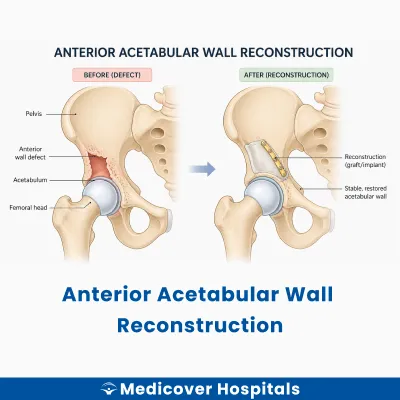
Anterior Acetabular Wall Reconstruction is a surgical procedure involving the hip joint. It focuses on repairing the acetabulum (the socket of the hip bone) to restore its structure and function. This procedure is crucial for maintaining hip stability and mobility.
This surgery is often needed for conditions like fractures or developmental deformities of the acetabulum. If untreated, these issues can lead to pain, instability, and arthritis. Modern surgical approaches include open reduction and internal fixation, as well as minimally invasive techniques. These methods aim to improve recovery and outcomes. Early intervention is key to preventing long-term complications.
Anterior Acetabular Wall Reconstruction Doctors Near You
Discover skilled orthopedics for anterior acetabular wall reconstruction at Medicover Hospitals across India. Choose your city and book a consultation to discuss your treatment options today.
Why Choose Medicover Hospitals for Anterior Acetabular Wall Reconstruction?
Get a second opinion from trusted experts and makeconfident, informed decisions.
 Get Second Opinion
Complete Guide To Anterior Acetabular Wall Reconstruction
Everything you need to know about the procedure, preparation, and recovery
Anterior Acetabular Wall Reconstruction Surgery Indications
Doctors recommend anterior acetabular wall reconstruction when the hip joint's stability is compromised. This procedure is often necessary when conservative treatments do not alleviate symptoms or improve joint function.
Severe Hip Pain
Patients often experience intense pain in the hip region, especially during movement. Imaging may reveal fractures or defects in the anterior acetabular wall. When pain persists despite medication and physical therapy, surgery is considered.
Hip Joint Instability
Some patients report a feeling of the hip "giving way" or instability. Examination may show excessive movement in the joint. If bracing and strengthening exercises fail to stabilize the hip, surgical intervention is needed.
Recurrent Hip Dislocation
Frequent dislocations can occur, causing severe discomfort and limiting mobility. X-rays or MRIs often show structural abnormalities. Surgery becomes necessary when dislocations recur despite conservative management.
Acetabular Fractures
Patients with fractures in the acetabular wall may experience sharp pain and difficulty walking. CT scans confirm the fracture's extent. When fractures do not heal with rest and immobilization, reconstruction is advised.
Failed Previous Hip Surgery
Some individuals may have persistent symptoms after prior hip surgeries. Imaging may reveal unresolved structural issues. When symptoms do not improve with rehabilitation, further surgical correction is required.
How to Prepare for Anterior Acetabular Wall Reconstruction?
Proper preparation is crucial for a smooth Anterior Acetabular Wall Reconstruction. It helps minimise complications and ensures a faster recovery.
- Medication Review: Stop NSAIDs, anticoagulants, and herbal supplements as advised by your doctor.
- Fasting: Fast for at least 8 hours before the procedure due to general anaesthesia.
- Pre-Surgery Exercises: Engage in recommended pelvic floor exercises to strengthen muscles.
- Clothing: Wear loose, comfortable clothing on the day of surgery for easy movement.
- Transport Arrangement: Arrange for someone to drive you home post-surgery.
- Medication List: Bring a list of current medications with dosages for hospital records.
- Pre-Op Testing: Complete any required blood tests or imaging studies as scheduled.
- Smoking and Alcohol: Avoid smoking and alcohol for a few weeks before surgery to aid recovery.
Anterior Acetabular Wall Reconstruction Surgery (Step-by-Step)
Overview: This procedure is performed by orthopaedic surgeons. It typically lasts 2-4 hours and is done under general anaesthesia.
- Preparation: The patient is positioned on the operating table. General anaesthesia is administered to ensure they are asleep and pain-free.
- Incision: A 10-15 cm incision is made over the hip area to access the acetabulum. The surgeon carefully exposes the joint.
- Fracture Assessment: The surgeon uses instruments like a curette to clean and assess the fracture. This ensures all debris is removed for a clear view.
- Reconstruction: The surgeon uses plates and screws to reconstruct the anterior acetabular wall. Precision is key to restore the joint's stability.
- Stabilization: Bipolar cautery may be used to control bleeding. The fixation is checked for stability and alignment.
- Closure: The incision is closed in layers using sutures or staples. A sterile dressing is applied to protect the wound.
- Recovery: The patient is moved to the recovery room. They are monitored as they wake from anaesthesia, with pain managed as needed.
Who Performs Anterior Acetabular Wall Reconstruction Surgery?
This surgery is performed by orthopaedic surgeons who specialise in hip and pelvic fractures. They have expertise in complex reconstructive procedures to restore function and mobility.
Recovery After Anterior Acetabular Wall Reconstruction Surgery
Recovery from anterior acetabular wall reconstruction surgery involves several stages. It is important to follow your surgeon's instructions to ensure a smooth healing process. Expect gradual improvement in mobility and strength over time.
Day 1-3:
- Hospital stay is common. Pain management and monitoring are priorities.
- Begin with a liquid diet, gradually introducing soft foods like curd and soups.
- Minimal movement; assistance required for basic activities.
Day 4-7:
- Transition to a semi-solid diet including dal-rice and moong dal.
- Begin gentle physiotherapy as advised by your doctor.
- Continue to limit weight-bearing activities.
Week 2-4:
- Increase mobility with the help of crutches or a walker.
- Incorporate light exercises to improve joint flexibility.
- Return to a normal diet, focusing on nutritious meals like khichdi.
Month 1-3:
- Gradual return to daily activities and work/school, depending on recovery.
- Continue physiotherapy to strengthen muscles around the hip.
- Avoid high-impact activities until fully healed.
When to Seek Urgent Help
- Severe pain unrelieved by medication.
- Signs of infection: fever, redness, or discharge at the incision site.
- Sudden inability to move the leg or bear weight.
Benefits of Anterior Acetabular Wall Reconstruction Surgery
This surgery aims to restore the stability and function of the hip joint.
- Improved Mobility: Helps regain a better range of motion in the hip.
- Pain Relief: Reduces or eliminates chronic hip pain associated with acetabular defects.
- Enhanced Joint Stability: Strengthens the hip joint, reducing the risk of dislocation.
- Long-term Durability: Provides a more permanent solution compared to non-surgical treatments.
Risks and Complications of Anterior Acetabular Wall Reconstruction Surgery
While generally safe, the surgery carries certain risks and potential complications.
Common Risks
- Infection at the surgical site.
- Blood clots in the legs or lungs.
Rare Risks
- Nerve damage leading to numbness or weakness.
- Fracture of the surrounding bone during surgery.
- Implant loosening or failure over time.
- Joint stiffness post-surgery.
Cost of Anterior Acetabular Wall Reconstruction Surgery
The cost of Anterior Acetabular Wall Reconstruction Surgery at Medicover Hospitals ranges from INR 1,80,000 to INR 4,50,000. The price varies depending on the ward category chosen, such as general, twin sharing, private, or suite options.
We offer transparent pricing with support for insurance and TPA, including CGHS, ESI, and major TPAs. Cashless facilities are available for your convenience. Please contact the hospital for the latest insurance panel details as these may change periodically.
Frequently Asked Questions
1. How much does Anterior Acetabular Wall Reconstruction surgery cost at Medicover Hospitals?
The cost ranges from INR 1,80,000 to INR 4,50,000 across Medicover Hospitals, depending on the room type and care level.
2. Is Anterior Acetabular Wall Reconstruction surgery covered under health insurance at Medicover?
Yes, it is covered by CGHS, ESI, and major TPAs with cashless options. Please contact the hospital for current panel details.
3. Will I need crutches after Anterior Acetabular Wall Reconstruction?
Yes, crutches are typically required for several weeks to aid in mobility and protect the hip during recovery.
4. Can I sit cross-legged after Anterior Acetabular Wall Reconstruction?
Sitting cross-legged is often discouraged for several months post-surgery to prevent strain on the reconstructed hip.
5. Is there a risk of hip dislocation after Anterior Acetabular Wall Reconstruction?
Yes, there is a risk of hip dislocation, especially in the initial weeks, requiring careful movement and adherence to post-operative guidelines.
6. When can I drive after Anterior Acetabular Wall Reconstruction?
Driving is usually not recommended until 6-8 weeks post-surgery, once you regain sufficient strength and mobility in the hip.
7. What foods aid recovery after Anterior Acetabular Wall Reconstruction?
Consuming protein-rich foods like dal, curd, and khichdi can support recovery by providing essential nutrients for healing.


