 Call
Call Patient Reports
Advanced Amputation of hand or foot Hospital with Expert Care
At Medicover Hospitals, our skilled general surgeons, holding qualifications like MS, DNB, and FMAS, perform open amputations of the hand or foot. This surgical approach is essential for severe injuries or infections. Patients benefit from reduced blood loss and shorter hospital stays.
Expert Surgeons
Yearly Surgeries
Patient Satisfaction
What is Amputation of Hand or Foot?
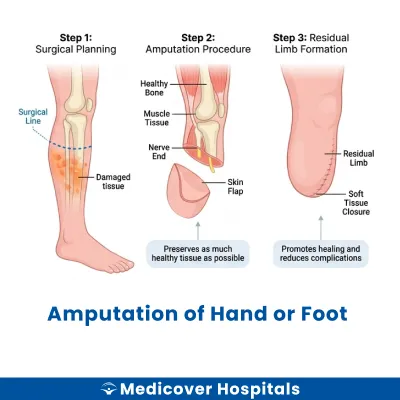
Amputation of the hand or foot is a surgical procedure involving the removal of all or part of a limb. This procedure may involve the hand (manual amputation) or the foot (pedal amputation). It is performed when the limb is severely damaged or diseased, making it non-functional or life-threatening.
This surgery is often necessary due to conditions like severe trauma, infection, diabetes-related complications, or cancer. If left untreated, these conditions can lead to further health complications, including life-threatening infections. Modern surgical approaches for amputation include techniques like microsurgery and reconstructive surgery, which aim to preserve as much function as possible. These methods help in improving the patient's quality of life post-surgery.
Amputation of Hand or Foot Doctors Near You
Find experienced general-surgeons for hand or foot amputation at Medicover Hospitals across India. Choose your city and book a consultation today for expert guidance and care.
Why Choose Medicover Hospitals for Amputation of Hand or Foot?
Get a second opinion from trusted experts and makeconfident, informed decisions.
 Get Second Opinion
Complete Guide To Amputation Of Hand Or Foot
Everything you need to know about the procedure, preparation, and recovery
Amputation of Hand or Foot Surgery Indications
Doctors may recommend amputation of a hand or foot when severe damage or disease affects the limb, making it non-functional or life-threatening. This procedure is considered when other treatments fail to alleviate symptoms or prevent complications.
Severe Trauma
Patients with crushed or severely injured limbs may experience intense pain, loss of function, and bleeding. Imaging may show irreparable damage to bones and tissues. When reconstruction is not possible, amputation may be necessary.
Gangrene
Gangrene causes tissue death, leading to discolouration, foul odour, and severe pain. Doctors may find a lack of blood flow in the affected area through imaging. If infection spreads or tissue necrosis worsens, amputation is often required.
Diabetic Foot Ulcers
Patients with diabetic foot ulcers may have persistent wounds, swelling, and infection. Examination may reveal poor circulation and nerve damage. When ulcers do not heal with conservative care, amputation might be needed to prevent further complications.
Peripheral Artery Disease (PAD)
Pain and numbness in the limbs are common in PAD. Tests may show blocked arteries and reduced blood flow. If revascularization fails and tissue death occurs, amputation may be the only option.
Severe Infections
Infections that do not respond to antibiotics can cause swelling, redness, and fever. Lab tests may indicate resistant bacteria. When infection threatens the limb or life, amputation may be necessary.
How to Prepare for Amputation of Hand or Foot?
Proper preparation is crucial for a successful amputation surgery. It helps reduce risks and ensures a smoother recovery process.
- Medication Review: Stop NSAIDs, anticoagulants, and herbal supplements as advised by your doctor.
- Fasting: Do not eat or drink for at least 8 hours before the surgery if general anaesthesia is used.
- Pre-Surgery Hygiene: Bathe with an antiseptic soap the night before and the morning of the surgery.
- Clothing: Wear loose, comfortable clothing to the hospital for easy dressing post-surgery.
- Transportation: Arrange for someone to drive you home after the procedure.
- Medication List: Bring a list of all medications with dosages to the hospital.
- Home Preparation: Set up a comfortable recovery area at home with easy access to essentials.
- Emotional Support: Consider speaking with a counsellor or support group to prepare mentally.
Amputation of Hand or Foot Surgery (Step-by-Step)
This surgery is performed by general surgeons or orthopaedic surgeons. It typically lasts 1 to 3 hours. It is done under general anaesthesia to ensure the patient is completely unconscious and pain-free during the procedure.
- Preparation: The patient is positioned comfortably on the operating table. The surgical area is cleaned and sterilised to prevent infection. Anaesthesia is administered to ensure the patient is asleep.
- Incision: The surgeon makes an incision of about 1-2 cm around the area to be amputated. This is done using a scalpel to access the underlying tissues.
- Dissection: Using surgical instruments like a curette or harmonic scalpel, the surgeon carefully separates the skin, muscles, and tissues from the bone. Blood vessels are sealed using bipolar cautery to control bleeding.
- Bone Cutting: The bone is cut using a surgical saw. The surgeon ensures the cut is smooth to prevent sharp edges that could cause complications.
- Closure: The remaining skin and tissues are shaped to create a stump. The incision is closed with sutures or staples. A sterile dressing is applied to protect the wound.
- Recovery: The patient is moved to a recovery room. They are monitored as they wake up from anaesthesia. Pain management and antibiotics are provided to aid recovery.
Who Performs Amputation of Hand or Foot Surgery?
Amputation of the hand or foot is performed by general surgeons. These specialists are trained in surgical procedures involving the removal of limbs. They ensure the surgery is conducted safely and effectively, focusing on minimizing complications and promoting healing.
Recovery After Amputation of Hand or Foot Surgery
Recovery from hand or foot amputation surgery involves physical healing and adapting to new ways of performing daily tasks. It's important to follow your doctor's advice and attend all follow-up appointments for optimal recovery.
Day 1-3:
- Rest is crucial. Keep the limb elevated to reduce swelling.
- Pain and discomfort are common. Take prescribed medications as directed.
- Begin with a soft diet. Include curd, dal-rice, and soups to maintain nutrition.
Day 4-7:
- Continue with gentle movements as advised by your physiotherapist.
- Gradually introduce more solid foods like khichdi and moong dal.
- Monitor the surgical site for any signs of infection.
Week 2-4:
- Stitches may be removed if healing is adequate.
- Begin more active rehabilitation exercises to improve strength and flexibility.
- Return to light activities or work, based on your doctor's advice.
Month 1-3:
- Focus on adapting to prosthetic devices if applicable.
- Continue with physiotherapy to enhance mobility and function.
- Resume normal activities gradually, avoiding strenuous tasks.
When to Seek Urgent Help:
- Severe pain not relieved by medication.
- Signs of infection: redness, swelling, or pus at the surgical site.
- Fever or chills.
- Unusual changes in limb colour or sensation.
Benefits of Amputation of Hand or Foot Surgery
Amputation of a hand or foot can be a necessary procedure to improve quality of life in certain medical conditions.
- Pain Relief: Helps alleviate severe pain caused by infections or injuries.
- Prevention of Spread: Stops the progression of life-threatening infections or gangrene.
- Improved Mobility: Enables the use of prosthetics for better movement and independence.
- Enhanced Quality of Life: Reduces complications from chronic conditions, improving overall health.
Risks and Complications of Amputation of Hand or Foot Surgery
While amputation can be beneficial, it carries certain risks and complications.
- Infection at the site of surgery.
- Phantom limb pain, where the patient feels pain in the amputated area.
- Swelling and delayed wound healing.
- Blood clots forming in the veins.
- Allergic reactions to anaesthesia.
- Emotional and psychological challenges post-surgery.
Cost of Amputation of Hand or Foot Surgery
The cost for amputation of hand or foot surgery at Medicover Hospitals ranges from Rs. 7500 to Rs. 11500, depending on the ward category. Prices vary based on the type of accommodation chosen, such as general, twin sharing, or private rooms.
We offer transparent pricing with support for insurance and TPA, including CGHS, ESI, and major TPAs. Cashless facilities are available for your convenience. Please contact the hospital for the latest insurance panel details as these may change periodically.
Frequently Asked Questions
1. How much does Amputation of hand or foot surgery cost at Medicover Hospitals?
The cost ranges from Rs. 7500 to Rs. 11500 across Medicover Hospitals. Prices vary based on room type and care level.
2. Is Amputation of hand or foot surgery covered under health insurance at Medicover?
Yes, it is often covered by CGHS, ESI, and major TPAs with cashless options. Please contact the hospital for current panel details.
3. Will I need a prosthetic after hand or foot amputation?
Yes, many patients opt for a prosthetic to aid mobility and functionality. Consult your doctor for the best options available.
4. Can I drive after a foot amputation?
Driving may be possible with adaptations and training. Consult your doctor for guidance based on your specific condition.
5. How will my diet change after hand or foot amputation?
A balanced diet including curd, dal-rice, and khichdi is recommended. Proper nutrition aids recovery and maintains overall health.
6. What are the risks of infection after hand or foot amputation?
Infection is a potential risk, especially at the surgical site. Follow your doctor's care instructions to minimise this risk.
7. Will I experience phantom pain after amputation?
Phantom pain is common after amputation and varies in intensity. Discuss pain management options with your healthcare provider.


