 Call
Call Patient Reports
Alcohol Septal Ablation Procedure Hospital with Expert Cardiologists
Alcohol Septal Ablation at Medicover Hospitals is a minimally invasive procedure performed by skilled cardiologists with DM and DNB qualifications. This technique uses catheter-based intervention to treat hypertrophic cardiomyopathy. Patients benefit from shorter hospital stays and reduced recovery times across India.
Expert Specialists
Yearly Treatments
Patient Satisfaction
What is Alcohol Septal Ablation?
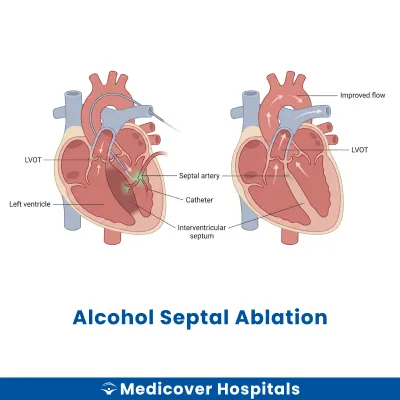
Alcohol Septal Ablation is a minimally invasive procedure used to treat hypertrophic cardiomyopathy. It involves the heart, specifically the thickened septum (wall) between the heart's chambers. During the procedure, a small amount of alcohol is injected into the septal artery. This causes the thickened tissue to shrink, improving blood flow.
This procedure is needed when hypertrophic cardiomyopathy causes symptoms like chest pain, shortness of breath, or fainting. If left untreated, it can lead to serious complications, including heart failure. Alcohol Septal Ablation is an alternative to surgical myectomy, which is an open-heart surgery. It offers a less invasive option with quicker recovery. Please consult with a healthcare provider to understand the best approach for your condition.
Alcohol Septal Ablation Doctors Near You
Discover skilled cardiologists for alcohol septal ablation at Medicover Hospitals across India. Choose your city and book a consultation to explore treatment options tailored to your needs.
Why Choose Medicover Hospitals for Alcohol Septal Ablation?
Get a second opinion from trusted experts and makeconfident, informed decisions.
 Get Second Opinion
Complete Guide To Alcohol Septal Ablation
Everything you need to know about the procedure, preparation, and recovery
Alcohol Septal Ablation Procedure Indications
Doctors recommend Alcohol Septal Ablation to treat specific heart conditions that affect the heart's structure and function. It is primarily used when symptoms are severe and other treatments have not been effective.
Severe Obstructive Hypertrophic Cardiomyopathy
Patients experience chest pain, shortness of breath, or fainting due to thickened heart muscle obstructing blood flow. Doctors find significant septal hypertrophy on echocardiograms. When medications fail to relieve symptoms, this procedure is considered.
Recurrent Syncope
Patients suffer from frequent fainting spells due to obstructed blood flow from the heart. Diagnostic tests show abnormal heart rhythms or significant outflow obstruction. When lifestyle changes and medications do not prevent episodes, this procedure may be recommended.
Exercise Intolerance
Patients report fatigue and breathlessness during physical activity. Tests reveal a thickened septum causing obstruction. When exercise capacity is severely limited despite medical therapy, this procedure is an option.
Severe Heart Failure Symptoms
Patients experience persistent breathlessness and swelling due to heart muscle obstruction. Imaging shows poor heart function and obstruction. When symptoms are not managed by medication, this procedure can be considered.
High Gradient Across Left Ventricular Outflow Tract
Patients may have symptoms like dizziness or chest discomfort. Echocardiograms show a high pressure gradient across the outflow tract. When this gradient remains high despite medication, the procedure is advised.
How to Prepare for Alcohol Septal Ablation?
Proper preparation for Alcohol Septal Ablation is crucial to ensure a smooth procedure and recovery. It helps minimise risks and enhances the effectiveness of the treatment.
- Medication Review: Stop NSAIDs, anticoagulants, and herbal supplements as advised by your doctor.
- Fasting: Do not eat or drink anything for at least 8 hours before the procedure due to anaesthesia requirements.
- Medical History: Provide a complete list of medications with dosages to your healthcare team.
- Clothing: Wear loose, comfortable clothing on the day of the procedure.
- Transportation: Arrange for someone to drive you home after the procedure.
- Pre-Procedure Tests: Complete any required tests such as blood work or imaging as instructed.
- Hydration: Stay well-hydrated the day before, unless advised otherwise.
- Follow Instructions: Adhere to any additional instructions provided by your healthcare provider.
Alcohol Septal Ablation procedure (Step-by-Step)
Overview: Alcohol Septal Ablation is performed by Heart health experts. The procedure typically lasts 1-2 hours. It is usually done under local anaesthesia with sedation.
- Preparation: The patient is taken to the catheterization lab. Local anaesthesia is administered to numb the groin area.
- Catheter Insertion: A small incision, about 1-2 cm, is made in the groin. A catheter is inserted into the femoral artery using a guidewire.
- Guiding the Catheter: The catheter is carefully guided to the heart using fluoroscopy (X-ray imaging). The cardiologist navigates it to the septal artery that supplies the thickened heart muscle.
- Alcohol Injection: Once positioned, a small amount of alcohol is injected through the catheter. This causes the targeted heart muscle to shrink over time.
- Monitoring: The patient's heart rhythm and blood pressure are closely monitored. Adjustments are made as necessary to ensure safety.
- Catheter Removal: After the procedure, the catheter is removed. Pressure is applied to the incision site to prevent bleeding.
- Recovery: The patient is moved to a recovery area. They may need to lie flat for a few hours. Monitoring continues to ensure stability.
Who Performs Alcohol Septal Ablation procedure?
This procedure is performed by interventional cardiologists. They specialize in minimally invasive techniques for heart conditions. Their expertise ensures precise catheter placement and effective treatment.
Recovery After Alcohol Septal Ablation procedure
Recovering from an Alcohol Septal Ablation procedure involves gradual healing and monitoring. Patients can expect to stay in the hospital for a short period post-procedure for observation. Follow-up appointments are crucial to ensure proper recovery.
Day 1-3:
- Hospital stay for monitoring heart function and vital signs.
- Rest is essential. Avoid strenuous activities.
- Begin with a light diet. Options include curd, dal-rice, and soups.
Day 4-7:
- Discharge from the hospital is likely if no complications arise.
- Continue with light activities at home. Avoid heavy lifting.
- Gradually introduce foods like khichdi and moong dal.
Week 2-4:
- Resume light work or school activities if feeling well.
- Regular follow-up with the cardiologist is important.
- Maintain a balanced diet with easy-to-digest Indian foods.
Phase 2 (1-3 months):
- Gradually increase physical activity as advised by the doctor.
- Continue heart-healthy dietary habits.
- Attend all scheduled follow-up appointments for heart monitoring.
When to Seek Urgent Help
- Severe chest pain or discomfort.
- Shortness of breath or difficulty breathing.
- Irregular or rapid heartbeat.
- Fainting or severe dizziness.
Benefits of Alcohol Septal Ablation procedure
Alcohol Septal Ablation is a minimally invasive procedure used to treat hypertrophic cardiomyopathy. It offers several benefits for patients.
- Symptom Relief: Helps reduce symptoms like shortness of breath and chest pain.
- Improved Heart Function: Enhances blood flow by reducing the thickness of the heart muscle.
- Non-Surgical Option: Provides an alternative to open-heart surgery for eligible patients.
- Shorter Recovery Time: Generally involves a quicker recovery compared to surgical options.
Risks and Complications of Alcohol Septal Ablation procedure
While Alcohol Septal Ablation can be beneficial, it is important to be aware of potential risks and complications.
- Common: Arrhythmias, which may require additional treatment.
- Common: Chest pain or discomfort following the procedure.
- Rare: Heart block, possibly necessitating a pacemaker.
- Rare: Damage to the heart muscle, affecting its function.
- Rare: Infection at the catheter insertion site.
- Rare: Allergic reaction to the alcohol or contrast dye used.
Cost of Alcohol Septal Ablation procedure
The cost of the Alcohol Septal Ablation procedure at Medicover Hospitals ranges from Rs. 41,000 to Rs. 223,000. Prices vary based on the ward category chosen. We offer transparent pricing to ensure clarity. Our hospitals support insurance and TPA services, including CGHS, ESI, and major TPAs, with a cashless facility available for your convenience. Please contact the hospital for the latest insurance panel details as these may change periodically.
Frequently Asked Questions
1. How much does Alcohol Septal Ablation cost?
The cost of Alcohol Septal Ablation at Medicover Hospitals ranges from Rs. 41,000 to Rs. 223,000, depending on the type of accommodation chosen.
2. Is Alcohol Septal Ablation covered under insurance?
Alcohol Septal Ablation may be covered by CGHS, ESI, and major TPAs. Please contact the hospital for current panel details.
3. Will my heart function improve after the procedure?
Yes, Alcohol Septal Ablation aims to improve heart function by reducing the thickness of the heart muscle. This can enhance blood flow and reduce symptoms.
4. Can I exercise after Alcohol Septal Ablation?
You may need to avoid strenuous exercise for a few weeks post-procedure. Light activities like walking are usually encouraged after recovery.
5. Will I need medication after the procedure?
Post-procedure, you may need medications to manage heart function and prevent complications. Your doctor will guide you on the specific medications required.
6. Can I experience arrhythmias after the procedure?
There is a possibility of arrhythmias following Alcohol Septal Ablation. Regular follow-ups with your cardiologist are essential to monitor and manage this risk.
7. What diet should I follow post-procedure?
Post-procedure, a heart-healthy diet including fruits, vegetables, and whole grains is recommended. Indian foods like dal-rice and khichdi are good options.


