 Call
Call Patient Reports
Best Hospital for Advancement Skin Flap Reconstruction with Advanced Plastic Surgery Care
Advancement skin flap reconstruction at Medicover Hospitals is performed using the open surgical approach. Our plastic surgeons, with qualifications like MS and MCh, are skilled in this technique. This procedure often results in smaller incisions, leading to a shorter recovery time for patients.
Expert Surgeons
Yearly Surgeries
Patient Satisfaction
What is Advancement Skin Flap Reconstruction?
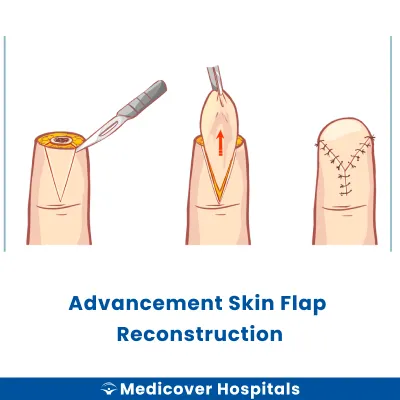
Advancement skin flap reconstruction is a surgical procedure used to repair defects in the skin, often on the face or other visible areas. It involves moving a section of skin and underlying tissue from an adjacent area to cover the defect. This technique maintains blood supply to the flap, promoting healing and reducing scarring. The procedure is commonly used after skin cancer removal or trauma.
This surgery is needed when there is significant skin loss due to conditions like basal cell carcinoma or squamous cell carcinoma. If untreated, these conditions can lead to further tissue damage and disfigurement. Modern surgical approaches include local flap techniques and microsurgical methods. These ensure optimal cosmetic and functional outcomes. Early intervention is crucial to prevent complications.
Advancement Skin Flap Reconstruction Surgery Doctors Near You
Discover skilled plastic-surgeons for advancement skin flap reconstruction at Medicover Hospitals across India. Choose your city and book a consultation to explore effective treatment options tailored to your needs.
Why Choose Medicover Hospitals for Advancement Skin Flap Reconstruction?
Get a second opinion from trusted experts and makeconfident, informed decisions.
 Get Second Opinion
Complete Guide To Advancement Skin Flap Reconstruction
Everything you need to know about the procedure, preparation, and recovery
Advancement Skin Flap Reconstruction Surgery Indications
Advancement skin flap reconstruction is recommended when there is a need to repair skin defects that cannot heal on their own. Plastic surgeons often suggest this procedure when other treatments do not provide the desired results.
Non-Healing Wounds
Patients may experience persistent open wounds that do not close with standard care. These wounds often show no signs of healing despite regular dressings and medications. When conservative treatments fail, and the wound remains open, surgery becomes necessary.
Skin Cancer Removal
After excision of skin cancer, patients may have significant tissue loss. Surgeons find that the surrounding skin is insufficient to close the defect. When primary closure is not possible, advancement flaps are used to cover the area.
Traumatic Injuries
Patients with deep cuts or lacerations may experience exposed tissues or bones. On examination, doctors may find that the skin edges cannot be brought together. When direct closure is not feasible, this surgery is considered.
Pressure Ulcers
Patients with pressure ulcers often have deep sores that do not heal with repositioning and wound care. These ulcers may show signs of infection or necrosis. When they fail to improve, surgical intervention is required.
Scar Revision
Some patients have scars that cause functional impairment or cosmetic concerns. Examination reveals tight or contracted scars limiting movement. When non-surgical methods do not suffice, advancement flaps help improve the appearance and function.
How to Prepare for Advancement Skin Flap Reconstruction?
Proper preparation is crucial for a smooth advancement skin flap reconstruction. It helps in reducing complications and ensures a quicker recovery.
- Medication Review: Stop NSAIDs, anticoagulants, and herbal supplements 1-2 weeks before surgery.
- Fasting Instructions: Fast for at least 8 hours before the procedure if general anaesthesia is used.
- Skin Care: Clean the surgical area with an antiseptic soap as advised by your doctor.
- Clothing: Wear loose, comfortable clothing on the day of surgery to avoid pressure on the surgical site.
- Transportation: Arrange for someone to drive you home post-surgery, as you may feel drowsy from anaesthesia.
- Medication List: Bring a list of all medications you take, including dosages, for the medical team.
- Smoking and Alcohol: Avoid smoking and alcohol for at least 48 hours before surgery to promote healing.
- Rest and Relaxation: Ensure you get adequate rest the night before to help your body prepare for the procedure.
Advancement Skin Flap Reconstruction Surgery (Step-by-Step)
Performed by plastic surgeons, the procedure typically lasts 1 to 3 hours. It is usually done under local anaesthesia, but general anaesthesia may be used depending on the case.
- Preparation: The surgical area is cleaned and marked. Anaesthesia is administered to ensure the patient feels no pain during the procedure.
- Incision: A precise incision, usually 1-2 cm, is made near the defect. This allows for the mobilisation of the skin flap.
- Flap Elevation: Using surgical instruments like scalpels and forceps, the surgeon carefully elevates the skin flap. This involves separating the skin from underlying tissues while maintaining blood supply.
- Flap Advancement: The elevated flap is moved to cover the defect. The surgeon adjusts the flap to ensure it fits well over the area needing reconstruction.
- Securing the Flap: The flap is sutured into place using fine sutures. The surgeon ensures that the tension is evenly distributed to promote healing.
- Closure: The donor site, where the flap was taken from, is closed with sutures. The surgeon checks for any bleeding and ensures the area is secure.
- Post-Operative Care: A dressing is applied to protect the site. The patient is monitored for a short period before being allowed to recover at home.
Who Performs Advancement Skin Flap Reconstruction Surgery?
Plastic surgeons, trained in reconstructive techniques, perform this surgery. They have expertise in handling delicate tissues and ensuring optimal cosmetic and functional outcomes. Their skills are crucial for the precise execution of the procedure.
Recovery After Advancement Skin Flap Reconstruction Surgery
Recovery from advancement skin flap reconstruction surgery involves careful monitoring and following specific guidelines to ensure proper healing. Patients can expect some swelling and discomfort, which gradually subsides. Adhering to dietary and activity recommendations is crucial for a smooth recovery.
Day 1-3:
- Rest is essential. Keep the surgical area elevated to reduce swelling.
- Follow a soft diet. Include foods like curd, dal-rice, and soups.
- Avoid strenuous activities. Gentle walking is encouraged.
Day 4-7:
- Swelling and bruising should start to decrease.
- Continue with a balanced diet. Add khichdi and moong dal for protein.
- Limit physical activity. Avoid lifting heavy objects.
Day 8-14:
- Most patients can resume light activities and return to work or school.
- Maintain a nutritious diet to support healing.
- Follow-up appointments are crucial to monitor progress.
Phase 3 (Week 3-4):
- Normal activities can gradually resume, but avoid high-impact exercises.
- Continue eating a balanced diet to aid recovery.
- Scarring may start to improve, but protection from sun exposure is advised.
When to Seek Urgent Help
- Excessive bleeding or pus from the surgical site.
- Fever or chills indicating possible infection.
- Severe pain not relieved by prescribed medication.
- Sudden swelling or redness around the surgical area.
Benefits of Advancement Skin Flap Reconstruction Surgery
Advancement skin flap reconstruction is a surgical technique used to repair skin defects. It offers several benefits for patients.
- Natural Appearance: Utilises nearby skin for a more natural look.
- Improved Healing: Enhances blood supply to the affected area, promoting faster recovery.
- Reduced Scarring: Minimises visible scarring by using adjacent skin.
- Versatility: Suitable for various sizes and locations of skin defects.
Risks and Complications of Advancement skin flap reconstruction Surgery
Like any surgical procedure, advancement skin flap reconstruction carries certain risks. It is important to be aware of these potential complications.
- Infection at the surgical site.
- Bleeding or hematoma formation.
- Flap necrosis due to insufficient blood supply.
- Delayed wound healing.
- Changes in skin sensation around the surgical area.
- Unfavourable cosmetic outcome.
What is the Cost of Advancement Skin Flap Reconstruction Surgery?
The cost of advancement skin flap reconstruction surgery at Medicover Hospitals ranges from Rs. 60,000 to Rs. 1,10,000. The price varies depending on the ward category chosen, such as day care, general, or suite options. Medicover Hospitals offers transparent pricing and supports insurance and TPA services, including CGHS, ESI, and major TPAs. A cashless facility is also available for added convenience. Please contact the hospital for the latest insurance panel details as these may change periodically.
Frequently Asked Questions
1. How much does Advancement skin flap reconstruction surgery cost at Medicover Hospitals?
The cost for Advancement skin flap reconstruction surgery at Medicover Hospitals ranges from Rs. 60,000 to Rs. 1,10,000, depending on the type of room and care.
2. Is Advancement skin flap reconstruction surgery covered under health insurance at Medicover?
Advancement skin flap reconstruction surgery may be covered by CGHS, ESI, and major TPAs. Please contact the hospital for current panel details.
3. Will my facial expressions change after surgery?
Facial expressions may temporarily change due to swelling or healing. Normal expressions usually return as recovery progresses.
4. Can I smile normally after lower lip flap surgery?
Smiling may feel different initially due to swelling. Most patients regain normal smiling ability within a few weeks.
5. How soon can I eat solid food after lip surgery?
Soft foods like curd and khichdi are recommended initially. Solid foods can typically be reintroduced after 1-2 weeks.
6. Will I have visible scars after scalp flap surgery?
Scalp flap surgery may leave scars, but they often fade over time. Proper care and follow-up can minimise their appearance.
7. Can I wash my hair after scalp flap surgery?
Hair washing is usually advised after a week, with gentle care. Follow your surgeon's instructions for best results.


