 Call
Call Patient Reports
Advanced Acute Liver Failure Hospital with Expert Care
At Medicover Hospitals, our team of gastroenterologists with qualifications like DM, DNB, and MS, manage Acute Liver Failure using open surgical approaches. This method allows for effective treatment, often resulting in reduced blood loss and shorter hospital stays for patients across India.
Expert Specialists
Yearly Treatments
Patient Satisfaction
What is Acute Liver Failure?
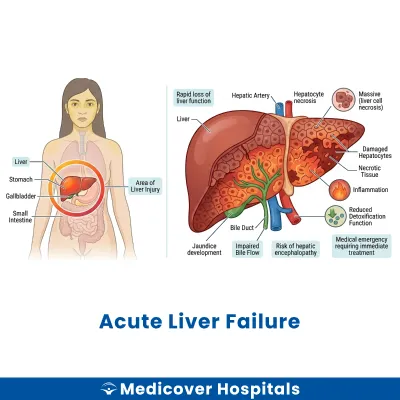
Acute Liver Failure is a rapid decline in liver function. The liver, a vital organ, loses its ability to perform essential tasks. These include detoxifying the blood, producing proteins, and aiding digestion. This condition can develop in days or weeks, unlike chronic liver diseases that progress over years.
Surgery is crucial for Acute Liver Failure when medical management fails. Causes include viral hepatitis, drug-induced liver injury, or autoimmune diseases. If untreated, it can lead to severe complications like brain swelling or multi-organ failure. Liver transplantation is a modern surgical approach. It replaces the damaged liver with a healthy one. This procedure can be life-saving. Early intervention is key to improving outcomes.
Acute Liver Failure Doctors Near You
Find experienced gastroenterologists-medical for acute liver failure at Medicover Hospitals across India. Choose your city and book a consultation to receive expert guidance and care.
Why Choose Medicover Hospitals for Acute Liver Failure?
Get a second opinion from trusted experts and makeconfident, informed decisions.
 Get Second Opinion
Complete Guide To Acute Liver Failure
Everything you need to know about the procedure, preparation, and recovery
Acute Liver Failure procedure Indications
Doctors recommend procedures for acute liver failure when the liver rapidly loses its ability to function. This condition requires immediate medical attention to prevent life-threatening complications.
Severe Jaundice
Patients may notice yellowing of the skin and eyes. Blood tests reveal elevated bilirubin levels. When jaundice worsens despite medical management, a procedure may be necessary.
Coagulopathy
Patients might experience unusual bleeding or bruising. Blood tests show prolonged clotting times. If bleeding risks increase and do not respond to treatment, intervention is needed.
Hepatic Encephalopathy
Confusion, altered mental status, or even coma can occur. Ammonia levels in the blood are often elevated. When mental status does not improve with medications, a procedure is considered.
Severe Abdominal Pain
Patients may report intense pain in the upper right abdomen. Imaging might show liver swelling. Persistent pain unresponsive to medication may lead to procedural intervention.
Renal Dysfunction
Patients could experience reduced urine output. Blood tests indicate impaired kidney function. When kidney issues worsen despite supportive care, a procedure may be advised.
Metabolic Acidosis
Patients may feel breathless or fatigued. Blood gas analysis shows low pH and bicarbonate levels. If acidosis persists despite treatment, a procedure might be necessary.
How to Prepare for Acute Liver Failure?
Preparation is crucial for managing acute liver failure effectively. It ensures that the treatment proceeds smoothly and reduces potential complications.
- Medication Review: Stop NSAIDs, anticoagulants, and herbal supplements as advised by your doctor.
- Fasting Guidelines: Fast for at least 8 hours before the procedure if general anaesthesia is planned.
- Hydration: Stay hydrated unless instructed otherwise. Dehydration can worsen liver function.
- Clothing: Wear loose, comfortable clothing on the day of the procedure for ease and comfort.
- Transportation: Arrange for someone to drive you home after the procedure as you may not be fit to drive.
- Medication List: Bring a list of all medications you are taking, including dosages, for the healthcare team.
- Support System: Inform a family member or friend about your condition and procedure for emotional and logistical support.
- Pre-procedure Tests: Complete any blood tests or imaging studies as scheduled to assess liver function.
Acute Liver Failure procedure (Step-by-Step)
Managed by gastroenterologists and hepatologists. The procedure's duration varies based on the underlying cause. General anaesthesia is typically used.
- Initial Assessment: The patient undergoes a thorough evaluation. Blood tests and imaging studies help determine the liver's condition. The patient may feel anxious but is reassured by the medical team.
- Stabilisation: Vital signs are monitored closely. Intravenous fluids and medications are administered to stabilise the patient. The patient might feel a slight discomfort from the IV line.
- Diagnostic Procedures: A liver biopsy might be performed using a biopsy needle. This involves a small incision, about 1-2 cm, to obtain a tissue sample. The patient is under anaesthesia and does not feel pain.
- Surgical Intervention: If necessary, surgical tools like a laparoscope or harmonic scalpel are used. Incisions are made, typically 1-2 cm, to access the liver. The patient remains unconscious due to anaesthesia.
- Post-Procedure Monitoring: After the procedure, the patient is moved to recovery. Vital signs are monitored, and pain management is provided. The patient may feel groggy as they wake up from anaesthesia.
- Supportive Care: The patient receives ongoing care, including medications and nutritional support. Regular monitoring continues to ensure recovery. The patient might feel weak but is supported by the healthcare team.
Who Performs Acute Liver Failure procedure?
Specialists such as gastroenterology specialists and hepatologists manage acute liver failure. They have expertise in diagnosing and treating liver conditions. Their role is crucial in guiding the treatment plan and ensuring the patient's recovery.
Recovery After Acute Liver Failure procedure
Recovery from acute liver failure can be a gradual process. It involves careful monitoring and lifestyle adjustments. Patients may experience fatigue and need to follow a specific diet to support liver healing.
Day 1-3:
- Rest is crucial. Avoid any physical exertion.
- Begin with a liquid diet including clear soups and coconut water.
- Regular monitoring of vital signs and liver function tests.
Day 4-7:
- Gradually introduce soft foods like khichdi, dal-rice, and moong dal.
- Continue to avoid oily and spicy foods.
- Short walks around the room may be encouraged.
Day 8-14:
- Increase activity levels slowly, but avoid strenuous activities.
- Include curd and boiled vegetables in the diet for added nutrition.
- Monitor for any signs of jaundice or abdominal pain.
Phase 3 (Week 3-4):
- Most patients can resume light work or school activities.
- Maintain a balanced diet with plenty of fluids.
- Regular follow-up appointments to track liver recovery.
When to Seek Urgent Help
- Severe abdominal pain or swelling.
- Yellowing of the skin or eyes (jaundice).
- Confusion or altered mental state.
- Persistent vomiting or inability to eat.
Benefits of Acute Liver Failure procedure
Addressing acute liver failure promptly can significantly improve outcomes. Here are some benefits of undergoing treatment:
- Stabilisation: Immediate medical intervention helps stabilise vital functions.
- Symptom Relief: Procedures can alleviate symptoms like jaundice and confusion.
- Preventing Complications: Early treatment reduces the risk of complications such as brain swelling.
- Improved Survival Rates: Timely management can enhance survival chances.
Risks and Complications of Acute Liver Failure procedure
While treatment for acute liver failure is essential, it carries certain risks. Understanding these can help in making informed decisions.
- Common: Infection risk due to weakened immunity.
- Common: Bleeding disorders from impaired liver function.
- Rare: Kidney failure as a result of liver dysfunction.
- Rare: Adverse reactions to medications used in treatment.
- Rare: Brain swelling leading to further complications.
- Rare: Multi-organ failure in severe cases.
Cost of Acute Liver Failure procedure
The cost of the Acute Liver Failure procedure varies from Rs.300000 to Rs.800000 based on factors such as the surgical approach, duration of hospital stay, room category, required diagnostics, and post-operative care. At Medicover Hospitals, we ensure transparent pricing to help patients make informed decisions. We offer insurance and TPA support, including CGHS, ESI, and major TPAs, with a cashless facility available for added convenience. Please contact the hospital for the latest insurance panel details as these may change periodically.
Frequently Asked Questions
1. How much does Acute Liver Failure procedure cost at Medicover Hospitals?
The cost of the Acute Liver Failure procedure varies. Please contact Medicover Hospitals for detailed pricing information.
2. Is Acute Liver Failure procedure covered under health insurance at Medicover?
Acute Liver Failure procedures may be covered by CGHS, ESI, and major TPAs. Please contact the hospital for current panel details.
3. Can Acute Liver Failure cause jaundice?
Yes, jaundice is a common symptom of Acute Liver Failure. It occurs due to the liver's inability to process bilirubin.
4. Will I need a liver transplant for Acute Liver Failure?
In severe cases, a liver transplant may be necessary. This depends on the extent of liver damage and overall health.
5. What diet should I follow after Acute Liver Failure?
A balanced diet with curd, dal-rice, and khichdi is recommended. Avoid alcohol and high-fat foods to support liver recovery.
6. Can Acute Liver Failure lead to brain complications?
Yes, it can cause hepatic encephalopathy, affecting brain function. This occurs due to toxin buildup in the bloodstream.
7. How long does it take to recover from Acute Liver Failure?
Recovery time varies based on the severity and treatment. It can take weeks to months for liver function to improve.
8. Is liver treatment expensive?
Yes, advanced liver treatment especially transplant is considered expensive because it involves major surgery, specialized care, and long-term medications.
9. What is the 50 50 rule for liver resection?
The 50–50 rule is a clinical indicator used after liver surgery to predict the risk of post-operative liver failure. It means that on the 5th day after surgery, if the prothrombin time is less than 50% and the serum bilirubin is more than 50 µmol/L, the risk of severe complications or mortality is high.


