 Call
Call Patient Reports
Best Abdominal or Laparoscopic Rectopexy Surgery Hospital
At Medicover Hospitals, our skilled general surgeons, with qualifications like MS, DNB, and FMAS, perform laparoscopic rectopexy to address rectal prolapse. This minimally invasive approach involves smaller incisions and typically results in reduced blood loss and shorter hospital stays for patients across India.
Expert Surgeons
Yearly Surgeries
Patient Satisfaction
What is Abdominal or Laparoscopic Rectopexy?
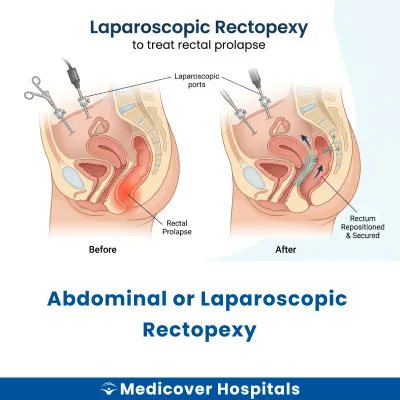
Abdominal or Laparoscopic Rectopexy is a surgical procedure aimed at correcting rectal prolapse. Rectal prolapse occurs when the rectum (the final section of the large intestine) slips out of its normal position. This surgery involves securing the rectum back into place within the pelvis, often using minimally invasive techniques like laparoscopy, which involves small incisions and the use of a camera.
This surgery is necessary for individuals experiencing rectal prolapse, which can lead to discomfort, incontinence, and other complications. If left untreated, the condition may worsen, affecting quality of life. Modern surgical approaches for this procedure include laparoscopic and robotic-assisted techniques. These methods offer quicker recovery and less postoperative pain. Please consult a healthcare professional for advice tailored to your condition.
Abdominal or Laparoscopic Rectopexy Doctors Near You
Discover experienced general-surgeons for abdominal or laparoscopic rectopexy at Medicover Hospitals across India. Choose your city and book a consultation to explore your treatment options today.
Why Choose Medicover Hospitals for Abdominal or Laparoscopic Rectopexy?
Get a second opinion from trusted experts and makeconfident, informed decisions.
 Get Second Opinion
Complete Guide To Abdominal Or Laparoscopic Rectopexy
Everything you need to know about the procedure, preparation, and recovery
Abdominal or Laparoscopic Rectopexy Surgery Indications
Doctors recommend abdominal or laparoscopic rectopexy when conservative treatments for rectal prolapse are ineffective. This procedure is often suggested to restore normal bowel function and alleviate associated symptoms.
Chronic Rectal Prolapse
Patients may experience a protrusion of the rectum through the anus, often accompanied by discomfort and bleeding. On examination, doctors observe the rectal tissue extending outside the body. Surgery is considered when lifestyle changes and medications fail to manage the condition.
Severe Faecal Incontinence
Individuals may suffer from an inability to control bowel movements, leading to social embarrassment. Doctors find weakened pelvic floor muscles during evaluation. When pelvic floor exercises and dietary adjustments do not improve symptoms, surgery is recommended.
Obstructed Defecation Syndrome
Patients report difficulty in passing stools, often requiring manual assistance. Diagnostic tests reveal a prolapsed rectum causing obstruction. Surgery is advised when dietary changes and laxatives do not alleviate the symptoms.
Rectal Pain and Discomfort
Persistent rectal pain and discomfort, especially during bowel movements, are common complaints. Physical examination shows rectal prolapse as the underlying cause. When pain management and non-surgical interventions are ineffective, rectopexy is considered.
Recurrent Prolapse Episodes
Patients experience frequent episodes of rectal prolapse, affecting their quality of life. Clinical findings confirm recurrent prolapse despite conservative management. Surgery becomes necessary when non-surgical methods fail to prevent recurrence.
How to Prepare for Abdominal or Laparoscopic Rectopexy?
Proper preparation is crucial for a successful abdominal or laparoscopic rectopexy. It helps minimise complications and ensures a smoother recovery.
- Medication Review: Stop NSAIDs, anticoagulants, and herbal supplements as advised by your doctor.
- Fasting Guidelines: Fast for at least 8 hours before the surgery to prepare for anaesthesia.
- Bowel Preparation: Follow the prescribed bowel prep to clear your intestines before the procedure.
- Pelvic Floor Exercises: Perform recommended exercises to strengthen the pelvic muscles before surgery.
- Comfortable Clothing: Wear loose clothing on the day of surgery for comfort and ease of movement.
- Transportation Arrangements: Arrange for someone to drive you home post-surgery as you may feel drowsy.
- Medication List: Bring a list of your current medications with dosages for hospital records.
- Pre-Surgery Consultation: Attend all pre-surgery appointments to discuss any concerns or questions.
Abdominal or Laparoscopic Rectopexy Surgery (Step-by-Step)
This procedure is performed by general surgeons. It typically lasts 2 to 3 hours and is done under general anaesthesia.
- Preparation: The patient is positioned on the operating table. General anaesthesia is administered to ensure comfort and unconsciousness during the procedure.
- Incision: Small incisions of about 1-2 cm are made in the abdomen. A trocar is inserted through these incisions to allow access for surgical instruments.
- Insertion of Laparoscope: A laparoscope, a thin tube with a camera, is inserted through one of the incisions. This provides a clear view of the internal organs on a monitor.
- Mobilisation of Rectum: The surgeon uses instruments like a harmonic scalpel to carefully mobilise the rectum. This involves freeing it from surrounding tissues.
- Rectum Fixation: The rectum is then lifted and secured to the sacrum using sutures or mesh. This helps prevent future prolapse.
- Closure: The instruments are removed, and the small incisions are closed with sutures or surgical glue. The patient is then moved to the recovery area.
- Recovery: The patient gradually wakes up from anaesthesia. Vital signs are monitored, and pain management is provided as needed.
Who Performs Abdominal or Laparoscopic Rectopexy Surgery?
This surgery is performed by general surgeons with expertise in laparoscopic procedures. They are skilled in using specialised instruments and techniques to correct rectal prolapse.
Recovery After Abdominal or Laparoscopic Rectopexy Surgery
Recovery from abdominal or laparoscopic rectopexy surgery involves gradual healing and lifestyle adjustments. It's important to follow your doctor's instructions to ensure a smooth recovery. Here's what you can expect during the recovery period.
Day 1-3:
- Rest is crucial. Avoid any strenuous activities.
- Start with a liquid diet. Include clear soups and gradually introduce soft foods like khichdi and moong dal.
- Pain and discomfort are common. Take prescribed medications as directed.
Day 4-7:
- Slowly increase activity levels. Short walks are encouraged to improve circulation.
- Continue with a soft diet. Include curd and dal-rice for easy digestion.
- Monitor the incision site for any signs of infection.
Week 2-4:
- Gradually resume normal activities but avoid heavy lifting.
- Return to work or school may be possible, depending on your recovery progress and job nature.
- Maintain a balanced diet with fibre-rich foods to prevent constipation.
Phase 1 Month and Beyond:
- Engage in light exercises as advised by your doctor.
- Continue with a healthy diet, incorporating a variety of fruits, vegetables, and whole grains.
- Follow up with your doctor for regular check-ups.
When to Seek Urgent Help:
- Severe abdominal pain or swelling.
- Fever or chills indicating possible infection.
- Persistent nausea or vomiting.
- Bleeding or discharge from the incision site.
Benefits of Abdominal or Laparoscopic Rectopexy Surgery
Abdominal or laparoscopic rectopexy is a surgical procedure aimed at correcting rectal prolapse. It offers several benefits for patients.
- Minimally Invasive: Laparoscopic approach involves smaller incisions, leading to quicker recovery.
- Reduced Pain: Patients typically experience less postoperative pain compared to open surgery.
- Shorter Hospital Stay: The minimally invasive nature often results in a shorter hospitalisation period.
- Improved Bowel Function: Many patients report better bowel control and function post-surgery.
- Lower Recurrence Rate: This procedure has shown to effectively reduce the chances of rectal prolapse recurrence.
Risks and Complications of Abdominal or Laparoscopic Rectopexy Surgery
While generally safe, abdominal or laparoscopic rectopexy carries certain risks and potential complications.
- Common: Infection at the incision site may occur, requiring medical attention.
- Common: Bleeding during or after the procedure is a possibility.
- Rare: Injury to surrounding organs such as the bladder or intestines can happen.
- Rare: Deep vein thrombosis (DVT) may develop post-surgery.
- Rare: Anesthesia-related complications can arise, though they are uncommon.
- Rare: There is a small risk of bowel obstruction following the procedure.
Cost of Abdominal or Laparoscopic Rectopexy Surgery
The cost of Abdominal or Laparoscopic Rectopexy Surgery at Medicover Hospitals varies based on the ward category chosen. Prices range from Rs. 8,080 to Rs. 156,000. This variation ensures that patients can select a ward type that suits their budget and preferences.
We offer transparent pricing and support for insurance and TPA, including CGHS, ESI, and major TPAs. Cashless facilities are also available for a hassle-free experience. Please contact the hospital for the latest insurance panel details as these may change periodically.
Frequently Asked Questions
1. How much does Abdominal or Laparoscopic Rectopexy surgery cost at Medicover Hospitals?
The cost of Abdominal or Laparoscopic Rectopexy surgery at Medicover Hospitals ranges from Rs. 8,080 to Rs. 156,000, depending on the type of room and care required.
2. Is Abdominal or Laparoscopic Rectopexy surgery covered under health insurance at Medicover?
Yes, it is covered by CGHS, ESI, and major TPAs. Please contact the hospital for current panel details.
3. Will I need a special diet after rectopexy?
After rectopexy, a soft diet including curd, dal-rice, and khichdi is recommended. This helps in smooth bowel movements and recovery.
4. Can rectal prolapse recur after rectopexy?
There is a possibility of recurrence, although it is low. Regular follow-ups and a healthy lifestyle can help minimise this risk.
5. Will I experience bowel movement changes post-surgery?
Some changes in bowel movements are common initially. These usually stabilise within a few weeks as your body adjusts.
6. How soon can I resume normal activities post-rectopexy?
Most patients can return to normal activities within 2-4 weeks. However, heavy lifting and strenuous activities should be avoided for 6 weeks.
7. Is constipation a concern after rectopexy?
Constipation can occur after surgery, but it can be managed with a high-fibre diet and adequate hydration. Consult your doctor for specific recommendations.
8. Is rectopexy surgery painful?
Rectopexy may cause moderate pain or discomfort after the procedure, especially in the first few days, but it is usually well-controlled with medications. Pain tends to improve steadily, and most patients feel significantly better within 1–2 weeks.
9. How long is a rectopexy procedure?
Rectopexy typically takes about 2 to 4 hours, depending on whether it is done laparoscopically or as open surgery. Minimally invasive approaches may have slightly shorter recovery times.


