 Call
Call Patient Reports
Abdominal Hydatid Cyst Excision Surgery Hospital by Expert Gastroenterologists Surgical
At Medicover Hospitals, our team of consultant surgical gastroenterologists, with qualifications like MS, DNB, and MCh, perform open abdominal hydatid cyst excision. This approach ensures effective removal of cysts. Patients often experience shorter hospital stays and reduced recovery times.
Expert Surgeons
Yearly Surgeries
Patient Satisfaction
What is Abdominal Hydatid Cyst Excision?
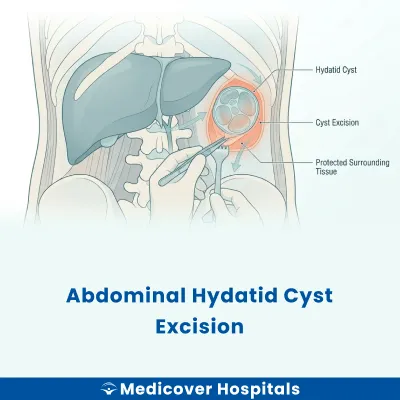
Abdominal Hydatid Cyst Excision is a surgical procedure to remove hydatid cysts from the abdomen. These cysts are caused by the Echinococcus parasite. They often form in the liver (hepatic region) but can also affect other abdominal organs. The surgery involves carefully excising the cyst to prevent spillage of its contents, which can cause severe allergic reactions.
This surgery is needed when hydatid cysts cause symptoms or complications. Conditions like cyst rupture, infection, or pressure on nearby organs may necessitate excision. If untreated, the cysts can lead to serious health issues, including organ dysfunction. Modern surgical approaches include laparoscopic and open surgery. These methods aim to safely remove the cysts with minimal complications.
Abdominal Hydatid Cyst Excision Doctors Near You
Discover skilled gastroenterologists-surgical for abdominal hydatid cyst excision at Medicover Hospitals across India. Choose your city and book a consultation to address your health needs today.
Why Choose Medicover Hospitals for Abdominal Hydatid Cyst Excision?
Get a second opinion from trusted experts and makeconfident, informed decisions.
 Get Second Opinion
Complete Guide To Abdominal Hydatid Cyst Excision
Everything you need to know about the procedure, preparation, and recovery
Abdominal Hydatid Cyst Excision Surgery Indications
Doctors recommend abdominal hydatid cyst excision when cysts cause significant symptoms or complications. This procedure is considered when non-surgical treatments are ineffective or when cysts pose a risk to health.
Severe Abdominal Pain
Patients may experience intense abdominal pain due to the pressure exerted by large cysts. Imaging tests like ultrasound or CT scans reveal cyst enlargement. When pain becomes unmanageable with medication, surgery is advised.
Cyst Rupture
Sudden, severe pain and allergic reactions can indicate a cyst rupture. Doctors confirm this through imaging and blood tests. Immediate surgical intervention is necessary to prevent further complications.
Infection or Abscess Formation
Fever, tenderness, and swelling in the abdomen may suggest infection. Lab tests and imaging confirm the presence of an abscess. If antibiotics fail to resolve the infection, surgery is required.
Obstruction of Bile Ducts
Symptoms like jaundice and digestive issues may occur if cysts obstruct bile ducts. Imaging shows the blockage. When endoscopic treatments are ineffective, surgical excision is needed.
Compression of Nearby Organs
Patients may experience symptoms related to organ compression, such as difficulty breathing or digestive problems. Scans reveal cysts pressing on organs. Surgery is recommended when these symptoms persist despite conservative measures.
How to Prepare for Abdominal Hydatid Cyst Excision?
Proper preparation for abdominal hydatid cyst excision is crucial for a smooth surgical experience and recovery. It helps minimise complications and ensures the procedure goes as planned.
- Medication Review: Stop NSAIDs, anticoagulants, and herbal supplements 7 days before surgery. Consult your doctor for guidance.
- Fasting Guidelines: Fast for at least 8 hours before the procedure. This is essential for general anaesthesia.
- Pre-Surgery Tests: Complete all required tests like blood work and imaging scans as advised by your healthcare provider.
- Personal Hygiene: Take a shower on the morning of the surgery. Avoid lotions, perfumes, or makeup.
- Comfortable Clothing: Wear loose, comfortable clothing on the day of surgery. It makes changing easier post-procedure.
- Transportation: Arrange for someone to drive you home after the surgery. Anaesthesia effects can linger.
- Medication List: Bring a list of your current medications, including dosages, to the hospital.
- Follow Instructions: Adhere to any additional instructions provided by your surgeon or healthcare team.
Abdominal Hydatid Cyst Excision Surgery (Step-by-Step)
Overview: This procedure is performed by gastroenterologists-surgical. It typically lasts 2-4 hours and is done under general anaesthesia.
- Preparation: The patient is given general anaesthesia to ensure they are asleep and pain-free. The surgical area is sterilised.
- Incision: A small incision, usually 1-2 cm, is made in the abdomen. This allows access to the cyst.
- Insertion of Instruments: A laparoscope is inserted through the incision. This tool helps the surgeon view the cyst on a monitor.
- Accessing the Cyst: Additional small incisions may be made for inserting other instruments like a trocar or harmonic scalpel. These help in reaching and handling the cyst.
- Cyst Excision: The cyst is carefully separated from surrounding tissues using a curette or bipolar cautery. Care is taken to prevent spillage of cyst contents.
- Closure: Once the cyst is removed, the incisions are closed with sutures or staples. A sterile dressing is applied.
- Recovery: The patient is moved to a recovery room. They are monitored as they wake up from anaesthesia.
Who Performs Abdominal Hydatid Cyst Excision Surgery?
This surgery is performed by gastroenterologists-surgical. These specialists are trained to handle complex abdominal procedures. They use advanced techniques and instruments to ensure effective cyst removal.
Recovery After Abdominal Hydatid Cyst Excision Surgery
Recovery from abdominal hydatid cyst excision surgery involves gradual healing and careful monitoring. Patients can expect a hospital stay followed by a period of rest at home. Adhering to dietary guidelines and activity restrictions is crucial for a smooth recovery.
Day 1-3:
- Hospital stay for monitoring. Pain management and antibiotics may be administered.
- Start with a liquid diet, including clear soups and coconut water.
- Limited movement; rest is essential.
Day 4-7:
- Transition to a soft diet. Include foods like dal-rice, khichdi, and curd.
- Gradually increase activity, such as short walks around the room.
- Continue to avoid heavy lifting and strenuous activities.
Week 2-4:
- Introduce more solid foods, such as moong dal and soft-cooked vegetables.
- Resume light activities and consider returning to work or school if feeling well.
- Follow-up appointments to check healing progress.
Phase 2 (1-3 months):
- Gradually return to regular diet, focusing on balanced meals.
- Engage in moderate exercises, avoiding high-impact activities.
- Regular check-ups to monitor recovery and prevent complications.
When to Seek Urgent Help:
- Fever or chills indicating possible infection.
- Severe abdominal pain or swelling.
- Persistent nausea or vomiting.
- Signs of wound infection, such as redness or discharge.
Benefits of Abdominal Hydatid Cyst Excision Surgery
Abdominal hydatid cyst excision is a surgical procedure aimed at removing cysts caused by the Echinococcus parasite. It offers several benefits for patients.
- Symptom Relief: Reduces abdominal pain and discomfort caused by cyst pressure.
- Prevention of Complications: Minimises the risk of cyst rupture and infection.
- Improved Organ Function: Restores normal function of affected organs by removing the cyst.
- Reduced Recurrence Risk: Decreases the likelihood of cyst reformation with complete excision.
Risks and Complications of Abdominal Hydatid Cyst Excision Surgery
While generally safe, abdominal hydatid cyst excision surgery carries certain risks and potential complications.
- Common: Infection at the surgical site may occur.
- Common: Bleeding during or after the procedure is possible.
- Rare: Allergic reactions to anaesthesia can happen.
- Rare: Injury to surrounding organs or tissues might occur.
- Rare: Bile leakage if the liver is involved in the surgery.
- Rare: Recurrence of the cyst if not completely removed.
Cost of Abdominal Hydatid Cyst Excision Surgery
The cost of Abdominal Hydatid Cyst Excision Surgery can vary starting from ₹1,20,000 - ₹3,50,000 based on factors such as the surgical approach, duration of hospital stay, room category, required diagnostics, and post-operative care.
At Medicover Hospitals, we offer transparent pricing for all procedures. We support insurance and TPA services, including CGHS, ESI, and major TPAs, with a cashless facility available for your convenience. Please contact the hospital for the latest insurance panel details as these may change periodically.
Frequently Asked Questions
1. How much does Abdominal Hydatid Cyst Excision surgery cost at Medicover Hospitals?
The cost varies starting from ₹1,20,000 - ₹3,50,000 based on factors like hospital location and services . Please contact Medicover Hospitals for detailed pricing information.
2. Is Abdominal Hydatid Cyst Excision surgery covered under health insurance at Medicover?
Many insurance plans, including CGHS and ESI, may cover this surgery. Please contact the hospital for current panel details as insurance panels may change.
3. Can liver function be affected after cyst excision?
Liver function may temporarily be affected after surgery. Regular follow-ups and liver function tests are essential to monitor recovery.
4. Is there a risk of bile leakage post-surgery?
Bile leakage is a rare complication after cyst excision. Immediate medical attention is required if symptoms like jaundice or abdominal pain occur.
5. Will I need to avoid fatty foods after surgery?
Yes, it's advisable to avoid fatty foods initially. Opt for lighter meals like dal-rice and khichdi to aid digestion during recovery.
6. How soon can I return to work post-surgery?
Most patients can return to work within 4-6 weeks. However, it depends on individual recovery and the nature of your job.
7. Can hydatid cysts recur after excision?
There is a possibility of recurrence if any cyst remnants are left. Regular check-ups and imaging tests are crucial to monitor for recurrence.


