 Call
Call Patient Reports
3 Dimensional Conformal Radiation Therapy Procedure by Expert Oncologists
3 Dimensional Conformal Radiation Therapy (3D-CRT) at Medicover Hospitals is performed by skilled oncologists with qualifications such as MS, DNB, and DM. This advanced technique targets tumours precisely, using a non-invasive approach. Patients often experience reduced side effects and improved treatment outcomes.
Expert Specialists
Yearly Treatments
Patient Satisfaction
What is 3 Dimensional Conformal Radiation Therapy?
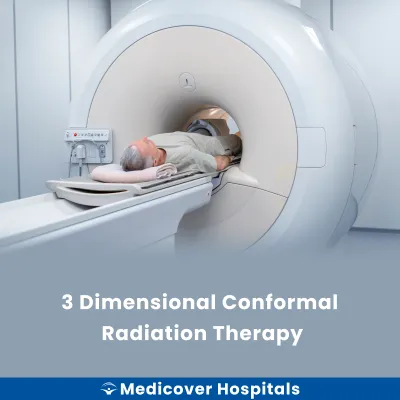
3 Dimensional Conformal Radiation Therapy (3D-CRT) is a technique used to deliver precise radiation doses to a tumour. It involves creating a three-dimensional representation of the tumour and surrounding organs. This allows for targeted treatment, sparing healthy tissues. Commonly used for cancers in the brain, prostate, and lungs, 3D-CRT helps in focusing radiation on the affected area.
This therapy is needed when cancerous tumours are present. It is crucial for controlling tumour growth and preventing spread. If left untreated, the condition can worsen, leading to severe health complications. Modern approaches like Intensity-Modulated Radiation Therapy (IMRT) and Image-Guided Radiation Therapy (IGRT) enhance the precision of 3D-CRT, improving outcomes for patients.
3 Dimensional Conformal Radiation Therapy Doctors Near You
Discover expert oncologists for 3 Dimensional Conformal Radiation Therapy at Medicover Hospitals across India. Choose your city and book a consultation to explore personalised cancer treatment options.
Why Choose Medicover Hospitals for 3 Dimensional Conformal Radiation Therapy?
Get a second opinion from trusted experts and makeconfident, informed decisions.
 Get Second Opinion
Complete Guide To 3 Dimensional Conformal Radiation Therapy
Everything you need to know about the procedure, preparation, and recovery
3 Dimensional Conformal Radiation Therapy procedure Indications
Doctors recommend 3 Dimensional Conformal Radiation Therapy (3D-CRT) to target and treat specific cancerous areas while sparing surrounding healthy tissue. This procedure is often advised when precision is crucial to avoid damaging critical structures.
Prostate Cancer
Patients may experience frequent urination, difficulty starting urination, or pelvic discomfort. Imaging tests like MRI or CT scans reveal localized prostate tumours. When hormone therapy or surgery is not suitable, 3D-CRT is considered to precisely target the tumour.
Brain Tumours
Symptoms such as headaches, seizures, or vision changes may occur. MRI scans show tumour location and size. If surgery is risky due to tumour location, 3D-CRT is recommended to focus radiation on the tumour while protecting brain function.
Lung Cancer
Patients often have persistent cough, chest pain, or shortness of breath. CT scans or PET scans confirm tumour presence and stage. When surgery is not an option due to tumour size or patient health, 3D-CRT is used to target the tumour precisely.
Head and Neck Cancers
Symptoms include difficulty swallowing, voice changes, or persistent sore throat. Imaging tests identify tumour extent. When surgery might affect vital functions, 3D-CRT is chosen to minimize impact on speech and swallowing.
Rectal Cancer
Patients may experience rectal bleeding, changes in bowel habits, or abdominal pain. Colonoscopy Procedure and imaging reveal tumour location. When surgery is not feasible, 3D-CRT helps shrink the tumour and relieve symptoms.
How to Prepare for 3 Dimensional Conformal Radiation Therapy?
Proper preparation for 3 Dimensional Conformal Radiation Therapy is crucial to ensure the treatment's effectiveness and minimise side effects. Following the guidelines can help you have a smoother experience.
- Medication Review: Stop NSAIDs, anticoagulants, and herbal supplements as advised by your doctor.
- Fasting Instructions: If sedation is required, fast for at least 6 hours before the procedure.
- Bowel Preparation: Follow any specific bowel prep instructions given by your healthcare team.
- Clothing: Wear loose, comfortable clothing to the hospital for ease during the procedure.
- Transportation: Arrange for someone to drive you home post-treatment, especially if sedation is used.
- Medication List: Bring a list of all medications you are taking, including dosages, to share with the medical team.
- Hydration: Stay well-hydrated unless instructed otherwise by your doctor.
- Emotional Support: Consider bringing a family member or friend for emotional support, if allowed.
3 Dimensional Conformal Radiation Therapy procedure (Step-by-Step)
Overview: This procedure is performed by oncologists. It typically lasts 15-30 minutes per session. It does not require anaesthesia as it is non-invasive.
- Simulation: The patient lies on a treatment table. A CT scan is performed to map the tumour's exact location. The patient must remain still during this process.
- Planning: Oncologists use the CT images to design a precise radiation plan. Special software helps in shaping the radiation beams to match the tumour's 3D shape.
- Positioning: The patient is positioned on the treatment table in the same way as during the simulation. Immobilisation devices may be used to ensure accuracy.
- Beam Shaping: Multileaf collimators (MLCs) are used to shape the radiation beams. This ensures that the radiation targets only the tumour, sparing healthy tissues.
- Radiation Delivery: The linear accelerator delivers the radiation beams. The patient does not feel any sensation during this process.
- Monitoring: The oncologist monitors the patient from a control room. Communication is maintained through an intercom system.
- Completion: The session ends, and the patient can resume normal activities immediately. Follow-up sessions are scheduled as per the treatment plan.
Who Performs 3 Dimensional Conformal Radiation Therapy procedure?
Radiation oncologists perform this procedure. They specialise in using radiation to treat cancer. They work closely with medical physicists and radiation therapists to ensure precise treatment delivery.
Recovery After 3 Dimensional Conformal Radiation Therapy Procedure
Recovery from 3 Dimensional Conformal Radiation Therapy (3D-CRT) varies for each individual. Patients may experience fatigue and skin changes in the treated area. It's important to follow the doctor's advice for a smooth recovery.
Day 1-3:
- Rest is crucial. Avoid strenuous activities.
- Consume light meals like dal-rice and soups to maintain energy levels.
- Stay hydrated with water and fresh juices.
Day 4-7:
- Gradually increase light activities, but avoid heavy lifting.
- Include soft foods like khichdi and moong dal in your diet.
- Monitor skin for any redness or irritation.
Week 2:
- Fatigue may persist. Continue to rest as needed.
- Incorporate curd into meals for digestive health.
- Most patients can resume work or school, depending on their energy levels.
Phase 3 (Week 3-4):
- Gradually return to normal activities, but listen to your body.
- Maintain a balanced diet with plenty of fruits and vegetables.
- Regular follow-ups with your doctor are essential.
When to Seek Urgent Help
- Severe skin reactions or Bleb in the treated area.
- Uncontrolled nausea or vomiting.
- High fever or signs of infection.
- Sudden, unexplained weight loss.
If you experience any of these symptoms, contact your healthcare provider immediately.
Benefits of 3 Dimensional Conformal Radiation Therapy procedure
3 Dimensional Conformal Radiation Therapy (3D-CRT) is a precise cancer treatment technique. It offers several benefits for patients undergoing radiation therapy.
- Precision Targeting: 3D-CRT allows precise targeting of the tumour, reducing damage to surrounding healthy tissues.
- Improved Outcomes: By focusing radiation on the tumour, it can enhance treatment effectiveness and potentially improve outcomes.
- Customised Treatment: The therapy is tailored to the shape and size of the tumour, providing a personalised approach to treatment.
- Reduced Side Effects: With targeted radiation, patients may experience fewer side effects compared to conventional radiation therapy.
Risks and Complications of 3 Dimensional Conformal Radiation Therapy procedure
While 3D-CRT is a beneficial treatment, it does come with certain risks and potential complications. Patients should be aware of these before starting therapy.
- Common: Skin irritation or changes in the treated area.
- Common: Fatigue during or after treatment sessions.
- Common: Temporary hair loss in the treated area.
- Rare: Long-term damage to nearby organs or tissues.
- Rare: Secondary cancers due to radiation exposure.
- Rare: Changes in blood cell counts.
Cost of 3 Dimensional Conformal Radiation Therapy procedure
The cost of 3 Dimensional Conformal Radiation Therapy at Medicover Hospitals ranges from ₹75,000 to ₹2,25,000. The price varies depending on the ward category chosen, such as day care, general, or private suites. We offer transparent pricing to ensure clarity for our patients.
Insurance and TPA support are available, with acceptance of CGHS, ESI, and major TPAs. A cashless facility is also provided for your convenience. Please contact the hospital for the latest insurance panel details as these may change periodically.
Frequently Asked Questions
1. How much does 3DCRT cost at Medicover Hospitals?
The cost of 3 Dimensional Conformal Radiation Therapy ranges from ₹75,000 to ₹2,25,000 across Medicover Hospitals.
2. Is 3DCRT covered under health insurance at Medicover?
3 Dimensional Conformal Radiation Therapy may be covered by CGHS, ESI, and major TPAs. Please contact the hospital for current panel details.
3. Will 3DCRT affect my lung function?
3 Dimensional Conformal Radiation Therapy can impact lung function if the lungs are in the treatment area. Discuss potential effects with your oncologist.
4. Can I drive after 3DCRT for brain tumours?
Driving is usually not recommended immediately after 3DCRT for brain tumours due to potential side effects. Consult your doctor for personalised advice.
5. Will my skin change after 3DCRT for breast cancer?
Skin changes, such as redness or irritation, are common after 3DCRT for breast cancer. These usually improve within a few weeks post-treatment.
6. Can I eat spicy food during 3DCRT for throat cancer?
Spicy food may irritate the throat during 3DCRT for throat cancer. Opt for softer foods like dal-rice or khichdi for comfort.
7. Will 3DCRT for prostate cancer affect my libido?
3 Dimensional Conformal Radiation Therapy for prostate cancer can impact libido temporarily. Discuss any concerns with your healthcare provider for guidance.


