 Call
Call Patient Reports
Barretts Esophagus: Causes, Diagnosis and Treatments
Written by Medicover Team and Medically Reviewed by Dr A Venkateshwar Rao , Gastroenterologists Medical
Table of Contents
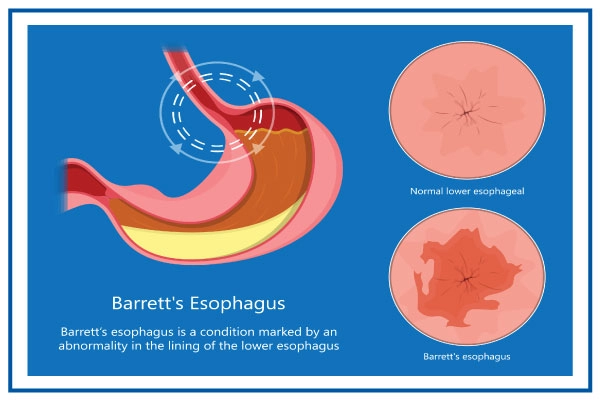
Barrett's esophagus (BE) is a condition in which the flat pink lining of the esophagus changes and becomes more like the lining of the small intestine rather than the esophagus. The primary reason for Barrett's esophagus is because of chronic inflammation resulting from Gastroesophageal Reflux Disease (GERD).
Gastroesophageal reflux disease (GERD) happens when stomach acid regularly moves back into the hollow muscular tube known as esophagus. This back flow of acid reflux can irritate the lining of the esophagus. GERD frequently comes with symptoms like regurgitation or heartburn. Barrett's esophagus may develop in a few people as a result of this GERD that changes the cells lining the lower esophagus.
A higher risk of esophageal cancer is linked to Barrett's esophagus. Even though there is a low chance of developing esophageal cancer, it is crucial to undergo routine health examinations with thorough imaging and extensive esophageal biopsies to look for precancerous cells (dysplasia). To prevent esophageal cancer, it is important to treat precancerous cells on time.
What Are the Symptoms of Barrett's Esophagus?
Barrett's esophagus does not have symptoms. Its symptoms are related to complications of chronic GERD, they are as follows:
- Frequent heartburn and stomach contents coming back up
- Having trouble swallowing food
- Occasionally, chest pain
- Black or bloody stools
- Vomiting blood
Only some patients with Barrett's esophagus report having significant acid reflux symptoms. As a result, you should talk to your doctor about your digestive health and the potential for Barrett's esophagus.
What Are the Causes of Barrett's Esophagus?
Barrett's Esophagus develops when the normal lining of the lower esophagus is repeatedly damaged by chronic acid reflux. Over time, this damage causes the normal squamous cells to be replaced by intestinal-type cells, increasing the risk of esophageal cancer. Several factors can contribute to the development of this condition.
- Chronic gastroesophageal reflux disease (GERD): Long-term acid reflux is the most common cause of Barrett's Esophagus.
- Hiatal hernia: A hiatal hernia can weaken the lower esophageal sphincter, allowing stomach acid to flow back into the esophagus.
- Obesity: Excess abdominal fat increases pressure on the stomach, raising the risk of acid reflux.
- Smoking: Tobacco use damages the esophageal lining and worsens acid reflux.
- Age and gender: The condition is more common in adults over 50 years of age and occurs more frequently in men.
- Family history: A family history of Barrett's Esophagus or esophageal cancer may increase the risk.
When to See a Doctor for Barrett's Esophagus?
A Gastroenterologist specializes in Barrett's Esophagus. Seek care if persistent heartburn, difficulty swallowing, or chest pain disrupts daily life or worsens despite medication, as these may signal progression requiring urgent evaluation.
You should see a doctor if you have:
- Frequent heartburn or acid reflux occurring more than twice a week that does not improve with over-the-counter medications.
- Persistent difficulty or pain when swallowing food or liquids, even after dietary adjustments.
- Unexplained weight loss or chronic hoarseness alongside ongoing digestive discomfort.
Get medical help immediately if:
- You vomit blood or notice dark, tarry stools, which may indicate serious internal bleeding in the esophagus.
- You experience sudden, severe chest pain or pressure that could signal esophageal perforation or a cardiac event.
- You have severe difficulty swallowing to the point where you are unable to eat or drink anything at all.
These could be signs of a serious complication like Barrett's Esophagus, which needs urgent care.
Find Gastroenterologists-medical for Barretts Esophagus Treatment Near You
- Doctor for Barretts Esophagus in Hyderabad - Hitech City
- Doctor for Barretts Esophagus in Hyderabad - Financial District
- Doctor for Barretts Esophagus in Secunderabad
- Doctor for Barretts Esophagus in Bengaluru
- Doctor for Barretts Esophagus in Navi Mumbai
- Doctor for Barretts Esophagus in Pune
- Doctor for Barretts Esophagus in Vizag
- Doctor for Barretts Esophagus in Nashik
- Doctor for Barretts Esophagus in Chh.Sambhajinagar
- Doctor for Barretts Esophagus in Kurnool
- Doctor for Barretts Esophagus in Vizianagaram
- Doctor for Barretts Esophagus in Nellore
- Doctor for Barretts Esophagus in Kakinada
- Doctor for Barretts Esophagus in Warangal
- Doctor for Barretts Esophagus in Karimnagar
- Doctor for Barretts Esophagus in Chandanagar
- Doctor for Barretts Esophagus in Nizamabad
- Doctor for Barretts Esophagus in Srikakulam
How Is Barrett's Esophagus Diagnosed?
Barrett's Esophagus is diagnosed using endoscopy and biopsy to examine changes in the lining of the esophagus. These tests help confirm the diagnosis, identify precancerous changes (dysplasia), and guide appropriate treatment and follow-up.
- Medical history and physical examination: The doctor reviews symptoms such as chronic heartburn, acid reflux, and difficulty swallowing.
- Upper gastrointestinal endoscopy: A flexible tube with a camera is used to examine the esophagus for abnormal changes in the lining.
- Esophageal biopsy: Small tissue samples are collected during endoscopy and examined under a microscope to confirm Barrett's Esophagus and detect dysplasia.
- Histopathological examination: The biopsy identifies the presence of intestinal-type cells replacing the normal esophageal lining.
- Surveillance endoscopy: Regular follow-up endoscopies with biopsies may be recommended to monitor for progression to dysplasia or esophageal cancer.
- Additional tests: Esophageal pH monitoring or esophageal manometry may be performed in selected patients to evaluate acid reflux and esophageal function.
What Are the Treatment Options for Barrett's Esophagus?
Treatment for Barrett's Esophagus focuses on controlling acid reflux, promoting healing of the esophagus, and preventing progression to esophageal cancer. The treatment plan depends on the severity of the condition and whether precancerous changes (dysplasia) are present.
- Acid-suppressing medications: Proton pump inhibitors (PPIs) are commonly prescribed to reduce stomach acid and relieve GERD symptoms.
- Lifestyle modifications: Maintaining a healthy weight, avoiding smoking and alcohol, eating smaller meals, and avoiding foods that trigger reflux can help control symptoms.
- Endoscopic therapy: Procedures such as radiofrequency ablation, endoscopic mucosal resection, or cryotherapy may be recommended for patients with dysplasia or early-stage cancer.
- Surgery: Anti-reflux surgery (fundoplication) may be considered when medications do not adequately control GERD or in selected patients.
- Regular surveillance endoscopy: Periodic endoscopic examinations with biopsies help monitor for progression to dysplasia or esophageal cancer.
- Treatment of complications: Esophageal strictures or ulcers caused by chronic reflux may require additional endoscopic treatment.
Your health is everything - prioritize your well-being today.
 Consult Barretts Esophagus Doctors Today
Complications of Barrett's Esophagus
Those who have Barrett's esophagus are more likely to get esophageal cancer. Even in patients whose esophageal cells have undergone precancerous alterations, the danger is minimal. Fortunately, esophageal cancer seldom occurs in patients with Barrett's esophagus.
Lifestyle and Self-Care
Changes in lifestyle may help with GERD symptoms, which may be the cause of Barrett's esophagus. Consider the following precautions:
- Maintain a healthy weight.
- Avoid foods and beverages, including chocolate, coffee, wine, and mint, that make you experience heartburn.
- Giving up smoking.
- Drink water
- Taking proper rest and sleep.
Frequently Asked Questions
1. What are the common symptoms of Barrett's esophagus?
Symptoms can include persistent heartburn, difficulty swallowing, chest pain, regurgitation, and even unexplained weight loss.
2. What causes Barrett's esophagus?
The primary cause of Barrett's esophagus is prolonged gastroesophageal reflux disease (GERD), where stomach acid flows back into the esophagus. This chronic irritation leads to the cellular changes in the lining.
3. Is Barrett's esophagus a precursor to cancer?
Yes, Barrett's esophagus is considered a risk factor for developing esophageal adenocarcinoma, a type of cancer. However, not all individuals with Barrett's esophagus will develop cancer.
4. How is Barrett's esophagus diagnosed?
Diagnosis involves endoscopic procedures like upper endoscopy and biopsy. During upper endoscopy, a thin, flexible tube with a camera is inserted into the esophagus to examine the lining and obtain tissue samples.
5. What treatments are available for Barrett's esophagus?
Treatment options vary based on the severity and risk factors. They may include medication to reduce acid reflux, lifestyle changes, endoscopic therapies to remove abnormal tissue, or even surgery in more advanced cases.
6. Can Barrett's esophagus be reversed?
While the cellular changes themselves may not be reversible, proper treatment and management can help prevent further progression and reduce the risk of complications, including cancer.
7. Can lifestyle changes help manage Barrett's esophagus?
Yes, lifestyle modifications such as maintaining a healthy weight, avoiding trigger foods, quitting smoking, and elevating the head of your bed can help manage symptoms and reduce acid reflux.


