 Call
Call Patient Reports
- Cardiology 84
- Dermatology 45
- Endocrinology 33
- ENT 16
- Fertility 190
- Gastroenterology 78
- General-Medicine 81
- Gynecology 80
- Hematology 19
- Infectious-Diseases 33
- Neurology 52
- Oncology 34
- Ophthalmology 23
- Orthopedics 69
- Pediatrics 31
- Procedure 23
- Public-Health 144
- Pulmonology 59
- Radiology 8
- Urology 68
- Wellness 161
- Woman-and-child 77
- 2748
- 3.7 Minute
Written by Medicover Team and Medically Reviewed by Dr B Ananta Rao, Consultant General & Laparoscopic Surgeon
How Our Top Specialists at Medicover Hospitals, Vizag, Deliver Timely Emergency Surgical Care
Medical emergencies often occur without warning and require immediate medical attention. Acute abdominal pain, sudden bloating, internal bruising, or trauma may become life-threatening if they are not treated in time. What matters then is early diagnosis, a team of experienced surgeons, and a hospital that can act in an instant.
At Medicover Hospitals, Vizag, we often see patients arriving in emergency with a sudden abdominal condition that needs urgent investigation. In such patients, our objective is simple, to discover the issue, stabilize the patient, and determine if surgery is required. An emergency team works best when surgeons, emergency physicians, anaesthetists, and critical care specialists work in close coordination.
Rapid Assessment and Diagnosis in Abdominal Emergencies
In abdominal emergencies, clarity within the first few hours can significantly impact recovery. Our emergency teams initiate parallel evaluation - clinical examination, laboratory tests, and imaging - without delay.
Advanced imaging tools such as ultrasound and CT scans help us identify conditions like acute appendicitis, intestinal obstruction, perforation, gallbladder inflammation, internal bleeding, or traumatic injuries. Pre-anesthesia assessment and surgical fitness evaluation are conducted simultaneously to avoid unnecessary waiting.
This streamlined process allows an experienced abdominal surgery specialist in Vizag to make timely and informed surgical decisions.
Immediate Surgical Readiness
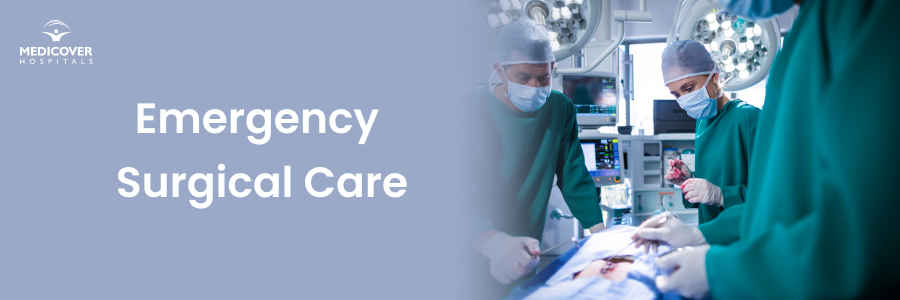
Emergency surgery requires infrastructure that is constantly prepared. Our operation theatres are fully equipped with modern anaesthesia systems, real-time monitoring, and high-definition laparoscopic platforms.
When required, a skilled emergency abdominal surgery doctor in Vizag can proceed with minimally invasive laparoscopic techniques, which often reduce post-operative pain and promote quicker recovery. In more complex or unstable cases, open surgery may be performed to ensure complete control and safety.
The choice of technique is guided entirely by patient stability, underlying condition, and overall risk assessment - not by preference alone.
Get a second opinion from trusted experts and makeconfident, informed decisions.
Get Second OpinionNot sure where to start?
Talk to a patient care advisor — free, confidential, 24/7. We'll match you to the right specialist and book your appointment in minutes.
Managing Common Abdominal Emergencies
Our general surgery teams routinely manage conditions such as:
- Acute appendicitis
- Gallbladder infections and gallstones
- Intestinal obstruction
- Perforated ulcers
- Complicated hernias
- Abdominal trauma
- Bowel-related emergencies
In trauma-related cases, surgical teams work closely with emergency physicians and critical care specialists to stabilize patients before and after surgery.
Multispecialty Support for Complex Cases
Emergency abdominal conditions sometimes involve more than one organ system. A perforation may lead to sepsis, trauma may affect multiple structures, or an intestinal obstruction may require gastrointestinal surgical expertise.
Our model integrates anaesthesiology, radiology, intensive care, and, when necessary, gastroenterology or colorectal specialists. This multidisciplinary coordination allows us to address both the immediate problem and potential complications proactively.
Complex emergency cases may require collaboration between multiple specialties. Surgeons work closely with anaesthesiologists, radiologists, gastroenterologists, and critical care specialists to ensure coordinated and safe treatment.
Focus on Infection Control and Safety
Emergency surgeries carry a higher risk of infection due to contamination or inflammation. Strict infection-control protocols, sterile operation theatres, and evidence-based antibiotic protocols are essential components of our surgical practice.
Post-operatively, patients are monitored in modern recovery units and ICUs where vital parameters are continuously tracked. Early mobilization, wound care management, and nutritional planning are initiated as soon as clinically appropriate.
Your health is everything - prioritize your well-being today.
Schedule Your AppointmentMinimally Invasive Options When Possible
Where patient stability allows, laparoscopic surgery is often preferred in emergency abdominal conditions. High-definition laparoscopic systems and advanced camera technologies provide enhanced visualization during procedures such as laparoscopic appendectomy or cholecystectomy.
Not all emergency cases are suitable for minimally invasive surgery. The decision depends on factors such as the patient's stability, severity of infection, and complexity of the condition.
Minimally invasive approaches may result in:
- Smaller incisions
- Reduced blood loss
- Lower post-operative pain
- Faster discharge
However, we remain guided by safety first. If an open procedure ensures better control in a critical scenario, that option is chosen without hesitation.
Clear Communication During Crisis
Emergency situations can be overwhelming for families. Alongside medical intervention, we prioritize transparent communication. Our surgical team explains the diagnosis, planned procedure, possible risks, and expected recovery timeline in clear terms before proceeding whenever possible.
After surgery, structured follow-up and rehabilitation planning support a smoother recovery and reduce readmission risk.
Prepared for Urgency, Committed to Recovery
Timely emergency surgical care depends not only on skilled surgeons but on systems that function without delay. At Medicover Hospitals, Vizag, our emergency abdominal care is designed to respond quickly, operate safely, and support recovery comprehensively.
When minutes matter, coordinated expertise and structured readiness can make all the difference - and that responsibility is one we approach with seriousness, precision, and care.
Frequently Asked Questions
Severe or persistent abdominal pain, sudden bloating, vomiting, fever, blood in stool, or inability to pass stool or gas may signal a serious abdominal emergency. Immediate medical evaluation is important to prevent complications.
Doctors typically perform a physical examination, blood tests, and imaging such as an ultrasound or CT scans. These tests help detect infections, internal bleeding, organ perforation, bowel obstruction, or other serious abdominal conditions.
Not all abdominal emergencies require surgery. Some conditions can be treated with medications, fluids, antibiotics, or monitoring. Surgery is recommended when there is severe infection, organ rupture, obstruction, or uncontrolled bleeding.
Laparoscopic surgery uses small incisions and specialized instruments to treat certain abdominal emergencies. It often results in less pain, reduced infection risk, shorter hospital stays, and faster recovery compared to traditional open surgery.
Recovery time depends on the condition, type of surgery, and overall health. Minimally invasive procedures may allow recovery within a few weeks, while complex open surgeries may require longer healing and follow-up care.
- Cardiology
- Case Studies
- Dermatology
- Endocrinology
- ENT
- Fertility
- Gastroenterology
- General
- General-Medicine
- Gynecology
- Hematology
- Infectious-Diseases
- Medical News
- Neurology
- Oncology
- Ophthalmology
- Orthopedics
- Pediatrics
- Procedure
- Public-Health
- Pulmonology
- Radiology
- Second Opinion
- Urology
- Wellness
- Woman-and-child
Related Blogs
Still have questions? Speak with our experts now!
040-68334455


