 040 68334455
 WhatsApp
 Patient Portal
 Home Care
- Cardiology 84
- Dermatology 45
- Endocrinology 33
- ENT 16
- Fertility 190
- Gastroenterology 78
- General-Medicine 81
- Gynecology 80
- Hematology 19
- Infectious-Diseases 33
- Neurology 52
- Oncology 34
- Ophthalmology 23
- Orthopedics 69
- Pediatrics 31
- Procedure 23
- Public-Health 144
- Pulmonology 59
- Radiology 8
- Urology 68
- Wellness 161
- Woman-and-child 77
- 1778
- 1.2 Minute
Written by Medicover Team and Medically Reviewed by Dr Nithya C Achaiah, HOD & Consultant
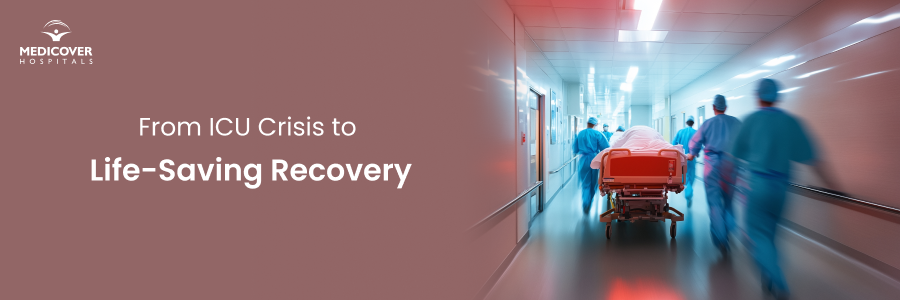
From Critical to Stable: The Remarkable ICU Turnaround Led by Medicover Bengaluru Doctors
For Mrs. Meena, a 50-year-old home-maker in Whitefield, the severe flu symptoms seemed manageable until, within 48 hours, her body suddenly collapsed. Fever spiked, breathing became rapid and shallow, and she slipped into confusion. This wasn't a simple illness; it was severe sepsis leading to the beginnings of multi-organ failure, a devastating, life-threatening crisis demanding immediate, expert intervention. Her family was shocked by the speed and severity of the illness.
In that moment of absolute desperation, they needed assurance that the highest level of life support was instantly available. They rushed her to Medicover Hospital, Bengaluru.
Recognized for its advanced life-support systems and rapid multispecialty response, Medicover stands as the best emergency hospital in Whitefield and is the trusted destination for managing the most complex critical conditions.
The Emergency Arrival: 24/7 ICU Readiness
Mrs. Meena's arrival was met by a dedicated critical care team already mobilized at Medicover Hospital. As the best critical care hospital in Whitefield, Bangalore, Medicover's ICU is not just a room with beds, but a hub of intensive monitoring and expertise available 24/7.
Under the leadership of Dr. Nithya C Achaiah, HOD & Consultant with over 15 years of experience in critical care medicine, the ICU response moved with speed, structure, and precision. The focus was immediate stabilization of failing organs while identifying the root cause of the crisis.
Mrs. Meena was swiftly moved into an Advanced Intensive Care Unit (ICU). Advanced ventilators were deployed for respiratory support, while hemodynamic monitors tracked her heart function in real time.
Simultaneously, rapid diagnostic services were initiated, including bedside imaging and urgent laboratory investigations such as blood gases and infection markers. This coordinated, intensivist-led approach allowed the team to quickly confirm severe sepsis with early multi-organ involvement and initiate life-saving treatment without delay.
This level of preparedness and expert oversight forms the backbone of successful critical care management at Medicover Hospital, Bengaluru.
Get a second opinion from trusted experts and makeconfident, informed decisions.
Get Second OpinionNot sure where to start?
Talk to a patient care advisor — free, confidential, 24/7. We'll match you to the right specialist and book your appointment in minutes.
The Expertise That Saves: Multispecialty Management
Managing sepsis and multi-organ failure requires more than one specialist; it requires a unified, experienced ICU team, led by a dedicated intensivist.
The critical care team, guided by the senior intensivists, immediately began managing the sepsis, carefully balancing fluids, administering targeted antibiotics, and supporting her failing kidneys using Dialysis machines for renal replacement therapy, if needed.
The team's collective experience in Sepsis and systemic infection management allowed them to manage simultaneous challenges, from Advanced respiratory support to maintaining neurological stability. This round-the-clock intensive monitoring, backed by modern technology, is the reason Medicover is the best critical care hospital in Whitefield, Bangalore.
Explaining Critical Care in Simple Words
Critical care, or intensive care, is the highest level of medical attention provided for patients with life-threatening illnesses or injuries, where failure of one or more vital organs is imminent.
- What is an Intensivist? An intensivist is a doctor who specializes solely in critical care medicine. They coordinate all aspects of the patient's care, acting as the leader of the multispecialty team (which may include a pulmonologist, cardiologist, and neurologist).
- Life Support Systems: These are essential technologies, such as advanced ventilators, cardiac monitors, and dialysis machines, that temporarily take over the function of failed organs, giving the patient's body time to heal the underlying condition.
- The Goal: The aim of the best emergency hospital in Whitefield, Bangalore, is not just to keep the patient alive, but to achieve a stable turnaround that enables long-term recovery and a return to a functional life.
The Turnaround: The Road to Stability
Mrs. Meena spent nearly a week in the ICU, battling the systemic infection. The team's rigorous adherence to strict infection control and patient safety protocols was paramount in preventing secondary complications. They used Multimodal patient monitoring systems to detect the slightest changes, allowing for instantaneous adjustments to her treatment.
Slowly, signs of improvement emerged. Her fever stabilized, her kidney function improved, and her reliance on the ventilator decreased. The moment she was successfully taken off the breathing machine and stabilized, the critical turnaround was a massive victory, showcasing the successful management of a severe, life-threatening condition.
The Family’s Relief
When Mrs. Meena was transferred from the Advanced ICU to the High-Dependency Unit (HDU), the flood of relief for her family was overwhelming. The care extended beyond her medical stabilization; the staff provided daily updates and maintained a compassionate environment that supported the family through the emotional trauma of critical illness.
They realized that the skill and vigilance available at the best critical care hospital in Whitefield, Bangalore, had given them a second chance.
Recovery Journey at Medicover
Mrs. Meena's recovery was guided by Medicover's continuous care model.
- Step-Down Care: She received specialized monitoring in the HDU before moving to a regular ward, ensuring stabilization after the intense critical phase.
- Rehabilitation: Post-critical care, she began therapy focusing on rebuilding the muscle strength lost during her ICU stay, aided by the neurorehabilitation team for comprehensive physical recovery.
- Comprehensive Management: Her post-discharge care included detailed guidance on Post-operative intensive care follow-up and long-term health management, ensuring she avoided future severe complications.
Your health is everything - prioritize your well-being today.
Schedule Your AppointmentEducational Takeaways for Readers
Critical care is a crucial service that demands instant access and expertise:
- Recognize Sepsis/Crisis: Look for severe signs like extreme weakness, confusion, rapid breathing, and very low blood pressure.
- Act Fast: For life-threatening emergencies, choose the best emergency hospital in Whitefield, Bangalore, one with a dedicated 24/7 ICU and on-site specialists.
- Holistic Support: The best critical care includes not only machines and medicine but also expert sepsis and systemic infection management and compassionate support for the family.
Conclusion
Mrs. Meena's remarkable recovery from the brink of multi-organ failure is a testament to the skill and dedication of Medicover's Intensivist-led team.
At Medicover Hospital Whitefield, Bangalore, our commitment is to provide expert, round-the-clock care for all life-threatening conditions, from Stroke and neurological emergency care to managing Multi-organ failure. Led by specialists like Dr. Nithya C Achaiah, HOD & Consultant, we ensure the best critical care hospital in Whitefield, Bangalore, is always ready to achieve the best possible outcomes when time matters most.
Contact Our 24/7 Emergency & Critical Care Services
Disclaimer: This blog is based on a real-life medical scenario. Every patient's condition is unique. Please consult a doctor for a proper diagnosis and treatment plan.
Frequently Asked Questions
Yes, our ICU services are available 24/7 ICU services with experienced intensivists for continuous monitoring. Our critical care unit is administered by a skilled group of critical care nurses, anesthesiologists, and dedicated intensivists, ensuring round-the-clock expert care.
Yes. As the best critical care hospital in Whitefield, Bangalore, Medicover manages complex inter-hospital transfers. We accept critically ill patients from other facilities requiring our level of Advanced life support and multispecialty expertise, including those needing Renal replacement therapy (dialysis).
Emergency care (ER) provides immediate assessment and stabilization for acute issues (like trauma or sudden illness). Critical care (ICU) provides continuous, specialized, life-support and intensive monitoring for stabilized patients whose lives remain in immediate danger due to organ failure or severe illness, managing conditions like severe sepsis.
Infection control is a top priority. We maintain Strict infection control and patient safety protocols through dedicated Isolation units, specialized cleaning procedures, and continuous training for staff, minimizing the risk of hospital-acquired infections.
Yes. Our critical care department is subdivided into specialized areas, including Comprehensive cardiac care units and Specialized neurocritical care units, ensuring patients with specific conditions like major stroke or post-cardiac surgery recovery receive targeted, expert attention.
Yes. We support family understanding and confidence. While critical care decisions are time-sensitive, we facilitate meetings with senior intensivists to provide a second opinion and clarify the rationale behind the Advanced life support and treatment plan for your loved one.
A patient is shifted to the ICU when their condition becomes critical or unstable and needs constant monitoring. This includes severe breathing difficulty, low oxygen levels, unstable blood pressure, irregular heartbeat, sudden confusion, or the need for ventilator support or strong medications.
Sepsis may worsen if there is persistent fever or very low temperature, rapid breathing, falling blood pressure, reduced urine output, increasing confusion, extreme weakness, or cold, pale skin. These signs suggest organ stress and require urgent intensive care.
- Cardiology
- Case Studies
- Dermatology
- Endocrinology
- ENT
- Fertility
- Gastroenterology
- General
- General-Medicine
- Gynecology
- Hematology
- Infectious-Diseases
- Medical News
- Neurology
- Oncology
- Ophthalmology
- Orthopedics
- Pediatrics
- Procedure
- Public-Health
- Pulmonology
- Radiology
- Second Opinion
- Urology
- Wellness
- Woman-and-child
Related Blogs
Still have questions? Speak with our experts now!
040-68334455


Feeling unwell?
Request a callback!
