 Call
Call Patient Reports
- Cardiology 84
- Dermatology 45
- Endocrinology 33
- ENT 16
- Fertility 190
- Gastroenterology 78
- General-Medicine 81
- Gynecology 80
- Hematology 19
- Infectious-Diseases 33
- Neurology 52
- Oncology 34
- Ophthalmology 23
- Orthopedics 69
- Pediatrics 31
- Procedure 23
- Public-Health 144
- Pulmonology 59
- Radiology 8
- Urology 68
- Wellness 161
- Woman-and-child 77
- 2748
- 3.7 Minute
Written by Medicover Team and Medically Reviewed by Dr Ravishankar Kinjarapu, Senior Consultant Surgical Gastroenterology and GI Oncology
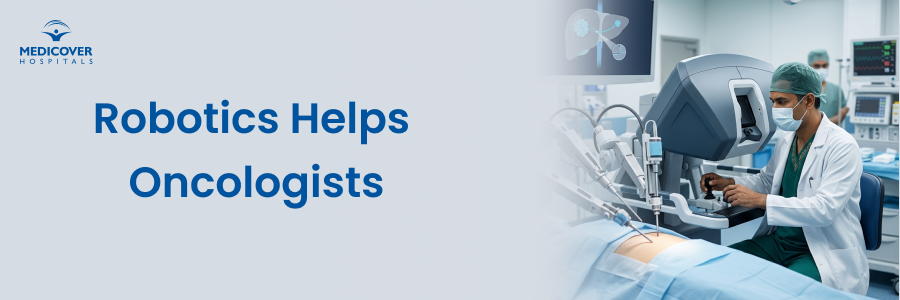
How Advanced Robotics Helps Oncologists Preserve Healthy Tissue During Cancer Surgery
Cancer surgery requires a careful balance. Surgeons must remove the tumour completely while preserving as much healthy tissue as possible so that patients can maintain normal function after surgery. Achieving this balance is one of the most important goals of modern oncological care, and advanced robotic systems are helping surgeons achieve it with greater precision.
At Medicover Hospitals, our comprehensive robotic surgery program is designed around one central principle: precision. For cancers affecting the gastrointestinal tract, that precision directly impacts outcomes such as bowel control, nutritional absorption, recovery speed, and overall quality of life.
Why Tissue Preservation Is Important in GI and Colorectal Cancer Surgery
In gastrointestinal and colorectal cancers, tumours are often located close to vital structures - blood vessels, nerves, sphincter muscles, and adjacent organs. Removing too little tissue increases the risk of recurrence. Removing too much may result in avoidable complications, long-term functional issues or permanent lifestyle changes.
A skilled Robotic GI surgery specialist in Vizag uses robotic-assisted systems to enhance visualization and control during surgery. The technology does not replace surgical expertise - it enhances it. Through magnified 3D imaging and highly articulated instruments, we are able to distinguish between cancerous and healthy tissue with greater clarity.
The Role of 3D Visualization and Motion Precision
One of the defining advantages of robotic surgery is high-definition 3D visualization. Compared to traditional open or even standard laparoscopic approaches, robotic platforms provide a stable, magnified view of delicate anatomical planes.
This level of visual detail allows us to:
- Identify tumour margins more clearly
- Protect the surrounding nerves and blood vessels
- Preserve critical structures such as sphincter muscles in colorectal surgery
- Minimize trauma to surrounding healthy tissue
Additionally, robotic instruments can rotate up to 360 degrees and filter out natural hand tremors. In narrow pelvic spaces - common in colorectal surgeries - this enhanced dexterity is particularly valuable.
Get a second opinion from trusted experts and makeconfident, informed decisions.
Get Second OpinionNot sure where to start?
Talk to a patient care advisor — free, confidential, 24/7. We'll match you to the right specialist and book your appointment in minutes.
Precision in Robotic Colorectal and Gastric Surgery
For patients treated by a Colorectal and GI surgery specialist in Vizag, robotic-assisted procedures can support more refined dissection in complex cases such as rectal cancer, gastric tumours, and advanced colon lesions.
In rectal cancer surgery, for example, preserving the nerves responsible for bladder and sexual function is essential. The robotic system's fine movements and improved depth perception help us navigate these confined spaces with greater accuracy.
Similarly, in gastric and upper GI cancers, precise lymph node dissection is crucial for effective cancer control. Robotics enables meticulous removal of affected nodes while safeguarding nearby organs.
Smaller Incisions, Lower Physiological Stress
Beyond tumour removal, robotic surgery contributes to overall tissue preservation by reducing surgical trauma. Smaller incisions mean less muscle disruption, reduced blood loss, and lower risk of infection.
This has several downstream benefits:
- Less post-operative pain
- Faster mobilisation
- Shorter hospital stay
- Quicker return to daily activities
For oncology patients, who may also require chemotherapy or radiation therapy, faster surgical recovery can be especially important in maintaining treatment timelines.
Your health is everything - prioritize your well-being today.
Schedule Your AppointmentIntegration with Multidisciplinary Cancer Care
Robotic technology is only one part of the equation. At Medicover, our approach to cancer surgery is embedded within a multidisciplinary framework. Imaging specialists, oncologists, anaesthetists and critical care teams collaborate before and after surgery to ensure comprehensive care.
Pre-operative imaging helps us plan surgical margins precisely. Intraoperative strategies focus on oncological safety while protecting healthy structures. Post-operative care prioritizes early recovery and functional rehabilitation.
Complex cancer cases are often reviewed in multidisciplinary tumour board meetings where surgeons, medical oncologists, radiation oncologists, and imaging specialists jointly evaluate the most effective treatment plan.
Expanding Robotic Applications Across Specialties
Robotic surgery is increasingly used across multiple specialties, including GI surgery, thoracic oncology, urology, gynecological cancers, and selected cardiac procedures. Across these areas, the goal remains consistent: improve surgical precision, reduce trauma to healthy tissues, and support faster patient recovery.
A Thoughtful Balance of Technology and Expertise
It is important to emphasize that robotics is not about replacing surgical skill. It is about enhancing it. The outcomes we aim for - complete tumour removal, preserved organ function, lower complication rates - depend on thoughtful patient selection and surgical judgment.
Advanced robotics allows us to operate with a higher degree of accuracy than ever before. In cancer surgery, where millimeters can define both survival and quality of life, that precision makes a meaningful difference.
Frequently Asked Questions
Robotic-assisted surgery provides surgeons with high-definition 3D visualization and enhanced instrument control. This allows them to clearly identify tumour boundaries and surrounding structures such as nerves and blood vessels. Because robotic instruments can move with greater precision and flexibility than the human hand, surgeons can remove cancerous tissue more accurately while preserving nearby healthy tissue and vital anatomical structures.
Robotic surgery is considered a minimally invasive technique and is associated with several clinical advantages compared to traditional open surgery. These may include smaller incisions, reduced blood loss, lower infection risk, and faster recovery. However, safety and outcomes depend on multiple factors such as the type and stage of cancer, the patient’s overall health, and the surgeon’s experience.
Robotic-assisted procedures are increasingly used in the treatment of gastrointestinal and colorectal cancers, including colon cancer, rectal cancer, stomach (gastric) cancer, and certain pancreatic or oesophageal tumours. These procedures allow surgeons to work effectively in complex anatomical areas while maintaining oncological safety.
Yes, many patients undergoing robotic-assisted surgery experience shorter hospital stays and faster recovery compared to traditional open procedures. Because the surgery involves smaller incisions and less tissue disruption, patients often experience less pain, earlier mobility, and quicker return to daily activities.
No. Robotic systems do not operate independently. The surgeon remains in full control of the robotic platform at all times. The technology simply translates the surgeon’s hand movements into highly precise actions inside the body, allowing for improved accuracy and stability during complex surgical procedures.
- Cardiology
- Case Studies
- Dermatology
- Endocrinology
- ENT
- Fertility
- Gastroenterology
- General
- General-Medicine
- Gynecology
- Hematology
- Infectious-Diseases
- Medical News
- Neurology
- Oncology
- Ophthalmology
- Orthopedics
- Pediatrics
- Procedure
- Public-Health
- Pulmonology
- Radiology
- Second Opinion
- Urology
- Wellness
- Woman-and-child
Related Blogs
Still have questions? Speak with our experts now!
040-68334455


