 Call
Call Patient Reports
- Cardiology 84
- Dermatology 45
- Endocrinology 33
- ENT 16
- Fertility 190
- Gastroenterology 78
- General-Medicine 81
- Gynecology 80
- Hematology 19
- Infectious-Diseases 33
- Neurology 52
- Oncology 34
- Ophthalmology 23
- Orthopedics 69
- Pediatrics 31
- Procedure 23
- Public-Health 144
- Pulmonology 59
- Radiology 8
- Urology 68
- Wellness 161
- Woman-and-child 77
- 3759
- 3.5 Minute
Monkeypox: What Governments Are Doing to Prevent the Next Outbreak
Monkeypox, a viral zoonotic disease, has been causing concerns among public health officials worldwide. With its potential to spread rapidly and cause significant health issues, governments are taking proactive measures to prevent future outbreaks.
In this article, we'll explore various strategies and actions governments are implementing to combat Monkeypox, focusing on surveillance, vaccination campaigns, international cooperation, and public health strategies.
Get a second opinion from trusted experts and makeconfident, informed decisions.
Get Second OpinionNot sure where to start?
Talk to a patient care advisor — free, confidential, 24/7. We'll match you to the right specialist and book your appointment in minutes.
What is Monkeypox?
Monkeypox is a disease caused by the Monkeypox virus, which is part of the Orthopoxvirus genus. Although similar to smallpox, monkeypox is less severe but can still cause serious health complications. The virus is transmitted to humans through close contact with an infected animal or person or through contaminated materials.
The disease was first identified in laboratory monkeys in 1958, hence its name, but it is believed to be primarily transmitted by rodents in the wild.
Symptoms and Transmission
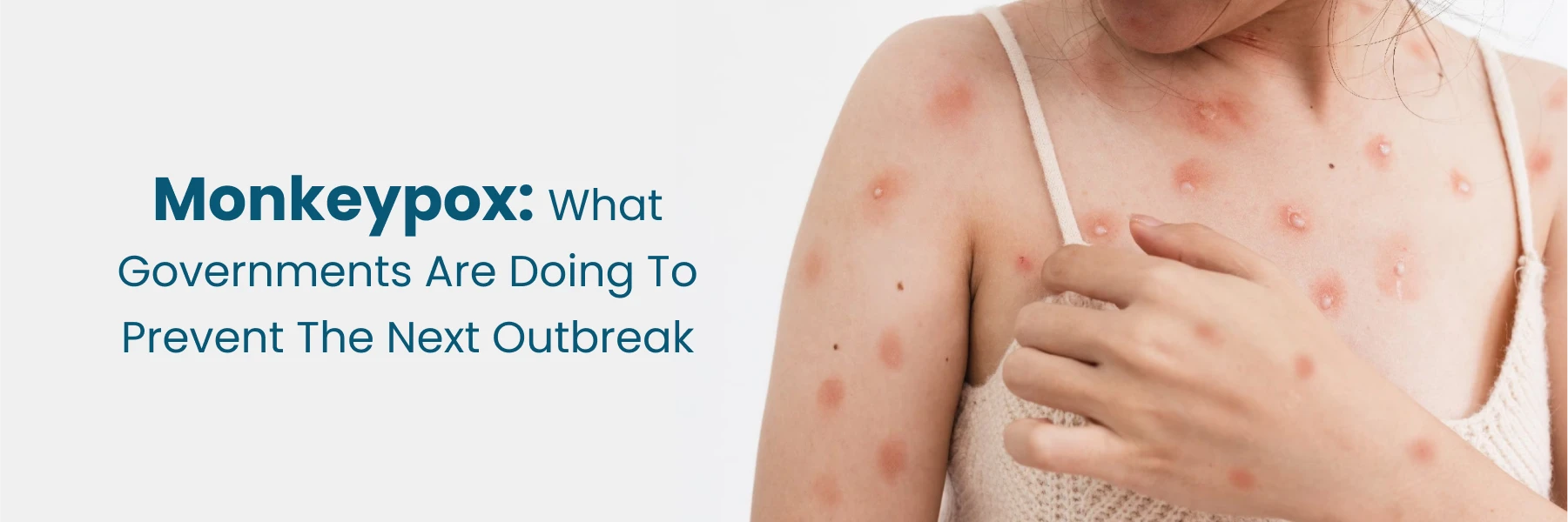
The symptoms of Monkeypox include fever, rash, and swollen lymph nodes. The disease can spread through respiratory droplets, bodily fluids, and direct contact with lesions. Initial symptoms often mimic those of the flu, including fever, muscle aches, and fatigue, which can make early detection challenging.
Understanding the transmission methods is crucial for developing effective prevention strategies, particularly in regions where the disease is endemic. The rash typically begins on the face and then spreads to other parts of the body, forming pustules that eventually scab over.
This visible symptom makes it easier to identify and isolate infected individuals. However, the virus can also be transmitted through respiratory droplets, which means that close contact can facilitate its spread, emphasizing the need for robust public health measures.
Monkeypox Surveillance
One primary method for preventing Monkeypox outbreaks is effective surveillance. By monitoring and tracking cases, governments can identify potential outbreaks early and take necessary actions to contain the virus.
Surveillance systems help with early detection and understanding the epidemiological patterns and potential risk factors associated with the disease.
National Surveillance Systems
Governments are enhancing their national surveillance systems to detect and report Monkeypox cases promptly. This involves:
- Establishing dedicated surveillance units for zoonotic diseases.
- Training healthcare workers to recognize and report symptoms of Monkeypox.
- Implementing electronic health records systems to streamline data collection and analysis.
These surveillance systems often include regular reporting from hospitals and clinics, which helps in creating a comprehensive database of suspected and confirmed cases. Some countries are also deploying mobile units to reach remote areas, ensuring that every potential case is noticed.
International Collaboration
Given the global nature of infectious diseases, international cooperation is vital. Governments are working with organizations like the World Health Organization (WHO) to share data and best practices and ensure a coordinated response to potential outbreaks.
International collaboration also facilitates the sharing of crucial epidemiological data and trends, which can help in forecasting and mitigating potential outbreaks.
Countries can benefit from shared resources and expertise by participating in global health networks. This collective effort is particularly important for low and middle-income countries that may lack the infrastructure and resources to combat Monkeypox effectively on their own.
Vaccination Campaigns
Vaccination is a key strategy in preventing Monkeypox outbreaks. Governments are rolling out vaccination campaigns to protect high-risk populations and prevent the spread of the virus. Vaccination campaigns are often tailored to the specific needs and conditions of different regions, taking into account factors such as population density and healthcare infrastructure.
Vaccination Strategies
There are several approaches to vaccination against Monkeypox:
- Ring Vaccination: This strategy involves vaccinating individuals who have been in contact with a confirmed case, as well as those contacts'contacts. It helps to create a "ring" of immunity around the infected person, preventing further spread.
- Mass Vaccination: In areas with high transmission rates, mass vaccination campaigns may be conducted to immunize large segments of the population.
Ring vaccination has been particularly effective in controlling outbreaks by quickly containing the virus. Mass vaccination, on the other hand, aims to build herd immunity in communities, reducing the overall risk of transmission.
Vaccine Development and Distribution
Governments are investing in the development and distribution of effective Monkeypox vaccines. This includes:
- Funding research for new and improved vaccines.
- Collaborating with pharmaceutical companies to ensure adequate supply.
- Establishing distribution networks to reach remote and underserved areas.
Investment in vaccine research is crucial for developing next-generation vaccines that offer longer-lasting protection and require fewer doses. Governments are also focusing on creating robust distribution channels to ensure vaccines reach all populations, including those in hard-to-reach areas.
Public Health Strategies
Public health strategies play a critical role in preventing Monkeypox outbreaks. These strategies focus on educating the public, improving hygiene practices, and ensuring access to healthcare services. Effective public health strategies can significantly reduce the risk of transmission and improve overall community health.
Public Awareness Campaigns
Educating the public about Monkeypox is essential for prevention. Governments are launching awareness campaigns to inform people about the symptoms, transmission methods, and preventive measures for Monkeypox. These campaigns utilize various media platforms, including television, radio, social media, and print materials.
Public awareness campaigns often include information on what to do if someone suspects they have contracted the virus, as well as guidelines on how to avoid exposure. By keeping the public informed, governments can reduce panic and ensure a more coordinated community response to outbreaks.
Improving Hygiene Practices
Promoting good hygiene practices is another important strategy. This includes:
- Encouraging regular handwashing with soap and water.
- Advising against close contact with infected individuals or animals.
- Ensuring proper disposal of contaminated materials.
Governments are also working with community leaders and organizations to promote hygiene practices at the grassroots level. This can include distributing hygiene kits and providing education on the importance of sanitation in preventing the spread of diseases like Monkeypox.
International Health Cooperation
Global health issues like Monkeypox require a coordinated international response. Governments are working together to share resources, knowledge, and expertise to prevent outbreaks. International health cooperation ensures that even the most resource-constrained countries have the tools and knowledge needed to combat monkeypox effectively.
Collaborative Research
International collaboration in research is crucial for developing effective vaccines and treatments. Governments are partnering with research institutions and organizations worldwide to:
- Conduct epidemiological studies to understand the spread of monkeypox.
- Develop and test new vaccines and antiviral treatments.
- Share research findings and data to inform public health strategies.
Collaborative research efforts also focus on understanding the genetic makeup of the monkeypox virus, which can help in developing targeted treatments and vaccines. Sharing research findings globally accelerates the pace at which new solutions can be implemented.
Resource Sharing
Resource sharing is another key aspect of international cooperation. Governments are providing financial and technical support to countries with limited resources to help them implement effective monkeypox prevention strategies. This includes:
- Donating vaccines and medical supplies.
- Offering technical assistance for establishing surveillance and vaccination programs.
- Providing training for healthcare workers.
Resource sharing not only helps in immediate outbreak response but also builds long-term capacity in healthcare systems. This is particularly important for ensuring that countries are better prepared for future outbreaks.
Challenges and Future Directions
Despite the efforts being made, several challenges remain in preventing monkeypox outbreaks. Addressing these challenges is crucial for the success of prevention strategies. Understanding these challenges can help develop more effective and resilient public health systems.
Challenges
Some of the key challenges include:
- Limited access to healthcare services in remote and underserved areas.
- Vaccine hesitancy and misinformation.
- Need more funding and resources for surveillance and vaccination programs.
- Difficulty in controlling zoonotic diseases due to wildlife reservoirs.
Combatting misinformation and vaccine hesitancy requires targeted communication strategies that address community concerns and build trust. Additionally, securing adequate funding is essential for sustaining long-term surveillance and vaccination efforts.
Future Directions
To overcome these challenges, governments are focusing on:
- Strengthening healthcare infrastructure to ensure access to services for all populations.
- Increasing public trust in vaccines through transparent communication and community engagement.
- Securing sustainable funding for long-term prevention programs.
- Enhancing research efforts to understand the ecology of Monkeypox and develop better control measures.
By focusing on these areas, governments aim to create a more robust and responsive public health system capable of effectively managing Monkeypox and other emerging infectious diseases.
Your health is everything - prioritize your well-being today.
Schedule Your AppointmentConclusion
Preventing Monkeypox outbreaks requires a multifaceted approach that includes effective surveillance, vaccination campaigns, public health strategies, and international cooperation. By working together and investing in these strategies, governments can protect public health and prevent the spread of Monkeypox.
It is essential to remain vigilant and adaptive to new challenges, ensuring a comprehensive and coordinated response to this emerging health threat. With continued effort and collaboration, the global community can successfully combat Monkeypox and safeguard public health for future generations.
Frequently Asked Questions
Governments are enhancing disease surveillance systems, promoting widespread vaccination campaigns, conducting public health awareness programs, and collaborating with international organizations like the WHO to monitor and control the spread of Monkeypox.
Many governments are working to ensure that vaccines are distributed fairly, prioritizing high-risk populations and ensuring that underserved communities have access to vaccination programs.
International cooperation is vital for sharing information, resources, and best practices. Governments are collaborating on research, developing treatment protocols, and coordinating responses to ensure a unified effort against Monkeypox.
Governments are launching public education campaigns, partnering with social media platforms to counter misinformation, and providing clear, evidence-based information to the public to dispel myths and prevent panic
Long-term strategies include strengthening public health infrastructure, investing in the research and development of new vaccines and treatments, and maintaining a robust global surveillance network to detect and respond swiftly to potential outbreaks.
Governments are training healthcare workers, ensuring that hospitals have the necessary supplies and equipment, and developing protocols to manage and contain Monkeypox cases effectively.
- Cardiology
- Case Studies
- Dermatology
- Endocrinology
- ENT
- Fertility
- Gastroenterology
- General
- General-Medicine
- Gynecology
- Hematology
- Infectious-Diseases
- Medical News
- Neurology
- Oncology
- Ophthalmology
- Orthopedics
- Pediatrics
- Procedure
- Public-Health
- Pulmonology
- Radiology
- Second Opinion
- Urology
- Wellness
- Woman-and-child
Related Blogs
Still have questions? Speak with our experts now!
040-68334455


