 Call
Call Patient Reports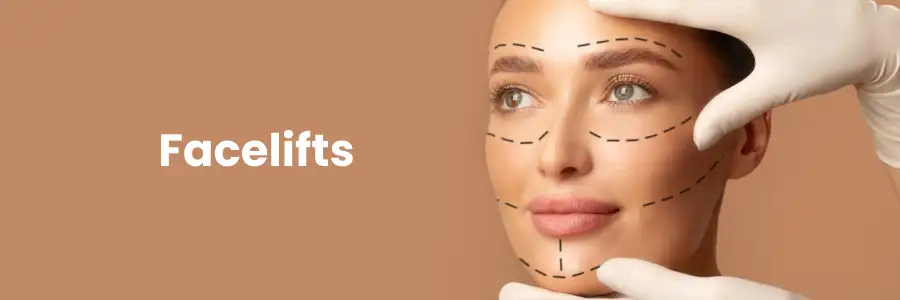
- 3759
- 3.5 Minute
Facelifts: Types & Recovery Guide
Are you considering a facelift to rejuvenate your appearance and regain your youthful look? Do sagging skin and wrinkles affect your confidence in social interactions and daily activities? Here, we explore the various types of facelifts, their benefits, and the recovery timeline to help you make an informed decision about this cosmetic procedure.
Get a second opinion from trusted experts and makeconfident, informed decisions.
Get Second OpinionNot sure where to start?
Talk to a patient care advisor — free, confidential, 24/7. We'll match you to the right specialist and book your appointment in minutes.
Facelift Surgery Types
Facelifts, also known as rhytidectomies, come in different types to address specific aging concerns on the face and neck. Understanding the differences between traditional facelift surgery and mini facelifts versus full facelifts can help you choose the most suitable option for your needs:
- Traditional Facelift Surgery: This comprehensive procedure targets moderate to severe facial aging by lifting and tightening the underlying muscles and tissues, resulting in a more youthful appearance.
- Mini Facelift vs. Full Facelift: While a mini facelift focuses on enhancing the lower face, a full facelift addresses sagging skin and wrinkles across the entire face and neck for more dramatic results.
Facelift Recovery Tips
After undergoing a facelift, following proper recovery tips is crucial to ensure optimal healing and long-lasting results. Here are some essential facelift recovery tips to aid in a smooth post-operative period:
- Avoid strenuous activities and heavy lifting for the first few weeks to prevent complications.
- Follow your surgeon's instructions regarding medication, skincare, and follow-up appointments for proper healing.
- Apply cold compresses to reduce swelling and bruising, promoting faster recovery.
Non-Surgical Facelift Alternatives
If you prefer non-invasive options to achieve a youthful appearance, several non-surgical facelift alternatives can help rejuvenate your skin without surgery. These treatments include:
- Injectables like botox and dermal fillers to reduce wrinkles and restore facial volume.
- Laser therapy to improve skin tone and texture by stimulating collagen production.
Facelift Results
Benefits of facelift procedures go beyond physical appearance, providing psychological and emotional advantages as well. Some of the key benefits of facelift surgery include:
- Improved self-confidence and self-esteem due to a more youthful and refreshed look.
- Enhanced facial contours and symmetry for a harmonious overall facial appearance.
Risks and Benefits of Facelift Surgery
Before opting for a facelift, it's essential to weigh the risks and benefits associated with the procedure. While facelifts offer significant advantages, they also come with potential risks such as:
- Infection and scarring, although rare, are possible complications of facelift surgery.
- Temporary numbness or nerve damage in the treated areas may occur but often resolve with time.
Your health is everything - prioritize your well-being today.
Schedule Your AppointmentConclusion
In conclusion, facelifts are effective cosmetic procedures that can reverse signs of aging and enhance your overall appearance. By understanding the different types of facelift surgery, following proper recovery tips, exploring non-surgical alternatives, and considering the risks and benefits involved, you can make an informed decision about undergoing a facelift to achieve a more youthful and vibrant look.
Frequently Asked Questions
The average recovery time for a facelift varies, but most patients can expect to see significant improvement within 2-4 weeks.
There are several types of facelifts, including traditional facelift surgery, mini facelift vs full facelift, and non-surgical facelift alternatives.
Recovery time after a facelift surgery can vary but typically ranges from 1 to 2 weeks for initial healing and several months for full recovery.
The 20 minute permanent facelift is a non-surgical procedure that tightens skin and reduces wrinkles quickly and effectively.
The traditional facelift is known for its long-lasting results.
- Cardiology
- Case Studies
- Dermatology
- Endocrinology
- ENT
- Fertility
- Gastroenterology
- General
- General-Medicine
- Gynecology
- Hematology
- Infectious-Diseases
- Medical News
- Neurology
- Oncology
- Ophthalmology
- Orthopedics
- Pediatrics
- Procedure
- Public-Health
- Pulmonology
- Radiology
- Second Opinion
- Urology
- Wellness
- Woman-and-child
Related Blogs
Still have questions? Speak with our experts now!
040-68334455


