 Call
Call Patient Reports
Table of Contents
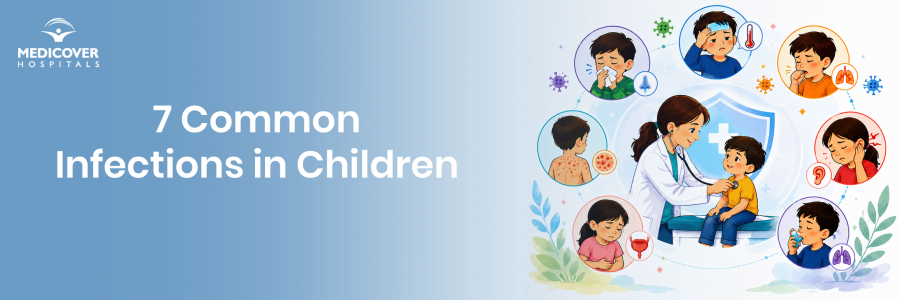
7 Common Childhood Infections: Symptoms, Treatment & Prevention


Children can get infections quite often, especially when they start school, daycare, or spend time around other children. A runny nose, cough, mild fever, or sore throat is usually caused by a common infection and often gets better with rest and fluids. Children can also develop ear infections, skin infections, urinary infections, or conditions such as hand-foot-and-mouth disease.
Most childhood infections are mild, but parents may sometimes find it difficult to know when a child needs medical attention. If your child is unusually sleepy, not drinking enough fluids, having trouble breathing, or simply seems much more unwell than usual, it is better to get medical advice.
Pediatric and Neonatal Care in Hitech City for Childhood Infections
At Medicover Hospitals, pediatric care focuses on children of different ages, from newborns and infants to older children. A pediatrician can assess your child’s symptoms, identify the likely cause, and suggest treatment based on the child’s age and condition.
Some infections can be managed with simple home care, while others may need medicines, tests, or closer monitoring. Getting the right diagnosis is important because antibiotics, for example, do not help with viral infections such as the common cold.
1. Common Cold and Cough
A cold is one of the most common illnesses in children. Your child may have a runny or blocked nose, sneezing, cough, sore throat, or a mild fever. Children can have several colds a year, particularly when they are around other children at school or daycare.
Most colds get better on their own. Giving your child enough fluids, allowing them to rest, and keeping them comfortable can help while the infection settles.
Antibiotics do not treat a common cold because colds are caused by viruses. Also, do not give cough or cold medicines to young children unless your pediatrician recommends them.
2. Flu (Influenza)
Flu can sometimes look like an ordinary cold at first, but children may develop fever, cough, sore throat, body aches, tiredness, or reduced appetite. Some children may also have vomiting or diarrhea.
Most children recover with rest, fluids, and appropriate care. However, flu can sometimes become more serious, particularly in very young children or children with certain health conditions.
If your child has difficulty breathing, is not drinking enough, is extremely weak or difficult to wake, or you feel that their condition is getting worse, seek medical help promptly.
3. Ear Infections
Ear infections are common in children and may sometimes develop after a cold. Your child may complain of ear pain, become irritable, have trouble sleeping, or keep touching or pulling at the ear. Fever may also occur.
Not every ear infection needs antibiotics. Some mild infections get better without them, while others may need treatment. A pediatrician can examine your child’s ear and decide what is appropriate.
If your child has fluid or pus coming from the ear, severe pain, hearing problems, worsening symptoms, or symptoms that continue for more than a couple of days, it is a good idea to have the ear checked.
4. Bronchiolitis
Bronchiolitis is a common infection of the small airways in babies and young children, particularly those younger than 2 years. It often begins like a cold, with a runny nose and cough, and may later cause wheezing or faster, harder breathing.
Because babies can become unwell quickly, parents should watch closely for breathing and feeding changes. A baby who is struggling to breathe, feeding poorly, becoming unusually sleepy, or showing signs of dehydration should be assessed by a doctor.
Bronchiolitis is usually caused by a virus, so antibiotics do not normally help. Treatment mainly focuses on keeping the child comfortable, maintaining fluids, and watching their breathing.
5. Skin Infections
Children can develop different types of skin infections. You may notice redness, swelling, warmth, pain, crusting, sores, or pus around the affected area.
Not every rash is an infection, though. Some rashes are caused by allergies, irritation, heat, or other conditions. That is why it is better not to assume that every rash needs an antibiotic cream or medicine.
If a skin problem is spreading quickly, becoming painful or swollen, producing pus, or accompanied by fever, your child should be examined by a pediatrician.
6. Urinary Tract Infections
A urinary tract infection (UTI) can happen in children too. Older children may complain that it hurts when they pass urine, need to urinate more often, or have pain in the lower abdomen.
Younger children may not be able to explain what is wrong. They may simply have fever, irritability, poor feeding, vomiting, or changes in their usual behaviour.
If a UTI is suspected, your pediatrician may recommend a urine test to confirm the infection before deciding on treatment. Giving antibiotics without confirming the cause is not always appropriate.
7. Hand - Foot and Mouth Disease
Hand-foot-and-mouth disease is a common viral infection, especially in children younger than 5 years. It can cause fever, sore throat, painful mouth sores, and small red spots or blisters on the hands and feet.
The mouth sores can make eating and drinking uncomfortable. This is why keeping your child hydrated is one of the most important things to watch during the illness.
Most children recover within 7 to 10 days. Because the infection spreads easily, good handwashing and cleaning commonly touched surfaces can help reduce its spread.
When Should Parents Seek Pediatric Care for Childhood Infections?
It can be difficult for parents to decide whether a child’s symptoms are serious. You know your child best, so if something feels different or concerning, it is reasonable to speak with a pediatrician.
Seek medical care if your child:
- Is having trouble breathing or breathing much faster than usual
- Is not drinking enough fluids or is showing signs of dehydration
- Is unusually sleepy, confused, or difficult to wake
- Has a seizure
- Has blue or grey lips or face
- Has symptoms that are getting worse instead of better
- Has a fever or other symptoms that are concerning for their age
- Is a baby younger than 3 months and has a temperature of 38°C (100.4°F) or higher
For babies and very young children, it is better to seek medical advice early when you are worried than to wait for symptoms to become severe.
Get a second opinion from trusted experts and makeconfident, informed decisions.
Get Second OpinionNot sure where to start?
Talk to a patient care advisor — free, confidential, 24/7. We'll match you to the right specialist and book your appointment in minutes.
Conclusion
Childhood infections are common, and most are not serious. Still, every child responds differently to illness. Paying attention to your child’s behaviour, breathing, fluid intake, and overall condition can help you recognise when they need medical care.
If your child is unwell and you are unsure what is causing the symptoms, a pediatrician can help identify the problem and guide you on the right treatment.
Your health is everything - prioritize your well-being today.
Schedule Your AppointmentFrequently Asked Questions
1. What are the most common infections in children?
Common infections include colds, flu, ear infections, bronchiolitis, skin infections, UTIs, and hand-foot-and-mouth disease.
2. Does every childhood infection need antibiotics?
No. Many childhood infections are caused by viruses, and antibiotics do not work against viral infections.
3. When should I take my child to a pediatrician?
Take your child for medical care if they have breathing difficulty, dehydration, unusual sleepiness, worsening symptoms, or any other symptom that concerns you.
4. How can I help my child recover from a cold?
Encourage rest and fluids and keep your child comfortable. Ask your pediatrician before giving medicines to young children.
5. Is hand-foot-and-mouth disease serious?
Usually, no. Most children recover within 7 to 10 days. The main concern is dehydration if painful mouth sores make it difficult for the child to drink.
6. Can children get ear infections after a cold?
Yes. Ear infections can occur along with or after respiratory infections such as colds.
7. When is a fever in a baby an emergency?
A baby younger than 3 months with a temperature of 38°C (100.4°F) or higher should be assessed by a healthcare professional promptly.
8. How can parents help prevent infections from spreading?
Regular handwashing, keeping commonly touched surfaces clean, staying home when a child is unwell, and following recommended vaccinations can help reduce the spread of infections.
- Cardiology
- Case Studies
- Dermatology
- Endocrinology
- ENT
- Fertility
- Gastroenterology
- General
- General-Medicine
- Gynecology
- Hematology
- Infectious-Diseases
- Medical News
- Neurology
- Oncology
- Ophthalmology
- Orthopedics
- Pediatrics
- Procedure
- Public-Health
- Pulmonology
- Radiology
- Second Opinion
- Urology
- Wellness
- Woman-and-child
Related Blogs


