 Call
Call Patient Reports
- Cardiology 84
- Dermatology 45
- Endocrinology 33
- ENT 16
- Fertility 190
- Gastroenterology 78
- General-Medicine 81
- Gynecology 80
- Hematology 19
- Infectious-Diseases 33
- Neurology 52
- Oncology 34
- Ophthalmology 23
- Orthopedics 69
- Pediatrics 31
- Procedure 23
- Public-Health 144
- Pulmonology 59
- Radiology 8
- Urology 68
- Wellness 161
- Woman-and-child 77
- 3759
- 3.5 Minute
The Complex Anatomy of Cervical Spine
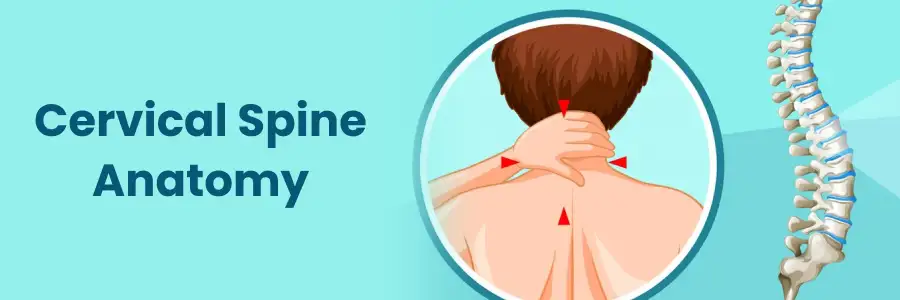
The cervical spine is a marvel of engineering, composed of bones, ligaments, muscles, and nerves working together to support the head, facilitate movement, and protect the spinal cord. In this article, we will delve into the intricate anatomy of the cervical spine, exploring its bones, functions, and physiological aspects.
The Skeletal Structure of the Cervical Spine
Vertebrae: The Building Blocks
The cervical spine consists of seven vertebrae labeled C1 through C7. These vertebrae are smaller and more mobile than those in the thoracic and lumbar regions, allowing for a more excellent range of motion.
Get a second opinion from trusted experts and makeconfident, informed decisions.
Get Second OpinionNot sure where to start?
Talk to a patient care advisor — free, confidential, 24/7. We'll match you to the right specialist and book your appointment in minutes.
C1: The Atlas
The atlas is the first cervical vertebra (C1) and supports the skull. It lacks a vertebral body and instead has a ring-like structure. The atlas articulates with the skull's occipital condyles, enabling nodding movements.
C2: The Axis
The axis (C2) is unique due to the odontoid process, or dens, which projects upward and provides a pivot for the atlas. This articulation allows for rotational movements of the head.
C3-C7: Standard Vertebrae
Vertebrae C3 through C7 share a standard structure, including a vertebral body, vertebral arch, and various processes for muscle attachment. However, each has unique features that contribute to the overall function of the cervical spine.
Ligamentous Support
Anterior and Posterior Longitudinal Ligaments
The anterior and posterior longitudinal ligaments run along the front and back of the vertebral bodies, respectively. These ligaments provide stability and limit excessive movement.
Ligamentum Flavum
The ligamentum flavum connects the laminae of adjacent vertebrae and helps maintain the spine's natural curvature while allowing flexibility.
Interspinous and Supraspinous Ligaments
These ligaments connect the spinous processes of adjacent vertebrae, contributing to the stability and integrity of the cervical spine.
Muscular Contributions
Deep Muscles
The deep muscles of the cervical spine, such as the multifidus and semispinalis cervicis, play a crucial role in maintaining posture and controlling precise movements.
Superficial Muscles
Superficial muscles like the trapezius and sternocleidomastoid are responsible for more extensive, gross movements of the head and neck. These muscles also assist in stabilizing the cervical spine during various activities.
Nerve Supply
Spinal Cord and Nerve Roots
The cervical spine houses the upper portion of the spinal cord, which transmits signals between the brain and the rest of the body. Nerve roots exit the spinal cord through intervertebral foramina, branching out to form the cervical plexus and brachial plexus, which innervate the neck, shoulders, and arms.
Autonomic Nervous System
The cervical spine also contains sympathetic nerve fibers, which are part of the autonomic nervous system and regulate involuntary functions such as heart rate and blood pressure.
Cervical Spine Functions
Support and Stability
The cervical spine supports the weight of the head, which averages around 10-12 pounds. Its robust structure and ligamentous support ensure stability while allowing for a wide range of movements.
Protection of the Spinal Cord
One of the cervical spine's primary functions is protecting the spinal cord. The vertebral foramen, a central opening in each vertebra, forms a protective canal through which the spinal cord passes.
Facilitation of Movement
The cervical spine enables a variety of head and neck movements, including flexion, extension, rotation, and lateral bending. This range of motion is essential for daily activities and overall quality of life.
Cervical Spine Imaging: MRI and X-Ray Anatomy
MRI Anatomy
Magnetic Resonance Imaging (MRI) provides detailed images of soft tissues, including intervertebral discs, the spinal cord, and nerve roots. It is particularly useful for diagnosing conditions such as herniated discs, spinal stenosis, and tumors.
Key MRI Features
- Intervertebral Discs: Appear as well-defined structures between the vertebral bodies.
- Spinal Cord: Visible within the vertebral canal, with clear delineation of nerve roots.
- Ligaments: Anterior and posterior longitudinal ligaments can be seen along the vertebral bodies.
X-Ray Anatomy
X-rays offer a clear view of the bony structures of the cervical spine. They are commonly used to assess alignment, detect fractures, and evaluate degenerative changes.
Key X-Ray Features
- Vertebral Bodies: Visible as rectangular structures stacked upon one another.
- Spinous Processes: Project posteriorly and are easily identifiable.
- Intervertebral Spaces: These appear as gaps between the vertebral bodies, indicating the presence of intervertebral discs.
Clinical Implications
Common Cervical Spine Conditions
Understanding the anatomy and physiology of the cervical spine is crucial for diagnosing and treating various conditions, including:
- Cervical Spondylosis: Age-related degeneration of the intervertebral discs and vertebrae.
- Herniated Discs: Displacement of disc material that can compress nerve roots or the spinal cord.
- Whiplash: Soft tissue injury resulting from rapid flexion and extension of the neck.
- Cervical Radiculopathy: Nerve root compression causing pain, numbness, or weakness in the arms.
Your health is everything - prioritize your well-being today.
Schedule Your AppointmentSurgical Interventions
In cases where conservative treatments fail, surgical interventions such as cervical discectomy, fusion, or laminectomy may be necessary to alleviate symptoms and restore function.
Conclusion
The cervical spine is a complex and vital component of the human body, responsible for support, protection, and movement. A thorough understanding of its anatomy, including the bones, ligaments, muscles, and nerves, is essential for diagnosing and treating related conditions. Advanced imaging techniques like MRI and X-ray play a crucial role in visualizing the cervical spine's intricate structures, aiding in accurate diagnosis and effective treatment planning.
By appreciating the cervical spine's complexity and functionality, healthcare professionals can better address their patients' needs, ensuring optimal outcomes and improved quality of life.
Frequently Asked Questions
The cervical spine consists of seven vertebrae labeled as C1 through C7.
The cervical spine supports the skull, enables head movement, and protects the spinal cord.
Cervical spine MRI provides detailed images of soft tissues like discs and nerves.
The bones include the seven cervical vertebrae that form the neck portion of the spine.
Cervical spine X-rays show the alignment of the vertebrae and can help detect fractures.
- Cardiology
- Case Studies
- Dermatology
- Endocrinology
- ENT
- Fertility
- Gastroenterology
- General
- General-Medicine
- Gynecology
- Hematology
- Infectious-Diseases
- Medical News
- Neurology
- Oncology
- Ophthalmology
- Orthopedics
- Pediatrics
- Procedure
- Public-Health
- Pulmonology
- Radiology
- Second Opinion
- Urology
- Wellness
- Woman-and-child
Related Blogs
Still have questions? Speak with our experts now!
040-68334455


