 Call
Call Patient Reports
- Cardiology 84
- Dermatology 45
- Endocrinology 33
- ENT 16
- Fertility 190
- Gastroenterology 78
- General-Medicine 81
- Gynecology 80
- Hematology 19
- Infectious-Diseases 33
- Neurology 52
- Oncology 34
- Ophthalmology 23
- Orthopedics 69
- Pediatrics 31
- Procedure 23
- Public-Health 144
- Pulmonology 59
- Radiology 8
- Urology 68
- Wellness 161
- Woman-and-child 77
- 2748
- 3.7 Minute
Written by Medicover Team and Medically Reviewed by Dr Venkata Sambasivarao, Consultant Radiation Oncology
Understanding Brachytherapy: How Medicover Hospitals Treat Cancer in Vizag
Cancer treatment has significantly changed over the years. What once relied heavily on broad, high-dose radiation is now moving toward far more targeted approaches. One such advancement is brachytherapy, a form of internal radiation that allows doctors to treat tumors with remarkable precision, often while limiting exposure to surrounding healthy tissue.
For patients, this shift matters. It can influence recovery time, side effects, and overall quality of life during and after treatment.
What is Brachytherapy and How Does It Work?
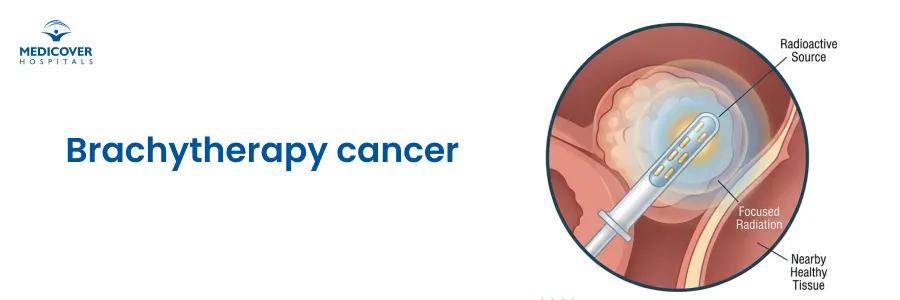
Brachytherapy is a type of radiation therapy where a radioactive source is placed inside or very close to the tumor. Unlike external radiation, which passes through the body, this method delivers treatment directly to the affected area.
This localized approach allows higher doses of radiation to be used where they are needed most, while reducing unnecessary impact on nearby organs. It is commonly used in cancers of the cervix, prostate, breast, and also in certain head and neck cancers.
A brachytherapy cancer treatment doctor in Vizag typically decides on this approach based on tumor type, stage, and location. In many cases, it is combined with other treatments like surgery or chemotherapy for better outcomes.
Why Precision Matters in Cancer Treatment
Radiation therapy has always required a balance—destroying cancer cells while preserving healthy tissue. Brachytherapy improves this balance significantly.
Because the radiation source is placed internally:
- The treatment area is highly controlled
- Radiation exposure to surrounding tissues is limited
- Side effects are often more manageable
- Treatment duration may be shorter compared to conventional methods
For cancers located near sensitive structures—such as those treated by a head & neck cancer surgeon in Vizag—this level of precision becomes especially valuable. Even small improvements in targeting can help preserve critical functions like speech and swallowing.
Get a second opinion from trusted experts and makeconfident, informed decisions.
Get Second OpinionNot sure where to start?
Talk to a patient care advisor — free, confidential, 24/7. We'll match you to the right specialist and book your appointment in minutes.
The Procedure: What Patients Can Expect
Brachytherapy is not a one-size-fits-all procedure. The exact process varies depending on the cancer being treated.
In general, the treatment involves placing applicators or implants near the tumor site. Imaging techniques like CT or MRI are used to guide placement and ensure accuracy. The radioactive source is then delivered through these applicators for a defined period.
Some treatments are completed in a single session, while others may require multiple sittings over a few days. In certain cases, temporary implants are removed after treatment, while in others, low-dose implants may remain in place for a longer duration.
Careful planning is central to the process. Each step—from imaging to dose calculation—is tailored to the patient’s condition.
Integrating Brachytherapy with Broader Oncology Care
Brachytherapy rarely works in isolation. It is often part of a broader, multidisciplinary treatment plan that may include:
- Surgical removal of tumors
- Chemotherapy for systemic control
- External radiation for wider coverage
At Medicover Hospitals in Vizag, this integration is handled through coordinated care between oncologists, radiologists, and surgical teams. We ensure that treatment decisions are based on a complete understanding of the patient’s condition rather than a single approach.
This kind of coordination becomes particularly important in complex cancers, where timing and sequencing of treatments can directly affect outcomes.
Your health is everything - prioritize your well-being today.
Schedule Your AppointmentRecovery and Side Effects
One of the reasons brachytherapy is increasingly preferred is its relatively focused impact on the body. Since radiation is confined to a specific area, many patients experience fewer systemic side effects compared to traditional radiation therapy.
That said, side effects can still occur depending on the treatment site. These may include localized discomfort, fatigue, or temporary irritation of nearby tissues. Most of these effects are manageable and tend to improve with time.
Recovery is usually quicker, especially when brachytherapy is used as part of a minimally invasive treatment plan. Patients are often able to return to routine activities sooner, though follow-up care remains essential.
A More Refined Approach to Cancer Care
The evolution of cancer treatment is about using that technology with precision and judgement. Brachytherapy reflects this shift. It allows doctors to focus treatment exactly where it is needed, without placing unnecessary strain on the rest of the body.
For patients in Vizag exploring advanced cancer care options, access to such targeted therapies, guided by experienced specialists, can make a meaningful difference in both treatment experience and long-term outcomes.
Frequently Asked Questions
Brachytherapy is typically recommended for patients with localized cancers such as cervical, prostate, breast, or certain head and neck cancers. The decision depends on factors like tumor size, stage, and location, which are carefully evaluated by specialists
The procedure is generally performed under anaesthesia or sedation, so patients do not feel pain during treatment. Some mild discomfort or irritation may occur afterwards, but it is usually manageable and temporary.
The duration varies depending on the type and dose of treatment. Some patients may complete it in a single session, while others may need multiple sessions over a few days.
Most side effects are localized and temporary. Long-term complications are less common than with external radiation, but they can vary depending on the treatment area and individual health conditions.
Yes, brachytherapy is often part of a comprehensive treatment plan. It may be combined with surgery, chemotherapy, or external radiation to improve overall outcomes and ensure more effective cancer control.
- Cardiology
- Case Studies
- Dermatology
- Endocrinology
- ENT
- Fertility
- Gastroenterology
- General
- General-Medicine
- Gynecology
- Hematology
- Infectious-Diseases
- Medical News
- Neurology
- Oncology
- Ophthalmology
- Orthopedics
- Pediatrics
- Procedure
- Public-Health
- Pulmonology
- Radiology
- Second Opinion
- Urology
- Wellness
- Woman-and-child
Related Blogs
Still have questions? Speak with our experts now!
040-68334455


