 Call
Call Patient Reports
- Cardiology 84
- Dermatology 45
- Endocrinology 33
- ENT 16
- Fertility 190
- Gastroenterology 78
- General-Medicine 81
- Gynecology 80
- Hematology 19
- Infectious-Diseases 33
- Neurology 52
- Oncology 34
- Ophthalmology 23
- Orthopedics 69
- Pediatrics 31
- Procedure 23
- Public-Health 144
- Pulmonology 59
- Radiology 8
- Urology 68
- Wellness 161
- Woman-and-child 77
- 1758
- 3.7 Minute
Written by Medicover Team and Medically Reviewed by Dr Madhav Desai Chief Consultant Nephrologist, Kidney Transplantation Specialist
Debunking the Kidney Stone Myths by Nephrologists in Bangalore
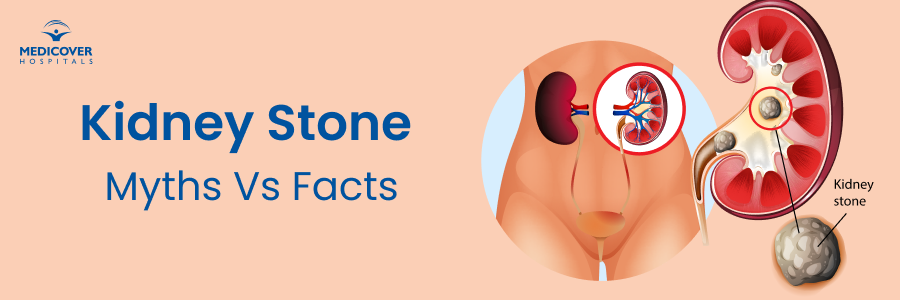
Kidney stones are one of the most common urinary tract diseases and can cause severe discomfort. Many people delay treatment due to fear or confusion. Much of this fear comes from half-truths and kidney stone myths that have been shared over the years. These myths about kidney stones can make people anxious, create unnecessary stress, and sometimes prevent them from seeking timely medical attention.
Reliable information is important, especially when symptoms like flank pain, difficulty urinating, or repeated infections start to affect daily life. Understanding the facts can help you make better decisions and reduce the fear of treatment. This guide explains the most common kidney stone myths in clear, simple language so you can focus on what really helps keep your kidneys healthy. If you ever need expert support, consulting the best nephrologists in Bangalore will ensure an accurate diagnosis and proper care.
Below are some of the widely believed misconceptions and the correct, research-based facts behind them.
Common Kidney Stone Myths and Facts
Myth 1: "Only people who drink less water develop kidney stones"
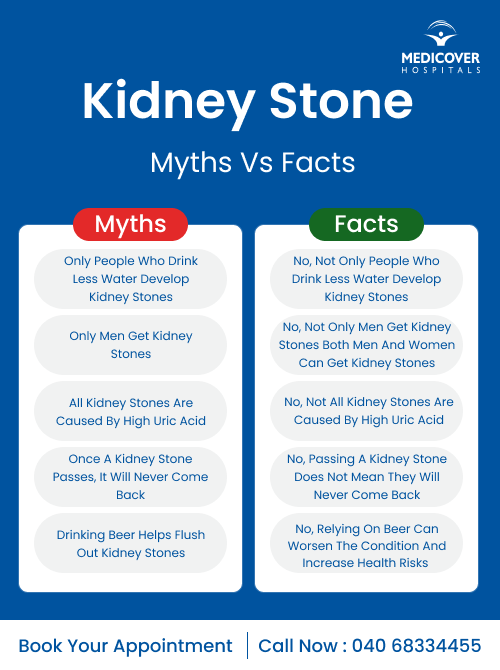
Fact: Drinking too little water is a major cause, but it's not the only one. Kidney stones can also be caused by high salt intake, low calcium intake, genetic factors, certain medications, obesity, chronic dehydration, and medical conditions such as hyperparathyroidism. Even people who drink enough water can develop stones if their diet or metabolic risk factors are high. This is one of the most common kidney stone myths because people think that not drinking enough water is the only cause.
Myth 2: "Only men get kidney stones"
Fact: Men are at slightly higher risk, but stones can also form in women. The gap between men and women has narrowed in recent years due to changes in lifestyle and eating habits. Women can also develop stones during pregnancy. Such myths about kidney stones may cause women to ignore symptoms such as back pain or burning when urinating.
Myth 3: "Eating too much calcium causes kidney stones"
Fact: Kidney stones are often made of calcium oxalate, but that doesn’t mean calcium in food is the enemy. In fact, having too little calcium in your diet can increase your risk of stone formation. Dietary calcium binds to oxalate in the intestines and prevents it from reaching the kidneys. Many people unnecessarily reduce their intake of dairy products or foods high in calcium, which is not recommended unless recommended by a nephrologist.
Get a second opinion from trusted experts and makeconfident, informed decisions.
Get Second OpinionNot sure where to start?
Talk to a patient care advisor — free, confidential, 24/7. We'll match you to the right specialist and book your appointment in minutes.
Myth 4: "All kidney stones are caused by high uric acid"
Fact: Uric acid stones are just one type of kidney stone. Others include calcium oxalate, calcium phosphate, cystine, and struvite stones. Each type is formed for different reasons. Without proper testing, you won't know what type of stone you have.
Myth 5: "Kidney stones always cause severe pain"
Fact: Some stones do cause severe, sharp pain. But not all stones show dramatic symptoms. Small stones may pass silently. Some may only cause mild discomfort or repeated urinary infections. Silent stones can still harm kidney function over time.
Myth 6: "Small kidney stones do not need treatment"
Fact: Small kidney stones pass naturally, but not always. They can grow, block urine flow, or cause repeated infections. The idea that "small means harmless" is a kidney stone misconception that leads to complications. The need for treatment depends on symptoms, size, and location. A doctor may advise medicines, hydration, dietary changes, or monitoring.
Myth 7: "Once a kidney stone passes, it will never come back"
Fact: Kidney stones can recur if dietary habits or underlying medical conditions are not corrected. People who have had one stone are more likely to get another. A prevention plan, metabolic evaluation, and lifestyle guidance from a specialist can help reduce recurrence. Facilities at the best hospitals in Bangalore usually offer structured stone prevention programs.
Myth 8: "Kidney stone treatment is always painful"
Fact: Modern treatments are very convenient. Most stones are treated with shockwave lithotripsy (ESWL), laser procedures, or minimally invasive endoscopic surgeries. These methods reduce pain, recovery time, and hospital stay. Pain management protocols are also more advanced today, making the process easier for patients.
Myth 9: "Removing a kidney stone requires open surgery"
Fact: Open surgery is rarely needed these days. Most kidney stones can be removed using minimally invasive techniques such as URS, RIRS, PCNL, or laser lithotripsy. These techniques use smaller instruments and allow for quicker recovery. Open procedures are only considered when the stones are very large or there are complications.
Myth 10: "Drinking beer helps flush out kidney stones"
Fact: Beer does not "pass out" kidney stones. Alcohol dehydrates the body, which can worsen the condition or increase the risk of stone formation. Good hydration means drinking water or doctor-approved fluids. Beer is not medically recommended for stone prevention.
Myth 11: "Ayurvedic or home remedies can dissolve all kidney stones"
Fact: Some home remedies may reduce discomfort, but they cannot dissolve all types of stones. Large stones or those that are stuck in the urinary tract require medical treatment. Relying solely on home remedies can delay proper care. Evidence-based treatment with the guidance of a kidney specialist ensures better outcomes.
Myth 12: "Painkillers can cure kidney stones"
Fact: Painkillers only control the pain of kidney stones. They do not break up or dissolve the stones. Many people misunderstand this and delay diagnosis. Long-term use of painkillers can also harm kidney health. A medical evaluation will determine the cause and the best course of treatment to prevent long-term damage.
Myth 13: "Gallstones and kidney stones are the same"
Fact: A Loud No. Gallstones form inside the gallbladder, a small organ that stores bile. They are usually made of cholesterol or bilirubin. Kidney stones form in the kidneys or urinary tract, and they are usually made of minerals such as calcium oxalate. The only similarity is the word "stone," which often leads to confusion and unnecessary fear.
Your health is everything - prioritize your well-being today.
Schedule Your Appointment

Frequently Asked Questions
These drinks do not dissolve kidney stones. Some can even worsen dehydration or irritate the kidneys. Stones only pass naturally if they are small, and larger stones require medical evaluation from trained specialists.
Water alone cannot stop every type of stone. Your body chemistry, diet, family history, and certain medical conditions also play major roles.
Calcium itself usually isn’t the problem. In fact, a low-calcium diet can increase stone formation because calcium helps bind oxalate in the gut.
Not everyone has repeated stones. Recurrence depends on lifestyle, diet, fluid intake, and underlying metabolic issues.
Many small stones pass naturally with medications and hydration. Larger stones may need procedures like laser treatment, shock-wave therapy, or minimally invasive surgery.
Kidney stones can occur in both men and women of any age group. Children and young adults also develop stones due to dehydration, high-sodium diets, genetic factors, or metabolic conditions.
Most stones, when treated on time, do not cause lasting kidney damage. Problems occur only when stones block urine flow or repeated stones appear without management. Early care at a Best hospital in Bangalore prevents long-term issues.
Protein-rich diets may contribute to stone formation in some people, but they are not the only cause. Stone formation is usually multifactorial. Balanced meals, adequate fluids, and medical guidance help manage risks effectively.
Follow-up tests are important because stones can return without symptoms, and underlying risks may stay uncorrected. A scan or urine study helps confirm that the urinary tract is clear and guides prevention strategies.
Avoiding dairy is not a recommended prevention method. Dairy provides essential calcium and does not directly cause stones. What matters is limiting salt, sugar, and processed foods while maintaining hydration.
Not always. Some types of stones, such as uric acid stones, may not be visible on standard X-rays. Ultrasound or CT scans provide more accurate information and help nephrologists plan the right treatment.
Some nuts, especially peanuts, almonds, and cashews, contain higher levels of oxalates. Oxalates can contribute to stone formation in people who are prone to kidney stones. You don’t need to avoid nuts completely, but eating them in moderation and drinking enough water can help reduce risk.
Kidney stones can affect people of any age, including young adults and even teenagers. Diet habits, dehydration, sedentary lifestyle, and family history play a major role. Age is not the main deciding factor your daily routine and hydration matter more.
Cranberry juice may help reduce urinary infections, but it does not break or flush kidney stones. In fact, cranberry juice is high in oxalates, which may increase stone risk in some people. Proper hydration, a balanced diet, and medical care are the correct ways to manage kidney stones.
- Cardiology
- Case Studies
- Dermatology
- Endocrinology
- ENT
- Fertility
- Gastroenterology
- General
- General-Medicine
- Gynecology
- Hematology
- Infectious-Diseases
- Medical News
- Neurology
- Oncology
- Ophthalmology
- Orthopedics
- Pediatrics
- Procedure
- Public-Health
- Pulmonology
- Radiology
- Second Opinion
- Urology
- Wellness
- Woman-and-child
Related Blogs
Still have questions? Speak with our experts now!
040-68334455


