 Call
Call Patient Reports
- Cardiology 84
- Dermatology 45
- Endocrinology 33
- ENT 16
- Fertility 190
- Gastroenterology 78
- General-Medicine 81
- Gynecology 80
- Hematology 19
- Infectious-Diseases 33
- Neurology 52
- Oncology 34
- Ophthalmology 23
- Orthopedics 69
- Pediatrics 31
- Procedure 23
- Public-Health 144
- Pulmonology 59
- Radiology 8
- Urology 68
- Wellness 161
- Woman-and-child 77
- 3912
- 3.8 Minute
Down Syndrome in Babies
Understanding the intricacies of Down syndrome in infants is pivotal for parents and caregivers striving to provide optimal care and support. This article delves into the essential aspects of Down syndrome, including its signs, diagnosis, developmental milestones, and the challenges faced in caring for a baby with this condition.
Get a second opinion from trusted experts and makeconfident, informed decisions.
Get Second OpinionNot sure where to start?
Talk to a patient care advisor — free, confidential, 24/7. We'll match you to the right specialist and book your appointment in minutes.
Signs of Down Syndrome in Infants
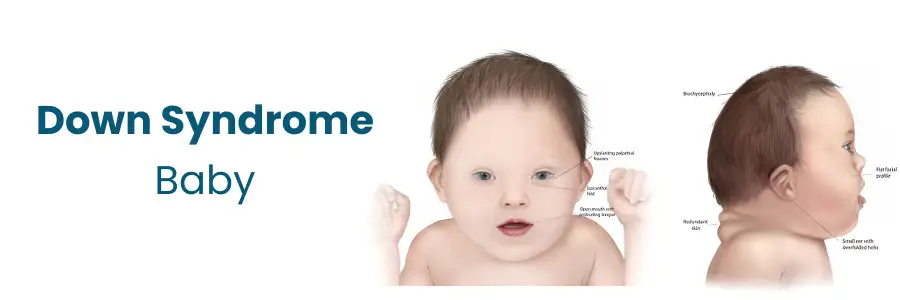
Down syndrome is typically identified at birth or shortly after that, but some signs can be noted prenatally. The most common signs of Down syndrome in infants include:
Physical Characteristics
- Flattened facial features: A flat facial profile, especially the nose, is a common characteristic.
- Almond-shaped eyes: The eyes may slant upward and have a unique fold of skin at the inner corner.
- Short neck: Infants may have a shorter neck with excess skin at the nape.
- Low muscle tone (hypotonia): Babies with Down syndrome often have reduced muscle tone, leading to floppiness.
- Single deep crease across the palm: This is known as a simian crease.
- Small ears and mouth: Ears may be smaller and set lower on the head, and the mouth may be small, sometimes leading to a protruding tongue.
Developmental Indicators
- Delayed motor skills: Infants might reach motor milestones like sitting, crawling, and walking later than their peers.
- Slow growth rate: Growth may be slower, and children with Down syndrome often have shorter stature.
Down Syndrome Diagnosis in Babies
The diagnosis of Down syndrome can occur prenatally or postnatally.
Prenatal Screening and Diagnostic Tests
- Screening Tests: These include blood tests and ultrasound during the first and second trimesters. The combined results can indicate the likelihood of Down syndrome.
- Diagnostic Tests: More definitive tests include amniocentesis, chorionic villus sampling (CVS), and percutaneous umbilical blood sampling (PUBS), which analyze fetal cells for chromosomal abnormalities.
Postnatal Diagnosis
- Physical Examination: A thorough physical examination by a pediatrician can identify the characteristic signs of Down syndrome.
- Chromosomal Analysis: A karyotype test (a blood sample) can confirm the diagnosis by identifying an extra chromosome 21.
Developmental Milestones in Down Syndrome
Children with Down syndrome achieve developmental milestones at their own pace, and early intervention can significantly aid their progress.
Cognitive Development
- Learning and Memory: Children may experience mild to moderate intellectual disability, affecting learning and memory. Early educational interventions and therapies can enhance cognitive development.
- Speech and Language: Delays in speech and language are common. Speech therapy can help in improving communication skills.
Motor Development
- Gross Motor Skills: These include activities such as sitting, standing, and walking. Physical therapy can assist in developing these skills.
- Fine Motor Skills: Activities like picking up objects, writing, and self-feeding can be delayed. Occupational therapy can be beneficial.
Feeding Challenges in Down Syndrome Babies
Feeding challenges are prevalent among infants with Down syndrome due to hypotonia, oral motor issues, and gastrointestinal problems.
Common Feeding Issues
- Poor Sucking Reflex: Hypotonia can lead to a weak sucking reflex, making breastfeeding or bottle-feeding difficult.
- Tongue Thrust: The tongue may protrude, complicating feeding.
- Reflux: Gastroesophageal reflux is common and can cause discomfort and feeding aversion.
Solutions and Strategies
- Positioning: Proper positioning during feeding can help manage hypotonia and reflux.
- Specialized Feeding Tools: Nipples and bottles designed for infants with feeding difficulties can improve feeding efficiency.
- Feeding Therapy: Working with a feeding therapist can provide tailored strategies to overcome feeding challenges.
Causes of Down Syndrome
Down syndrome is caused by the presence of an extra copy of chromosome 21 (trisomy 21). This genetic anomaly can occur in three forms:
Trisomy 21
- Nondisjunction: The most common form, occurring in about 95% of cases, where an extra chromosome 21 is present in all cells.
Mosaic Down Syndrome
- Mosaicism: A rare form where some cells have an extra chromosome 21 while others do not.
Translocation Down Syndrome
- Translocation: This form occurs when part of chromosome 21 is attached to another chromosome. It accounts for about 4% of cases.
Health Issues in Down Syndrome Babies
Babies with Down syndrome are at a higher risk for several health issues, necessitating regular medical monitoring.
Common Health Concerns
- Heart Defects: Congenital heart defects are present in nearly half of all infants with Down syndrome.
- Hearing and Vision Problems: Regular screenings are essential as hearing loss and vision issues are prevalent.s
- Thyroid Disorders: Hypothyroidism is common and requires monitoring.
- Respiratory Issues: Higher susceptibility to respiratory infections.
Management and Treatment
- Regular Check-Ups: Frequent medical visits for monitoring and early intervention.
- Specialist Care: Coordination with cardiologists, endocrinologists, and other specialists as needed.
Life Expectancy of Babies with Down Syndrome
Advancements in medical care have significantly increased the life expectancy of individuals with Down syndrome.
Historical vs. Current Life Expectancy
- Historical Perspective: In the past, life expectancy was much shorter, often due to untreated health issues.
- Modern Advances: Today, many individuals with Down syndrome live into their 60s and beyond, thanks to improved medical care and early interventions.
Early Intervention for Down Syndrome
Early intervention services are crucial for supporting the development of babies with Down syndrome. These services include:
Types of Early Intervention
- Physical Therapy: Helps improve motor skills and muscle tone.
- Speech Therapy: Aids in developing communication skills.
- Occupational Therapy: Supports fine motor skills and daily living activities.
- Educational Programs: Specialized programs tailored to individual learning needs.
Benefits of Early Intervention
- Enhanced Development: Early support can significantly boost cognitive and motor development.
- Improved Quality of Life: Early intervention helps children reach their full potential and enhances their overall quality of life.
Caring for a Baby with Down Syndrome
Caring for a baby with Down syndrome involves understanding their unique needs and challenges while providing a loving and supportive environment.
Tips for Caregivers
- Educate Yourself: Learn about Down syndrome to understand your baby's needs better.
- Build a Support Network: Connect with support groups and other families facing similar challenges.
- Focus on Strengths: Celebrate your baby's achievements and focus on their strengths.
- Stay Positive: Maintaining a positive outlook can help you navigate the challenges and enjoy the journey.
Conclusion
Understanding Down syndrome in infants involves recognizing the signs, seeking timely diagnosis, and supporting developmental milestones through early intervention. Despite the challenges, with the proper care and support, babies with Down syndrome can lead fulfilling and happy lives. By staying informed and proactive, caregivers can provide the best possible start for their children.
Your health is everything - prioritize your well-being today.
Schedule Your AppointmentFrequently Asked Questions
Down syndrome is a genetic disorder caused by an extra chromosome 21. It affects development and health.
It is usually diagnosed through prenatal screening or diagnostic tests like amniocentesis or chorionic villus sampling.
Common features include a flat facial profile, slanted eyes, and a single transverse palmar line.
There is no cure, but early intervention, therapy, and support can help improve development and quality of life.
Providing early intervention services, engaging in physical and speech therapy, and fostering a supportive environment can greatly aid development.
- Cardiology
- Case Studies
- Dermatology
- Endocrinology
- ENT
- Fertility
- Gastroenterology
- General
- General-Medicine
- Gynecology
- Hematology
- Infectious-Diseases
- Medical News
- Neurology
- Oncology
- Ophthalmology
- Orthopedics
- Pediatrics
- Procedure
- Public-Health
- Pulmonology
- Radiology
- Second Opinion
- Urology
- Wellness
- Woman-and-child
Related Blogs
Still have questions? Speak with our experts now!
040-68334455


