 Call
Call Patient Reports
Parkinson's Disease: What It Is and How It Is Managed
Written by Medicover Team and Medically Reviewed by Dr Krishna Haskar Dhanyamraju , Neurologists
Table of Contents
Parkinson's disease (PD) is a progressive neurodegenerative brain disorder caused by the gradual loss of dopamine-producing neurons in a region called the substantia nigra.
Parkinson's disease is a neurological disorder that mainly affects the nervous system and movement. The nervous system controls movement and many other functions throughout the body.
Parkinson's disease usually develops gradually, with early signs such as tremor in the hands, jaw, or feet. Tremor is a common symptom, but Parkinson's disease can also cause stiffness, slowed movement, and balance problems as it progresses.
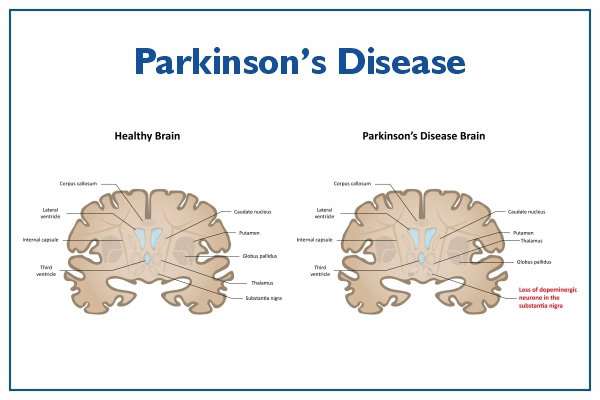
Parkinson's disease is a chronic neurological condition that primarily affects older adults. It most commonly develops after age 60 and is slightly more common in men than women. While less common, early-onset Parkinson's disease can occur in younger adults.
Without appropriate management, Parkinson's disease can cause movement-related problems such as tremors at rest, stiffness (rigidity), slowness of movement (bradykinesia), and postural instability, along with non-motor symptoms such as sleep problems, mood changes, cognitive decline, and constipation.
Parkinson's Disease in India
Parkinson's disease is an important neurological health concern in India, with prevalence increasing as the population ages. Reported rates vary between regions and study populations, reflecting differences in age, geography, and methods used to identify the disease.
According to Global Burden of Disease estimates, hundreds of thousands of people in India were living with Parkinson's disease in 2019. Increasing awareness of early symptoms and access to neurological care can support earlier diagnosis and appropriate long-term management.
What are the Parkinson's Disease Symptoms and Warning Signs?
Parkinson's disease symptoms often begin subtly and gradually become more noticeable over time. The symptoms can affect movement as well as sleep, mood, thinking, speech, and other non-motor functions. Recognizing early warning signs can help patients receive timely neurological evaluation.
Common Symptoms
- Tremors, especially in the hands or fingers, often occurring at rest
- Muscle stiffness or rigidity
- Bradykinesia (slowness of movement)
- Stooped posture
- Difficulty with balance and coordination
Severe or Advanced Symptoms
- Freezing of gait or sudden difficulty initiating movement
- Reduced or masked facial expressions
- Speech and handwriting changes
- Cognitive decline or dementia in some patients
What Are the Different Types of Parkinson's Disease?
Parkinsonian disorders can be classified according to their underlying cause and clinical features. Idiopathic Parkinson's disease is the most common form, while secondary and atypical parkinsonian disorders have different causes and patterns of progression.
Identifying the specific type of parkinsonism helps doctors select appropriate treatment and provide realistic expectations about disease progression.
- Idiopathic Parkinson's Disease: The most common form, in which the exact cause is not known.
- Vascular Parkinsonism: Parkinsonian symptoms associated with cerebrovascular disease or small strokes, often affecting walking and balance.
- Drug-Induced Parkinsonism: Caused by certain medications that interfere with dopamine signaling.
- Early-Onset Parkinson's Disease: Parkinson's disease that begins at a younger age, sometimes associated with genetic factors.
- Multiple System Atrophy: An atypical parkinsonian disorder that can cause movement problems along with significant autonomic dysfunction.
- Progressive Supranuclear Palsy: An atypical parkinsonian disorder that commonly affects balance and eye movements.
- Dementia with Lewy Bodies: A neurodegenerative disorder involving cognitive impairment, fluctuations in attention, visual hallucinations, and parkinsonian symptoms.
- Normal-Pressure Hydrocephalus: A condition that can cause walking difficulties, cognitive changes, and urinary problems and may sometimes resemble parkinsonism.
What Are the Common Causes and Risk Factors of Parkinson's Disease?
The exact cause of Parkinson's disease is not known in most cases. Researchers believe that a combination of genetic susceptibility, abnormal protein accumulation, aging, and environmental factors may contribute to the loss of dopamine-producing nerve cells.
Possible Causes
- Genetic mutations associated with familial Parkinson's disease
- Accumulation of abnormal alpha-synuclein protein, which is associated with Lewy bodies
- Changes in brain inflammation and cellular function
- Environmental or toxic exposures that may contribute to nerve-cell damage
Risk Factors
- Increasing age
- Family history of Parkinson's disease
- Male sex
- Long-term exposure to certain pesticides or other environmental toxins
- Repeated or significant head trauma
- Some occupational or environmental exposures
When to See a Doctor?
See a doctor if you develop persistent movement changes that could be associated with Parkinson's disease. Early neurological assessment can help determine whether symptoms are caused by Parkinson's disease or another condition.
- Notice tremors, particularly when a limb is at rest
- Experience muscle stiffness or slowed movement
- Develop changes in balance, walking, handwriting, or speech
- Have a family history of Parkinson's disease and develop concerning neurological symptoms
Seek prompt medical attention if:
- Movement problems suddenly become significantly worse
- You experience repeated falls or severe difficulty walking
- You develop sudden confusion, weakness, or other new neurological symptoms
Sudden neurological changes are not typical of slowly progressive Parkinson's disease and may require urgent evaluation for another medical condition.
Find Neurologists for Parkinsons Disease Treatment Near You
- Doctor for Parkinsons Disease in Hyderabad - Hitech City
- Doctor for Parkinsons Disease in Hyderabad - Financial District
- Doctor for Parkinsons Disease in Secunderabad
- Doctor for Parkinsons Disease in Bengaluru
- Doctor for Parkinsons Disease in Navi Mumbai
- Doctor for Parkinsons Disease in Pune
- Doctor for Parkinsons Disease in Vizag
- Doctor for Parkinsons Disease in Nashik
- Doctor for Parkinsons Disease in Chh.Sambhajinagar
- Doctor for Parkinsons Disease in Kurnool
- Doctor for Parkinsons Disease in Vizianagaram
- Doctor for Parkinsons Disease in Nellore
- Doctor for Parkinsons Disease in Kakinada
- Doctor for Parkinsons Disease in Warangal
- Doctor for Parkinsons Disease in Chandanagar
- Doctor for Parkinsons Disease in Nizamabad
- Doctor for Parkinsons Disease in Srikakulam
How Parkinson's Disease is Diagnosed?
Diagnosing Parkinson's disease primarily involves a detailed medical history and neurological examination. There is no single test that definitively confirms Parkinson's disease, so doctors assess the pattern of symptoms and may use additional tests to rule out other conditions.
Early and accurate diagnosis is important because treatment can be tailored according to the patient's symptoms, stage of disease, and overall health.
Common Diagnostic Tools
- Neurological examination: Evaluates movement, muscle tone, reflexes, coordination, balance, and other neurological functions.
- DaTscan: A specialized imaging test that can help assess dopamine transporter activity and distinguish some forms of parkinsonism.
- MRI: May help rule out structural brain abnormalities or other conditions that can cause similar symptoms.
- Genetic testing: May be considered in selected patients, particularly those with early-onset disease or a strong family history.
- Blood tests: May be used to rule out other medical conditions that can mimic Parkinson's symptoms.
Medicover Advantage: At Medicover Hospitals, neurological evaluation and diagnostic services can support accurate assessment and individualized care planning for patients with Parkinson's disease.
What Are the Treatment Options for Parkinson's Disease?
Parkinson's disease has no cure, but treatment can control symptoms, improve mobility and independence, and enhance quality of life. The treatment plan depends on the patient's symptoms, age, disease stage, response to medication, and overall health.
Management may involve medications, physical and occupational therapy, speech therapy, lifestyle measures, and advanced treatments for selected patients with significant motor complications.
Medication Options
- Levodopa and Carbidopa to improve motor symptoms by increasing dopamine activity in the brain
- Dopamine agonists to mimic the effects of dopamine
- MAO-B inhibitors to reduce the breakdown of dopamine in the brain
- Other medicines may be prescribed to address specific symptoms such as tremor, muscle stiffness, sleep problems, or mood changes
Advanced Treatments
- Deep Brain Stimulation (DBS) surgery for selected patients with significant medication-responsive motor symptoms or motor fluctuations
- Physical, occupational, and speech therapy to support movement, daily activities, communication, and swallowing
Long-Term Management: Parkinson's disease requires ongoing care rather than a short recovery period. Regular follow-ups allow doctors to adjust medications and therapies as symptoms change.
Your health is everything - prioritize your well-being today.
 Consult Parkinsons Disease Doctors Today
What Is the Recovery Process After Parkinson's Disease Treatment?
Parkinson's disease is a chronic condition, so treatment focuses on long-term symptom control rather than complete recovery. Many patients can maintain independence and daily activities for years with appropriate medication, rehabilitation, lifestyle changes, and regular medical follow-up.
The response to treatment varies between individuals, and treatment plans may need to be adjusted as the disease progresses.
Follow-Up Care
- Regular neurology consultations based on individual needs
- Periodic assessment of movement, balance, medications, and treatment response
- Regular physical, occupational, or speech therapy when recommended
Lifestyle and Diet
- A high-fiber diet and adequate fluids may help manage constipation
- Regular physical activity can support mobility, strength, balance, and mood
- Maintaining a consistent sleep routine can support overall well-being
Long-Term Outlook: Parkinson's disease progresses differently in each person. With appropriate medical care, rehabilitation, family support, and lifestyle management, many patients can maintain a good quality of life.
What Precautions Can Help Prevent Parkinson's Disease?
There is currently no guaranteed way to prevent Parkinson's disease. However, maintaining overall brain and physical health and reducing avoidable exposure to certain environmental hazards may support general neurological health.
Risk-Reduction Measures
- Minimize unnecessary exposure to pesticides and other toxic chemicals
- Use appropriate protective equipment when working with hazardous substances
- Protect the head from preventable injuries during sports and other high-risk activities
- Maintain regular physical activity and a balanced diet
- Attend medical evaluations when persistent neurological symptoms develop
Complications if Untreated or Poorly Controlled
- Progressive difficulty with movement and daily activities
- Falls and related injuries
- Speech and swallowing difficulties
- Cognitive decline in some patients
- Depression and anxiety
Our Experience Treating Parkinson's Disease
At Medicover Hospitals, we provide comprehensive care for individuals living with Parkinson's disease. Our neurology services combine clinical assessment, diagnostic support, medication management, and rehabilitation to address both movement and non-motor symptoms.
Our multidisciplinary approach focuses on improving mobility, maintaining independence, managing complications, and supporting quality of life through personalized long-term care.
Frequently Asked Questions
1. Can Parkinson's be cured completely?
Parkinson's disease currently has no complete cure, but treatments can effectively manage symptoms and improve quality of life. Hospitals like Medicover Hospital offer prepared care plans that include medication and therapy.
2. Is Parkinson's disease hereditary?
In most cases, Parkinson's isn't inherited, but a small percentage involves genetic factors. If there's a family history, consulting a neurologist at a center like Medicover Hospital may help assess your risk.
3. What age does Parkinson's usually start?
Parkinson's typically begins around age 60, but early-onset cases can appear before age 50. Early evaluation at hospitals such as Medicover can help with timely diagnosis and management.
4. Can stress make Parkinson's symptoms worse?
Yes, stress can worsen symptoms like tremors, stiffness, and anxiety. Stress-reducing strategies, sometimes recommended by specialists at hospitals like Medicover, can provide relief.
5. Is exercise safe for people with Parkinson's?
Absolutely. Regular exercise can improve balance, mobility, and mood in people with Parkinson's. Physiotherapy programs offered by institutions like Medicover Hospital are often beneficial.
6. Does Parkinson's affect memory?
Yes, some people with Parkinson's experience memory issues or cognitive decline over time. Early monitoring and support at neurology hospitals such as Medicover can help manage these changes.
7. Can medication side effects mimic Parkinson's?
Yes, certain drugs, especially antipsychotics, can cause Parkinson-like symptoms. If this occurs, a medical review at a hospital like Medicover is advised to adjust treatment.


