 Call
Call Patient Reports
- Cardiology 84
- Dermatology 45
- Endocrinology 33
- ENT 16
- Fertility 190
- Gastroenterology 78
- General-Medicine 81
- Gynecology 80
- Hematology 19
- Infectious-Diseases 33
- Neurology 52
- Oncology 34
- Ophthalmology 23
- Orthopedics 69
- Pediatrics 31
- Procedure 23
- Public-Health 144
- Pulmonology 59
- Radiology 8
- Urology 68
- Wellness 161
- Woman-and-child 77
- 958
- 1.7 Minute
Written by Medicover Team and Medically Reviewed by Dr Jakka Sai Manasa Reddy, Senior Consultant Obstetrician and Gynecologist
Busting the Urinary Tract Infections (UTI) Myths
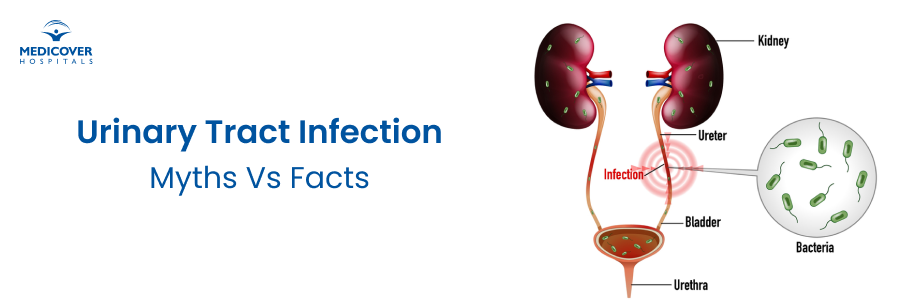
Urinary tract infections are very common. But people still get confused or misinformed about them. Urinary tract infection myths delay treatment, increase anxiety, and sometimes make the infection worse.
Many people rely on advice from friends, the internet, or old family beliefs. Knowing the facts about urinary tract infections can help you manage symptoms early, prevent complications, and recognize when you need medical attention.
Women experience UTIs more often, but men can also face urinary infections due to prostate issues, hygiene habits, or untreated medical conditions. Accurate knowledge is important for both. If you live in Bengaluru and are looking for the best hospital in Bangalore, experienced specialists can guide you in diagnosing and treating UTIs.
Common Urinary Tract Infection Myths in Women
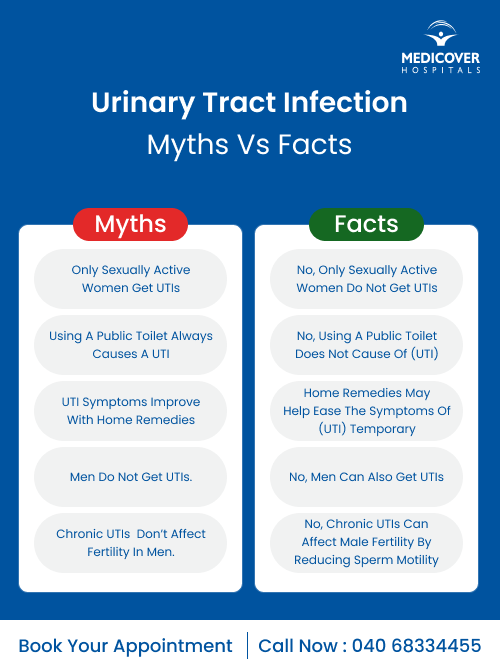
Myth 1: "Only sexually active women get UTIs"
Fact: Sexual activity can increase UTI risk, but it is not the only cause. Even women who are not sexually active can develop UTI infections due to factors like poor hydration, holding urine too long, constipation, hormonal changes, or anatomy. UTIs occur when bacteria enter the urinary tract, and this can happen in many situations unrelated to intercourse.
Myth 2: "Using a public toilet always causes a UTI"
Fact: Public toilets do not directly cause UTIs. The bacteria that usually cause urinary infections come from the person’s own gut, not from a toilet seat. Touching contaminated surfaces and then touching the genital area may increase risk, but sitting on a toilet seat does not cause a UTI.
Get a second opinion from trusted experts and makeconfident, informed decisions.
Get Second OpinionNot sure where to start?
Talk to a patient care advisor — free, confidential, 24/7. We'll match you to the right specialist and book your appointment in minutes.
Myth 3: "If UTI symptoms improve with home remedies, treatment is not needed"
Fact: Some women feel temporary relief with home remedies like drinking water or taking herbal drinks, but this does not cure the infection. Untreated UTIs may return or progress to a kidney infection. A proper urine test and medical guidance help confirm whether treatment is necessary.
Myth 4: "Wearing tight clothing causes UTIs"
Fact: Tight clothes alone do not cause urinary infections. They may increase moisture and reduce airflow, which can irritate the genital area, but they do not introduce bacteria into the urinary tract. Good hygiene and regular changing of underwear are much more important than clothing type.
Myth 5: "Menstrual blood can cause UTIs"
Fact: Menstruation does not cause urinary infections. During periods, the pH of the genital area may change slightly, and hygiene habits may vary, but menstrual blood itself does not lead to UTIs. Drinking enough water, changing pads regularly, and maintaining hygiene help reduce discomfort.
Myth 6: "UTIs don’t affect kidney function in women."
Fact: Recurrent or untreated UTIs can put pressure on kidney function, especially in women with diabetes, pregnancy-related changes, or undiagnosed anatomical issues. When bacteria move from the bladder to the kidneys, it can lead to pyelonephritis. This condition can cause high fever, flank pain, nausea, and in severe cases, temporary or long-term kidney damage.
Common Urinary Tract Infection Myths in Men
Myth 7: "Men do not get UTIs."
Fact: Men can get urinary infections, especially when they have prostate enlargement, kidney stones, poor hydration, or uncontrolled diabetes. Although UTIs are less common in men, they can still occur and may require evaluation to check for underlying causes.
Myth 8: "Burning during urination in men always means a UTI."
Fact: Burning urine can happen due to dehydration, high salt intake, sexually transmitted infections, prostate inflammation, or kidney stones. A UTI is only one possible cause. A proper test is needed to identify the exact reason.
Your health is everything - prioritize your well-being today.
Schedule Your AppointmentMyth 9: "Drinking beer helps flush out a UTI."
Fact: Beer does not clean the urinary tract or kill bacteria. Alcohol irritates the bladder and can worsen symptoms. It may increase dehydration and delay proper treatment. Water is the safest way to support recovery.
Myth 10: "Antibiotics are enough for UTIs"
Fact: Not all urinary symptoms require antibiotics. Overuse leads to resistance and reduces effectiveness when antibiotics are truly needed. A urine test confirms whether antibiotics are necessary and helps choose the correct medicine.
Myth 11: "UTIs in men always need long-term treatment."
Fact: UTI treatment duration depends on the cause and severity. Some infections need only a short course of medication, while others require longer treatment when prostate involvement or structural issues are present. A proper evaluation helps determine the right approach.
Myth 12: "Chronic UTIs don’t affect fertility in men."
Fact: While not every UTI leads to fertility problems, untreated or long-standing infections in men can contribute to issues like reduced sperm motility, low sperm count, or prostatitis. These are all linked to fertility challenges.
Chronic or repeated urinary tract infections can cause inflammation in nearby reproductive structures, including the prostate, epididymis, or testicles. When these areas are affected, sperm transport and semen quality can decline.
Frequently Asked Questions
In some mild cases, symptoms may improve, but most UTIs need proper evaluation. Untreated infections can spread to the kidneys. It is safer to consult a healthcare provider, especially if symptoms last more than 24–48 hours.
Poor hygiene increases risk, but it is not the only cause. UTIs can also occur due to dehydration, sexual activity, urinary retention, or natural bacterial imbalance.
Cranberry products may help reduce bacteria from sticking to the urinary tract, but they do not cure active infections. Antibiotics are usually required.
Public toilets themselves are not the main cause. UTIs occur when bacteria enter the urinary tract. Proper wiping techniques, hydration, and safe hygiene practices matter more.
No. UTIs are not sexually transmitted infections. Sexual activity may increase risk, but bacteria causing UTIs usually come from the person’s own body.
No. UTIs in men may indicate obstruction, an enlarged prostate, or other issues. Ignoring symptoms may lead to complications.
Yes, holding urine frequently allows bacteria to multiply inside the bladder, increasing infection risk.
No. Anyone can develop a UTI. Factors like not drinking enough water, sweating, long work hours, and lifestyle habits all contribute.
Burning is common but not universal. Some individuals may only have increased frequency, pelvic discomfort, or cloudy urine.
No. Self-medicating with antibiotics can cause resistance and incomplete treatment. Evaluation is important to choose the right medication.
No. Recurrent UTIs are often linked to lifestyle, hydration, sexual habits, menopause, or incomplete earlier treatments. Kidney issues are only one possible cause.
Properly chlorinated pools do not cause UTIs. Holding urine after swimming or remaining in wet swimwear for long periods may increase risk, not the water itself.
No. Over-cleaning or using harsh soaps can disrupt natural bacterial balance and increase the risk of irritation.
Symptoms may reduce, but infection may still be present. Persistent or recurrent symptoms should be evaluated.
No. Similar symptoms can occur in dehydration, bladder irritation, kidney stones, or reproductive tract issues. Proper diagnosis is essential.
- Cardiology
- Case Studies
- Dermatology
- Endocrinology
- ENT
- Fertility
- Gastroenterology
- General
- General-Medicine
- Gynecology
- Hematology
- Infectious-Diseases
- Medical News
- Neurology
- Oncology
- Ophthalmology
- Orthopedics
- Pediatrics
- Procedure
- Public-Health
- Pulmonology
- Radiology
- Second Opinion
- Urology
- Wellness
- Woman-and-child
Related Blogs
Still have questions? Speak with our experts now!
040-68334455


