 Call
Call Patient Reports
- Cardiology 84
- Dermatology 45
- Endocrinology 33
- ENT 16
- Fertility 190
- Gastroenterology 78
- General-Medicine 81
- Gynecology 80
- Hematology 19
- Infectious-Diseases 33
- Neurology 52
- Oncology 34
- Ophthalmology 23
- Orthopedics 69
- Pediatrics 31
- Procedure 23
- Public-Health 144
- Pulmonology 59
- Radiology 8
- Urology 68
- Wellness 161
- Woman-and-child 77
- 2755
- 3.5 Minute
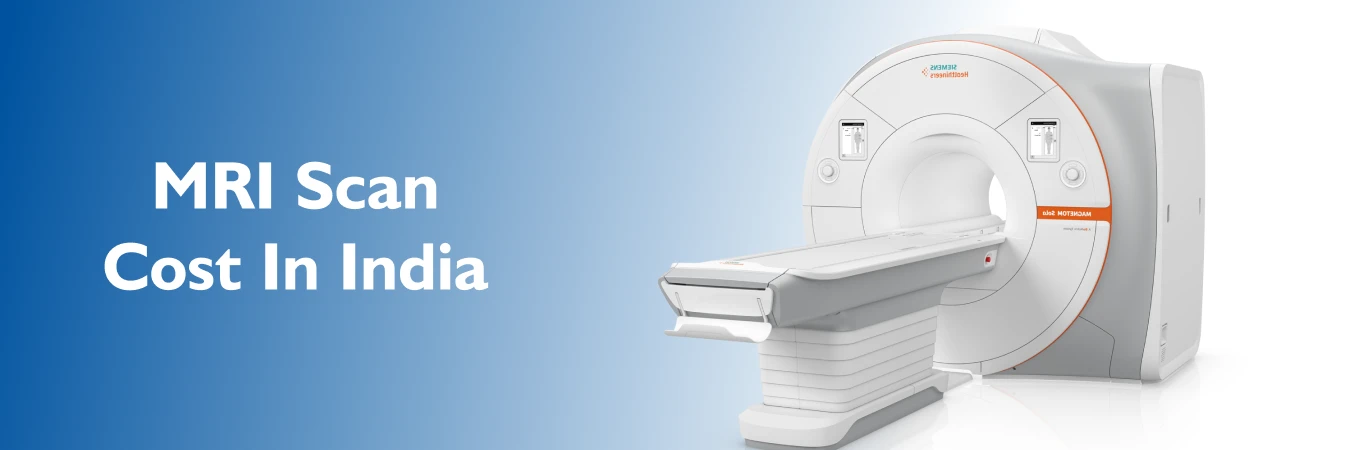
MRI Scan Cost In India
The cost of an MRI scan in India depends on various factors, including the location, the body part being scanned, and the type of scan prescribed by your doctor, either plain or with contrast.
Magnetic Resonance Imaging (MRI) is an acronym scan that produces detailed images of various organs of the body. It uses strong magnetic fields and radio waves to visualize the organs, tissues, and structures inside the body.
A Magnetic Resonance Imaging scan can clearly show:
- Muscles
- Tendons
- Ligaments
- Nerve roots
- Cartilage
Since it does not use X-rays to create the images, it does not carry radiation risks.
Conditions Diagnosable by MRI Scan
An MRI scan can indicate various health issues affecting soft tissues and organs, including:
- Tumors
- Inflammatory diseases
- Congenital abnormalities
- Osteonecrosis
- Bone marrow diseases
- Degenerative joint conditions like arthritis
- Spinal cord issues
- Injuries like fractures or soft tissue damage
- Osteomyelitis
Get a second opinion from trusted experts and makeconfident, informed decisions.
Get Second OpinionNot sure where to start?
Talk to a patient care advisor — free, confidential, 24/7. We'll match you to the right specialist and book your appointment in minutes.
Role of MRI Scans in Diagnosis and Treatment
MRI scans provide detailed images essential for:
- Diagnosing conditions like torn ligaments, tumors, and internal injuries.
- Guiding precise treatment plans tailored to individual needs.
- Assessing the effectiveness of treatments through before-and-after comparisons.
These scans play a critical role in medical diagnosis, treatment planning, and monitoring patient progress.
How Does an MRI Scan Work?
An MRI scan operates by harnessing strong magnetic fields generated by powerful magnets within the MRI scanner. These magnetic fields interact with hydrogen protons present in the body when a person undergoes the scan.
- Magnetic Field Interaction: Magnetic fields attract hydrogen protons, which are abundant in water molecules and a components of all types of body tissues.
- Alignment and Radio Waves: When radio waves are directed at specific areas of the body during the MRI scan, these hydrogen protons respond by spinning out of their natural alignment within the magnetic field.
- Signal Collection: After the radio waves are switched off, the hydrogen protons gradually realign with the magnetic field. As they do so, they emit radio signals that are detected by receivers in the MRI machine.
- Image Creation: By capturing and processing signals from millions of hydrogen protons throughout the body, an MRI scanner generates highly detailed cross-sectional images of internal structures and tissues.
MRI Scan Types and Cost in Hyderabad
| Name | Type | Estimated Cost |
| MRI Scan Brain | Plain | Rs.10000 to 11000 |
| Plain With Contrast | Rs. 14000 to 15000 | |
| MRI Scan Chest | Plain | Rs.10000 to 11000 |
| Plain With Contrast | Rs. 14000 to 15000 | |
| MRI Scan Breast | Plain | Rs.10000 to 11000 |
| Plain With Contrast | Rs. 14000 to 15000 | |
| MRI Scan of Cervical Spine | Rs.10000 to 11000 | |
| MRI Scan Knee | Rs.10000 to 11000 |
Magnetic Resonance Imaging Scan Uses
MRI scan is an advanced technology that has always expanded its scope and uses in the field of medicine.
The Significant Uses of MRI Scans are;
- Abnormalities of the brain and spinal cord
- Presence of masses, tumours, cysts and other anomalies in various parts of the body
- Injuries in the bones and joints, such as the back and knee
- Certain conditions related to the heart, liver and other organs in the abdomen
- Checking for breast cancer in women at high risk.
- Diagnosis of conditions regarding pelvic pain in women, such as fibroids and endometriosis
- Evaluation of Suspected Urine Abnormalities in Women in Case of Infertility
The Procedure of Magnetic Resonance Imaging Scan
The patient will be kept on certain dietary restrictions prior to the scan. Unless instructed otherwise, he/she can take his/her daily medications as usual. The patient must change into a hospital gown and wear a dress. During the scan, jewellery or metal fastenings are not allowed.
Finally, an MRI scan is a noninvasive and painless procedure. Depending on the size of the body part being scanned and the number of images needed, the duration can vary from 15 minutes to one hour or more.
During an MRI scan, the process typically involves several vital steps to ensure accurate imaging and patient comfort:
- Patient Preparation: The patient is instructed to lie down on a movable table that slides into the opening of the MRI scanner's long, narrow, tube-like structure.
- Monitoring and Communication: A technologist monitors the patient from another room and communicates via a microphone to ensure comfort and readiness throughout the procedure.
- Noise Management: As the MRI machine's magnetic scanner generates a magnetic field, it produces repetitive tapping and other loud noises. To mitigate this, patients are provided with earplugs to block out the noise.
- Contrast Material Administration: If a contrast-filled MRI is necessary, an IV (intravenous) catheter is inserted into a vein in the patient's hand or arm to inject the contrast material.
- Remaining Still: During the scan, patients are asked to stay as still as possible to prevent blurring or unclear images, which could affect the diagnostic quality.
- Completion of Procedure: Once the desired number of images is captured, the patient can leave the hospital or medical facility.
Your health is everything - prioritize your well-being today.
Schedule Your AppointmentWho Should Not Get an MRI Scan?
Though a Magnetic Resonance Imaging (MRI) scan is a safe procedure, some people are not advised to get the scan or with extra safety measures.
Those include:
- Pregnant women, particularly during the first trimester, unless necessary.
- People with metal implants in their bodies, such as pacemakers, clips used to treat brain aneurysms, artificial joints, or specific metal coils placed in blood vessels, are at increased risk.
- Women who are breastfeeding should inform the medical staff before getting the scan.
- People with severe claustrophobia, such as MRI scanners, can be in confined spaces.
Note:
The latest prices may vary; please contact @040-68334455 for the most current pricing information.
Frequently Asked Questions
MRI scans in India are used to diagnose various conditions such as tumors, cysts, joint injuries, heart conditions, liver diseases, and conditions like endometriosis and fibroids.
Side effects from MRI scans are uncommon, but some typical ones may include headaches, itchy eyes, nausea, distress for those with claustrophobia, and inflammation at the injection site.
The average cost of an MRI scan in India is usually between ₹1,500 to ₹25,000, depending on the type of scan and the location of the facility.
MRI scans typically last between 20 minutes to an hour, depending on the part of the body being scanned and whether a contrast agent is used.
In most cases, you don’t need to fast for an MRI scan. However, if the scan involves a contrast dye or is related to the abdomen or digestive system, fasting for a few hours might be required.
Yes, full-body MRI scans are usually more expensive because they require more time and equipment to scan multiple areas of the body.
- Cardiology
- Case Studies
- Dermatology
- Endocrinology
- ENT
- Fertility
- Gastroenterology
- General
- General-Medicine
- Gynecology
- Hematology
- Infectious-Diseases
- Medical News
- Neurology
- Oncology
- Ophthalmology
- Orthopedics
- Pediatrics
- Procedure
- Public-Health
- Pulmonology
- Radiology
- Second Opinion
- Urology
- Wellness
- Woman-and-child
Related Blogs
Still have questions? Speak with our experts now!
040-68334455


