 Call
Call Patient Reports
- Cardiology 84
- Dermatology 45
- Endocrinology 33
- ENT 16
- Fertility 190
- Gastroenterology 78
- General-Medicine 81
- Gynecology 80
- Hematology 19
- Infectious-Diseases 33
- Neurology 52
- Oncology 34
- Ophthalmology 23
- Orthopedics 69
- Pediatrics 31
- Procedure 23
- Public-Health 144
- Pulmonology 59
- Radiology 8
- Urology 68
- Wellness 161
- Woman-and-child 77
- 3634
- 3.7 Minute
What is Minimally Invasive Spine Surgery?
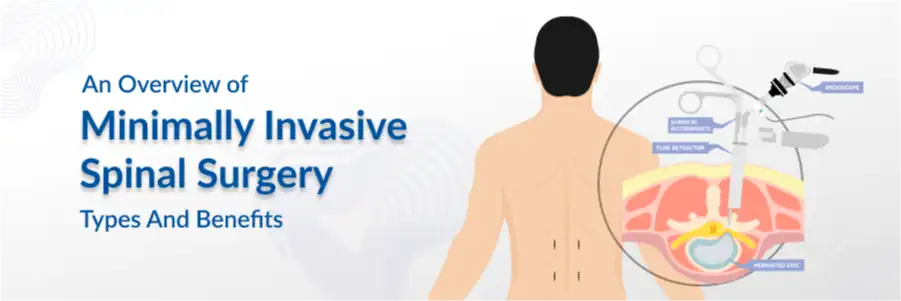
Minimally invasive spine surgery (MISS) attempts to treat spinal disorders with less damage to the surrounding tissues. Minimally invasive procedures aim to minimize damage to the surrounding muscles, ligaments, and other structures while performing the same surgical goals. This may result in less discomfort following surgery.
Key Features of Minimally Invasive Spine Surgery include
- Smaller incisions
- Use of specialized instruments
- Muscle sparing approach
- Imaging Techniques
Types of Minimally Invasive Spine Surgery
1. Spinal Cord Surgery
This term refers to surgical operations that treat disorders affecting the spinal cord directly, such as tumors, cysts or spinal cord compression caused by injury or degeneration. These surgeries aim to reduce pressure on the spinal cord and may include;
- Removal of tumors
- Removal of cysts
- Removal of damaged tissue
- Stabilization of the spine
- Decompression of the spine
2. Herniated Disc Surgery
Herniated disc surgery, also called discectomy or microdiscectomy, is used to treat a herniated disc in the spine. During the procedure, the surgeon removes the section of the herniated disc pressing on adjacent nerves, reducing discomfort and restoring normal function.
3. Open Spine Surgery
Traditional spine surgery is performed through a big, open incision. Open spine surgery enables direct access to the spine, allowing for detailed viewing and manipulation of spinal components. While effective, open spine surgery can result in longer hospital stays, more postoperative discomfort, and longer recovery times than minimally invasive procedures.
4. Keyhole Spine Surgery
It is also known as minimally invasive spine surgery, which involves making small incisions and accessing the spine using specialized devices. The phrase "keyhole" refers to the small size of the incisions, which are usually a few centimetres long. Keyhole spine surgery attempts to minimize tissue damage, alleviate postoperative pain, and speed up healing.
5. Microscopic Spine Surgery
This sort of spine surgery is carried out with a surgical microscope, which provides magnified views of the surgical site. Microscopic spine surgery allows for precise manipulation of spinal structures and applies to a combination of treatments such as discectomy, decompression, and spinal fusion.
6. Laser spine surgery
In this surgery, laser technology is used to treat specific spinal disorders. The laser is used to remove or melt tissue, such as herniated disc material or bone spurs, without the use of standard surgical tools. However, laser spine surgery is not universally accepted as a stand-alone treatment and is repeatedly combined with other surgical procedures.
Your health is everything - prioritize your well-being today.
Schedule Your AppointmentSteps in Minimally Invasive Spine Procedures
- Preparation: Your medical history is reviewed, and you receive anesthesia for comfort.
- Incision: Small cuts (less than an inch) are made near the spine.
- Instrument Insertion: Specialized tools and a camera are inserted through these incisions.
- Procedure: The surgeon uses the camera to guide repairs or adjustments to the spine.
- Closure: Incisions are closed with stitches or adhesive strips.
- Recovery: You're monitored post-surgery and given instructions for home care.
Minimally invasive spine procedures offer quicker recovery and less discomfort than traditional surgery, with minimal tissue damage.
Benefits of Minimally Invasive Spine Procedures
- Smaller Incisions: Minimizes damage to surrounding muscles and tissues, leading to less postoperative pain and faster recovery.
- Reduced Blood Loss: Smaller incisions result in less blood loss during surgery compared to traditional open procedures.
- Shorter Hospital Stay: Patients often require shorter hospital stays or can even go home the same day, promoting a quicker return to daily activities.
- Lower Infection Risk: Reduced exposure of internal organs lowers the risk of infections post-surgery.
- Improved Cosmesis: Small scars from the incisions are less noticeable and may fade over time, improving cosmetic outcomes.
- Preservation of Spinal Stability: Minimally invasive techniques aim to preserve spinal stability and function, minimizing the need for extensive spinal fusion.
- Quicker Rehabilitation: Patients typically experience quicker rehabilitation and can resume normal activities sooner.
- Reduced Risk of Complications: Overall, minimally invasive procedures are associated with lower rates of complications compared to traditional open surgeries.
Minimally invasive spine procedures offer numerous advantages, making them a preferred choice for many patients seeking effective treatment with faster recovery times and reduced surgical risks.
Frequently Asked Questions
Minimally Invasive Spine Surgery (MISS) is a modern way to treat spine problems with less harm to nearby tissues. The main aim is to get the same results as regular surgery but with less damage to muscles, ligaments, and other important parts of the spine.
The success rate of minimally invasive spine surgery is 90%.
A patient who is not improving with non-surgical therapy and has extreme back pain, numbness, or weakness in the upper or lower limbs may be a suitable candidate for minimally invasive spine surgery (MISS).
Recovery varies but is typically faster than traditional surgery. Most patients can return to normal activities within weeks to months, depending on the procedure.
Risks include bleeding, infection, nerve damage, and risks associated with anesthesia, though these are generally lower compared to open surgery.
Candidates include patients with specific spine conditions that can be treated effectively through minimally invasive techniques, based on their medical history and imaging studies.
Yes, patients may have restrictions on lifting heavy objects or strenuous activities for a period to allow the spine to heal properly.
- Cardiology
- Case Studies
- Dermatology
- Endocrinology
- ENT
- Fertility
- Gastroenterology
- General
- General-Medicine
- Gynecology
- Hematology
- Infectious-Diseases
- Medical News
- Neurology
- Oncology
- Ophthalmology
- Orthopedics
- Pediatrics
- Procedure
- Public-Health
- Pulmonology
- Radiology
- Second Opinion
- Urology
- Wellness
- Woman-and-child
Related Blogs
Still have questions? Speak with our experts now!
040-68334455


