 040 68334455
 WhatsApp
 Patient Portal
 Home Care
- Cardiology 84
- Dermatology 45
- Endocrinology 33
- ENT 16
- Fertility 190
- Gastroenterology 78
- General-Medicine 81
- Gynecology 80
- Hematology 19
- Infectious-Diseases 33
- Neurology 52
- Oncology 34
- Ophthalmology 23
- Orthopedics 69
- Pediatrics 31
- Procedure 23
- Public-Health 144
- Pulmonology 59
- Radiology 8
- Urology 68
- Wellness 161
- Woman-and-child 77
- 1778
- 1.2 Minute
Written by Medicover Team and Medically Reviewed by Dr Rupesh Kalyan, Senior Consultant Medical Gastroenterologist
A Life Saved Through a Scope: How Medicover Bengaluru Doctors Handled a Severe GI Bleed
It started suddenly and without warning. In Whitefield, Bangalore, a middle-aged individual experienced intense weakness, dizziness, and an alarming episode of vomiting blood. What seemed like a stomach issue moments earlier quickly turned into a medical emergency. Family members noticed the skin turning pale and the patient struggling to stay conscious. There was no time to wait; this was a race against blood loss.
They rushed straight to Medicover Hospitals, Whitefield, known across the city as the Best Gastroenterology Hospital in Whitefield, Bangalore, a center equipped to handle critical digestive emergencies around the clock.
When a Digestive Problem Becomes Life-Threatening
On arrival, the emergency and gastroenterology teams acted immediately. Vital signs showed dangerously low blood pressure, a classic sign of acute gastrointestinal (GI) bleeding. Large-bore IV lines were secured, fluids started, and urgent blood tests sent.
GI bleeding can be deceptive. While symptoms may begin as acidity or stomach discomfort, severe internal bleeding can escalate rapidly, leading to shock if not treated in time.
Get a second opinion from trusted experts and makeconfident, informed decisions.
Get Second OpinionThe Gastroenterologist Who Took Charge
Leading the case was Dr Rupesh Kalyan, Senior Consultant Medical Gastroenterologist, Hepatologist, and Therapeutic Endoscopist at Medicover Hospitals, Bengaluru. With extensive experience managing high-risk GI emergencies, he quickly assessed the situation and ordered an emergency upper GI endoscopy.
His approach was calm and decisive, critical in moments where every minute of delay could mean further blood loss.
Understanding GI Bleeding
GI bleeding occurs when there is active bleeding anywhere in the digestive tract. The gold standard for both diagnosis and treatment is therapeutic endoscopy, a procedure that allows doctors to identify the source of bleeding and stop it immediately without the need for open surgery.
GI bleeding most commonly occurs due to
- Peptic ulcers
- Erosive gastritis
- Varices related to liver disease
- Tears in the food pipe
Inside the Endoscopy Suite: Precision That Saves Lives
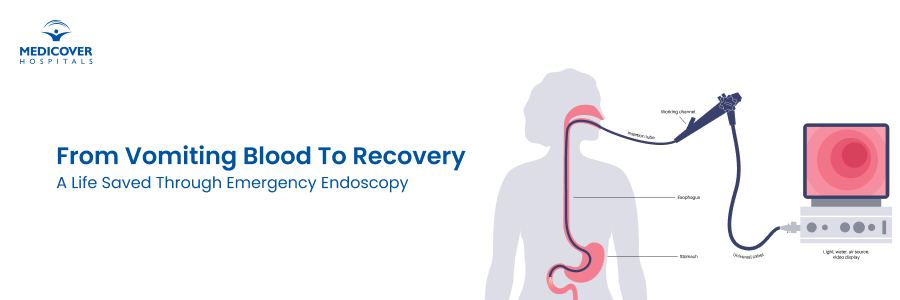
The patient was shifted to Medicover’s high-definition endoscopy suite without delay. Using a flexible endoscope, Dr Rupesh carefully navigated the upper digestive tract. The source was identified, a bleeding ulcer that required urgent control.
Through the scope itself, specialized tools were used to stop the bleeding effectively. The advantage of modern therapeutic endoscopy is that it allows minimally invasive, targeted treatment, reducing recovery time and avoiding major surgery.
Within minutes, the bleeding was controlled. Blood flow stabilized. The crisis had passed.
The Moment Hope Returned
As monitoring continued in the GI high-dependency unit, blood pressure improved, and consciousness returned. When the family was informed that the bleeding had been successfully controlled, the relief was overwhelming. What could have turned fatal was stopped just in time through expertise, speed, and technology.
Sometimes, saving a life doesn't involve dramatic surgery, just the right scope in the right hands at the right moment.
Recovery and Ongoing Care at Medicover Whitefield
Treatment didn't stop with the procedure. At Medicover Hospitals, Whitefield, recovery focused on both immediate stabilization and long-term digestive health. The patient received:
- Close monitoring for re-bleeding
- Blood transfusion support where needed
- Medications to heal the ulcer and protect the stomach
- Dietary guidance and follow-up endoscopic planning
The gastroenterology team also addressed the cause of the bleed, ensuring preventive care moving forward.
What This Story Teaches About Digestive Emergencies
GI bleeding is a medical emergency that should never be ignored. Warning signs include:
- Vomiting blood or coffee-colored material
- Black, tarry stools
- Sudden weakness or dizziness
- Unexplained drop in blood pressure
Your health is everything - prioritize your well-being today.
Schedule Your AppointmentKey takeaways:
Digestive emergencies often hide behind symptoms that seem harmless: acidity, nausea, mild discomfort until they suddenly turn life-threatening. Vomiting blood, passing black stools, extreme weakness, or dizziness are not warning signs to wait on; they are cries for immediate help. In moments of severe GI bleeding, every minute of delay means more blood lost and a greater risk to life.
Reaching a hospital equipped with 24/7 gastroenterology emergency care, advanced endoscopy, and experienced specialists can mean the difference between irreversible shock and survival. At Medicover Hospitals, Whitefield, the right expertise, technology, and readiness come together at the exact moment they are needed most, transforming fear into relief and a medical crisis into a second chance at life.
A Life Protected by Expertise and Readiness
Today, recovery is well underway. Strength is returning, and confidence has replaced fear. What began as a terrifying digestive emergency ended as a powerful reminder of what timely medical care can achieve.
This is the strength of Medical Gastroenterology at Medicover Hospitals, Bengaluru, where advanced endoscopy, experienced specialists, and compassionate care come together to protect lives. For families in Whitefield and across Bangalore, it's a reassurance that even the most sudden GI emergencies are met with expertise, speed, and hope every hour of every day.
Frequently Asked Questions
Yes. Vomiting blood or coffee-colored material is a medical emergency. It often indicates active internal bleeding and can quickly lead to shock if not treated promptly at a specialized gastroenterology hospital.
Common causes include peptic ulcers, erosive gastritis, tears in the food pipe, bleeding related to liver disease (varices), and certain medications such as painkillers or blood thinners. Identifying the exact cause is essential to prevent recurrence.
GI bleeding emergencies are handled by experienced medical gastroenterologists and therapeutic endoscopists, including specialists like Dr Rupesh Kalyan, who are trained to manage high-risk digestive emergencies using advanced endoscopic techniques.
In emergency settings, doctors use blood tests, vital sign monitoring, and most importantly, an upper GI endoscopy. Endoscopy allows specialists to directly see the source of bleeding and assess its severity in real time.
Treatment should begin immediately. Every minute of delay increases blood loss and the risk of shock. Early intervention at a hospital with 24/7 gastroenterology emergency care significantly improves survival and recovery outcomes.
After stabilization, patients are closely monitored for re-bleeding, given medications to heal the digestive tract, and supported with blood transfusions if required. Doctors also focus on treating the underlying cause to prevent future episodes.
- Cardiology
- Case Studies
- Dermatology
- Endocrinology
- ENT
- Fertility
- Gastroenterology
- General
- General-Medicine
- Gynecology
- Hematology
- Infectious-Diseases
- Medical News
- Neurology
- Oncology
- Ophthalmology
- Orthopedics
- Pediatrics
- Procedure
- Public-Health
- Pulmonology
- Radiology
- Second Opinion
- Urology
- Wellness
- Woman-and-child
Related Blogs
Still have questions? Speak with our experts now!
040-68334455


Feeling unwell?
Request a callback!
