 Call
Call Patient Reports
- Cardiology 84
- Dermatology 45
- Endocrinology 33
- ENT 16
- Fertility 190
- Gastroenterology 78
- General-Medicine 81
- Gynecology 80
- Hematology 19
- Infectious-Diseases 33
- Neurology 52
- Oncology 34
- Ophthalmology 23
- Orthopedics 69
- Pediatrics 31
- Procedure 23
- Public-Health 144
- Pulmonology 59
- Radiology 8
- Urology 68
- Wellness 161
- Woman-and-child 77
- 3945
- 3.9 Minute
Skin Issues in Infants During the Rainy Season
The rainy season brings relief from hot temperatures, but it also brings a range of challenges, particularly for newborns.
One such challenge is the heightened vulnerability of infants to various skin issues during this time.
Their delicate and sensitive skin requires special attention and care to combat the skin problems that are exacerbated by the humidity and dampness of the rainy season.
Common Skin Problems in Infants During Rainy Season
Infants have highly sensitive and delicate skin that is more prone to irritation and discomfort. The rainy season, characterized by increased humidity, can lead to several skin issues in newborns. Some common skin problems faced by infants during this time include:
- Diaper Rash: The dampness caused by wet diapers can result in diaper rash, leading to redness, inflammation, and discomfort in the diaper area.
- Fungal Infections: The moist environment is conducive to the growth of fungi, resulting in conditions like candidiasis, commonly known as thrush, which can cause white patches in the mouth and diaper area.
- Eczema Flare-Ups: Babies with sensitive skin are susceptible to eczema, which can worsen due to increased humidity, causing dryness, redness, and itchiness.
- Heat Rash: The combination of warmth and humidity can lead to heat rash or prickly heat, characterized by tiny red bumps and discomfort.
- Allergic Reactions: Increased moisture can exacerbate contact with allergens, triggering skin allergies and irritations.
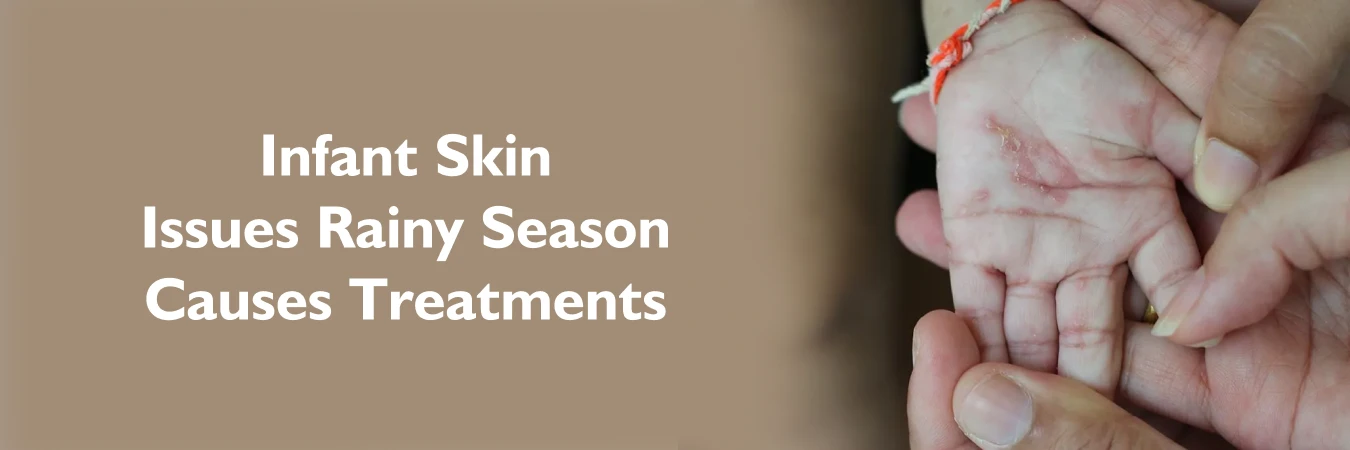
Dry White Patches on Baby Skin
Dry white patches on a baby's skin can be concerning for parents, but they are often harmless and treatable. These patches can result from various conditions, including eczema, dry skin, or fungal infections. Here, we'll explore the common causes, symptoms, and treatments for dry white patches on a baby's skin.
Treatment:
Taking preventive measures and employing suitable treatments can help alleviate these problems:
- Hygiene: Frequent diaper changes and proper cleansing of the baby's skin can prevent diaper rash and fungal infections. Use gentle, hypoallergenic baby wipes and avoid using strong soaps.
- Keep the Skin Dry: Pat the baby's skin gently after bathing and ensure the skin folds are dry to prevent fungal growth and heat rash.
- Moisturization: Regularly moisturize your baby's skin with a mild, fragrance-free baby lotion to prevent dryness and eczema flare-ups.
- Appropriate Clothing: Dress your baby in loose, breathable clothing made from natural fabrics to prevent overheating and skin irritation.
- Avoid Harsh Products: Avoid using strong detergents, perfumed products, or harsh fabric softeners for washing baby clothes as they can trigger allergies.
- Consultation with a Pediatrician or Dermatologist: If the skin issues persist or worsen, it's crucial to consult a medical professional. Pediatricians or dermatologists specializing in infant care can diagnose accurately and recommend suitable treatments.
When to Seek Medical Attention
- When seeking medical advice for your infant's skin issues during the rainy season, it's recommended to consult a pediatrician or a dermatologist.
- Pediatricians have expertise in diagnosing and treating various infant health issues, including skin problems.
- Dermatologists specializing in pediatric dermatology can also provide specialized care for your baby's delicate skin.
- You can minimize the risk of skin issues by following proper hygiene practices, maintaining skin dryness, and using appropriate products.
- However, if the problems persist, seeking professional medical help is essential. For specialized care and accurate diagnosis, consider consulting the experienced doctors at Medicover, who are well-equipped to address the unique skin needs of infants.
- Your baby's well-being is of utmost importance, and seeking expert advice ensures a healthy and comfortable rainy season for your precious little one.
Your health is everything - prioritize your well-being today.
Schedule Your AppointmentFrequently Asked Questions
Infants have delicate skin that is easily affected by changes in humidity and moisture. The rainy season's damp environment can lead to various skin problems in babies.
Diaper rash is redness and irritation in the diaper area. To prevent it, change diapers frequently, clean the area gently, and allow the skin to air-dry before putting on a fresh diaper.
Diaper rash is typically red and irritated, while fungal infections like candidiasis can have white patches. If in doubt, consult a pediatrician for an accurate diagnosis.
Yes, increased humidity can exacerbate eczema in infants, leading to dry, red, and itchy skin. Regular moisturization and maintaining dry skin folds can help manage eczema.
Heat rash, or prickly heat, is characterized by tiny red bumps. Dress your baby in lightweight, breathable clothing, and keep them cool to prevent heat rash.
Yes, the increased moisture can lead to contact with allergens, triggering allergies and skin irritations. Using gentle, hypoallergenic products can help reduce the risk.
If the skin issues persist, worsen, or cause discomfort to your baby, it's advisable to consult a pediatrician or dermatologist for professional guidance and treatment.
Avoid using strong soaps, detergents, and perfumed products on your baby's skin. Opt for mild, hypoallergenic options to prevent skin irritation.
Certain foods aid in milk production, such as: Maintain adequate hydration Consume a well-rounded diet Prepare lactation cookies Brew lactation teas.
For expert advice and specialized care, consider consulting experienced pediatricians or dermatologists at Medicover. They can provide tailored solutions for your baby's skin needs.
- Cardiology
- Case Studies
- Dermatology
- Endocrinology
- ENT
- Fertility
- Gastroenterology
- General
- General-Medicine
- Gynecology
- Hematology
- Infectious-Diseases
- Medical News
- Neurology
- Oncology
- Ophthalmology
- Orthopedics
- Pediatrics
- Procedure
- Public-Health
- Pulmonology
- Radiology
- Second Opinion
- Urology
- Wellness
- Woman-and-child
Related Blogs
Still have questions? Speak with our experts now!
040-68334455


