 Call
Call Patient Reports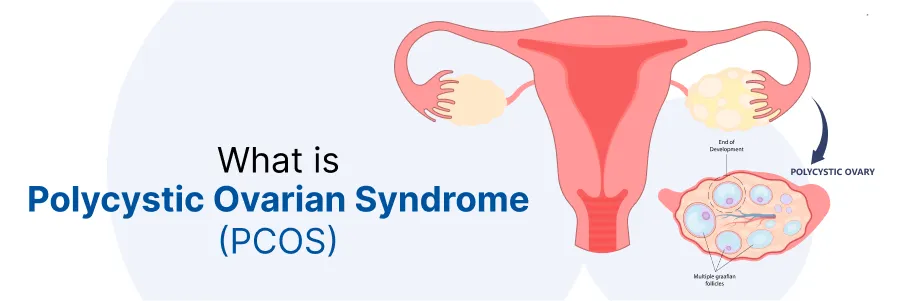
- 3759
- 3.5 Minute
Written by Medicover Team and Medically Reviewed by Dr Amatul Hafsa, Gynecologist
What is Polycystic Ovarian Syndrome (PCOS)?
Polycystic Ovarian Syndrome (PCOS) is a highly prevalent hormonal disorder that affects women of reproductive age. Also known as Stein-Leventhal Syndrome, it was first described in 1935 by doctors Irving Stein and Michael Leventhal.
Get a second opinion from trusted experts and makeconfident, informed decisions.
Get Second OpinionNot sure where to start?
Talk to a patient care advisor — free, confidential, 24/7. We'll match you to the right specialist and book your appointment in minutes.
How Common is PCOS?
- PCOS is responsible for menstrual irregularities in 4–12% of women of reproductive age.
- 5–10% of women develop PCOS during their teenage or childbearing years.
- It affects about 6–7% of the global female population.
- In India, PCOS prevalence is increasing rapidly, with up to 35% of women affected.
PCOS Symptoms and Complications
Women with PCOS may experience a range of symptoms such as:
- Irregular or missed periods
- Excess facial or body hair (hirsutism)
- Acne or oily skin
- Weight gain or difficulty losing weight
- Thinning hair on the scalp
- Insulin resistance or type 2 diabetes
- Difficulty in ovulation or infertility
If left unmanaged, PCOS complications may include:
- Infertility
- Endometrial hyperplasia or cancer
- Type 2 diabetes
- High blood pressure
- High cholesterol
- Heart disease
Timely diagnosis and treatment are essential to manage PCOS symptoms and complications effectively.
Does PCOS Affect Pregnancy?
Yes PCOS can affect pregnancy. It is one of the most common causes of infertility due to hormonal imbalances that prevent ovulation. Women with PCOS may have trouble getting pregnant and are at a higher risk of complications such as:
- Miscarriage
- Gestational diabetes
- Preeclampsia
- Premature delivery
However with proper management and treatment many women with PCOS go on to have healthy pregnancies.
Can I Have Children If I Have Polycystic Ovary Syndrome?
Yes, you can have children if you have PCOS. Though PCOS is one of the most common causes of female infertility, it is treatable, and many women conceive naturally or with medical support.
By understanding your body adopting a healthy lifestyle and working with fertility specialists your chances of getting pregnant with PCOS can improve significantly.
How to Conceive with PCOS Naturally
Wondering how to conceive with PCOS? Many women with PCOS are able to get pregnant through natural or assisted methods depending on the severity of their symptoms.
1. Lifestyle Changes
For women struggling with obesity or being overweight lifestyle changes are the first step in treating PCOS-related infertility.
- Adopt a balanced, low-glycemic diet
- Engage in regular physical activity
- Manage stress and sleep
Studies show that losing just 5–10% of body weight can help regulate ovulation and increase your chances of getting pregnant with PCOS.
How to Get Pregnant Fast with PCOS: Medical Options
If natural methods aren’t effective doctors may suggest medical or surgical treatments to get pregnant with PCOS quickly.
1. Clomiphene Citrate (CC):
It is the standard medicine suggested for ovulation induction in women with PCOS. After the medicine is given ovulation is successfully achieved in women with PCOS problems which thus helps them with timely menstruation, and improved conception chances.
Non-obese women or obese women who do not ovulate even after lifestyle changes are suggested to ovulation induction therapy with Clomiphene Citrate (CC). This increases the chances of conception with PCOS.
2. Metformin with Clomiphene Citrate (CC):
For insulin-resistant women, the combination of metformin and clomiphene citrate has been used and proven to improve the metabolic abnormalities in PCOS patients.
It is also known to improve ovulation rates and help conceive in women with PCOS.
3. Gonadotropin Therapy:
Ovulation induction with gonadotropin therapy is recommended for many patients with PCOS. These help follicles to mature and eggs to ovulate.
4. Laparoscopic Ovarian Drilling (LOD):
It is a surgical treatment of PCOS that can trigger ovulation in women. Although not commonly used it is recommended to patients who fail to ovulate even after losing weight or trying medications.
It is usually done with a small laparoscopic incision with general anaesthesia. This helps improve pregnancy chances in women. Sometimes Laparoscopy is followed by IVF treatment to enhance conception rates.
5. IVF (In-Vitro Fertilization) Treatment:
IVF is a procedure in which fertilisation takes place outside the body. The eggs and sperm are extracted using injection by giving stimulation medications and then fertilised in an IVF lab.
The embryo then formed is transferred back to the uterus to implant. This increases the chances of pregnancy for women with PCOS.
Chances of Getting Pregnant with PCOS
Your chances of getting pregnant with PCOS depend on:
- Age
- Weight
- Hormonal levels
- Insulin resistance
- Response to medication
With treatment, many women with PCOS can conceive either naturally or through assisted reproductive techniques like IVF.
Early Diagnosis and Fertility Support
Taking action early is crucial in managing PCOS. If you are asking how to get pregnant fast with PCOS consult a fertility expert for personalized advice and treatment. Timely care ensures better health outcomes and improved conception chances.
Your health is everything - prioritize your well-being today.
Schedule Your AppointmentWhy Choose Medicover Fertility?
Medicover Fertility is a leading international fertility chain offering:
- Advanced IVF labs and technology
- Expert fertility specialists
- Treatment aligned with ICMR and ESHRE guidelines
- High success rates especially in PCOS-related infertility
Frequently Asked Questions
Manage PCOS by lifestyle changes, monitor ovulation, and consider fertility treatments like IVF for conception.
PCOS causes enlarged ovaries with cysts, leading to irregular periods, infertility, weight gain, and higher diabetes and heart disease risks.
The best time to get pregnant with PCOS is during ovulation, which is when your body releases an egg. Since PCOS can cause irregular cycles, it’s important to track ovulation using tools like ovulation predictor kits, basal body temperature, or fertility apps. Maintaining a healthy lifestyle and managing weight can also help improve ovulation and increase your chances of getting pregnant.
Maintain fertility through diet, exercise, and proper sleep. Seek diagnosis and fertility treatments for conception help.
PCOS often causes irregular ovulation and menstruation, making timing unpredictable.
Medications like Clomiphene Citrate and Metformin can aid fertility in PCOS cases.
Consider fertility medications or IVF for faster conception with PCOS.
- Cardiology
- Case Studies
- Dermatology
- Endocrinology
- ENT
- Fertility
- Gastroenterology
- General
- General-Medicine
- Gynecology
- Hematology
- Infectious-Diseases
- Medical News
- Neurology
- Oncology
- Ophthalmology
- Orthopedics
- Pediatrics
- Procedure
- Public-Health
- Pulmonology
- Radiology
- Second Opinion
- Urology
- Wellness
- Woman-and-child
Related Blogs
Still have questions? Speak with our experts now!
040-68334455


