What is TAVR Surgery?
TAVR (Transcatheter Aortic Valve Replacement), also called TAVI, is a minimally invasive heart procedure that replaces a damaged aortic valve without the need for traditional open-heart surgery. The aortic valve plays a vital role in controlling blood flow from the heart to the rest of the body. It is mainly used for patients with severe aortic stenosis, leaky aortic regurgitation, or malformed (as in bicuspid aortic valve disease), it puts extra strain on the heart and reduces oxygen supply to the body.
Unlike traditional surgery, the TAVR procedure uses a thin catheter tube inserted through the leg or chest to implant a new valve. This helps restore blood flow and improve heart function with quicker recovery. TAVR is especially beneficial for patients who are elderly, have multiple health conditions, or are considered too high-risk for conventional surgery.
Types of Transcatheter Aortic Valve Replacement (TAVR) Procedures
The choice of TAVR technique depends on the patient's age, health condition, and structure of the blood vessels. A heart team that includes interventional cardiologists, cardiac surgeons, and anesthesiologists will evaluate and recommend the most suitable approach.
- Transfemoral TAVR: The most common method, performed via an artery in the groin (femoral artery). The new valve is guided up to the heart and placed within the diseased valve. Since it does not require chest incisions, recovery is usually quicker.
- Transapical TAVR: In cases where groin arteries are too narrow or unsuitable, doctors may access through a small incision in the chest and the tip of the heart (left ventricle). This approach gives direct access to the heart but may require a slightly longer recovery time compared to the transfemoral route.
- Transaortic TAVR: This method involves an incision in the upper chest and direct access to the aorta. It is usually chosen for patients with vascular disease or other conditions where both transfemoral and transapical access are not possible.
Each approach aims to provide a safe and effective replacement of the faulty valve while minimizing risks and helping patients return to daily activities sooner.
2-4 Hours
Surgery Duration
General Anesthesia
Anesthesia Used
1-2 Months
Full Recovery Timeline

When is Transcatheter Aortic Valve Replacement (TAVR) Recommended?
Doctors recommend TAVR surgery when patients face severe valve problems that cannot be managed with medication alone. Common indications include:
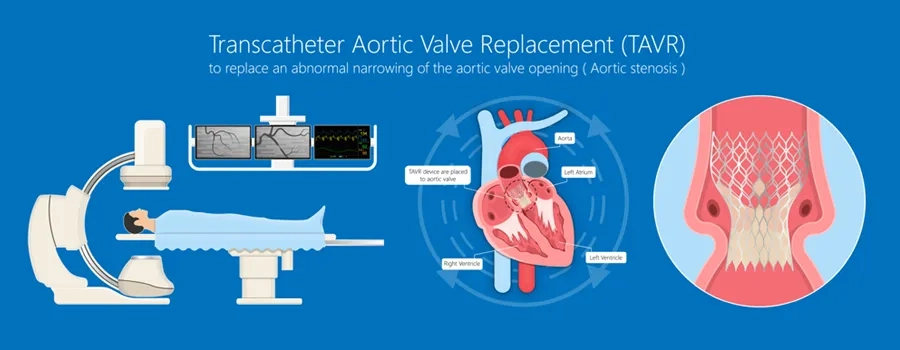
- Severe Aortic Stenosis: This is the most common reason for TAVR. The valve becomes stiff and narrow, forcing the heart to pump harder to push blood through. Patients often experience chest pain, dizziness, fainting, and shortness of breath. Without treatment, severe aortic stenosis can lead to heart failure.
- Aortic Regurgitation: In this condition, the valve does not close properly, causing blood to leak backward into the heart. Over time, this leads to fatigue, swelling of the legs, and reduced ability to perform daily activities. TAVR helps by implanting a new valve that seals properly and prevents backflow.
- Bicuspid Aortic Valve Disease: Some people are born with only two valve flaps instead of three. This congenital defect makes the valve more prone to early wear and tear, leading to stenosis or regurgitation. TAVR can restore normal blood flow and delay the need for more invasive surgery.
- High Surgical Risk Patients: Elderly patients or those with multiple medical problems such as diabetes, lung disease, kidney problems, or frailty may not be strong enough for open-heart surgery. For these patients, TAVR offers a safe alternative with lower risk and faster recovery.
How to Prepare for TAVR Surgery?
Proper preparation before Transcatheter Aortic Valve Replacement (TAVR) surgery is essential for a safe procedure and a smooth recovery. Patients who follow medical advice closely often experience fewer complications and quicker rehabilitation.
Medical Evaluation & Tests:
- Before the surgery, the heart care team, including the best cardiologists and cardiac surgeons, will conduct a thorough evaluation. This may include:
- Echocardiogram to check heart valve function,
- CT scan to assess the size and shape of the aortic valve,
- Electrocardiogram (ECG) to monitor heart rhythm, and
- Blood tests to evaluate overall health.
- These assessments help the surgical team create a personalised treatment plan and reduce risks during the procedure.
Lifestyle Adjustments:
- Doctors usually recommend making certain lifestyle changes in the weeks leading up to TAVR surgery.
- Quitting smoking is one of the most important steps, as it improves lung function and enhances healing after the procedure.
- Alcohol intake should be minimised or avoided completely, since it can interfere with anesthesia and post-surgery medications.
- Patients may also need to adjust regular medications, such as blood thinners or diabetes drugs, under the guidance of their cardiologist.
Home Preparation:
- Planning ahead for recovery at home can make the post-surgery period much easier.
- Patients are encouraged to arrange for a caregiver, whether a family member or professional, who can assist with mobility, meals, and daily activities during the first few weeks.
- Setting up a recovery space with comfortable seating, easy access to medications, and reduced physical strain will support a safer healing environment.
Day Before Surgery:
- On the day before surgery, patients are usually advised to follow fasting guidelines given by their doctor, which often means avoiding food and drinks for a set number of hours.
Day of Surgery:
- Skincare products, lotions, perfumes, or makeup should be avoided, as they may interfere with surgical sterility.
- On the day of the procedure, wearing comfortable and loose-fitting clothing is recommended, since it makes hospital admission and post-surgery recovery more convenient.
What Happens During TAVR?
Transcatheter Aortic Valve Replacement (TAVR) is carried out in a highly advanced hybrid operating room, where both surgical and catheter-based techniques are available. The procedure is performed by a specialized cardiac team, including the best cardiologists, cardiac surgeons, and anesthesiologists, ensuring safety at every step.
TAVR Procedure Steps
- Preparation and Anesthesia: Before the procedure begins, you will be given either deep sedation or general anesthesia, depending on your overall health and medical evaluation. This ensures that you remain comfortable and pain-free throughout the surgery. The medical team also connects you to continuous monitoring systems that track your heart rate, oxygen levels, and blood pressure.
- Catheter Insertion: Once you are prepared, the cardiologist makes a small incision, most commonly in the femoral artery located in the groin. In some cases, the access may be made through a small opening in the chest. Through this opening, a thin, flexible tube known as a catheter is carefully inserted and guided toward the heart using advanced imaging systems.
- Valve Placement: The replacement valve, which is folded into the catheter, is then advanced up to the site of the diseased aortic valve. The surgical team ensures the precise positioning of the new valve before deployment.
- Valve Deployment: Depending on the type of prosthetic valve used, it is either expanded with the help of a balloon or designed to self-expand into the correct place. This new valve begins functioning immediately, taking over the job of regulating blood flow from the heart to the rest of the body.
- Closure and Completion: After the valve has been successfully implanted, the catheter is carefully withdrawn, and the incision site is closed with stitches or special closure devices. The procedure usually takes between 1-2 hours, which is significantly shorter compared to open-heart valve replacement.
- Initial Recovery: Once the procedure is complete, you will be shifted to the intensive care unit (ICU) for close observation. Here, your vital signs, heart rhythm, and valve function are monitored to ensure a smooth recovery before moving you to a regular ward.
Who Performs the Aortic Valve Replacement (TAVR) Procedure?
The TAVR procedure is performed by a specialized medical team led by experts in cardiac care. These professionals have advanced training in minimally invasive heart procedures and work together to ensure the best outcomes for patients.
Specialists Involved:
- Cardiologist
- Interventional Cardiologist
- Cardiac Surgeon
- Imaging Specialist
- Anesthesiologist
What to Expect After TAVR?
One of the biggest advantages of TAVR is that recovery is typically faster and less demanding than traditional open-heart surgery. Most patients notice an improvement in symptoms within weeks, allowing them to return to their daily activities with renewed energy.
First Few Days
- In the initial days after the procedure, you may experience mild chest discomfort, soreness at the catheter insertion site, and a feeling of fatigue.
- These symptoms are temporary and generally improve quickly. During this time, you remain in the ICU or hospital ward where your heart function is closely monitored.
Weeks 2-4
- As you move into the second to fourth week, your stamina begins to improve.
- Patients are usually encouraged to start light walking and perform daily household activities.
- Most people notice that shortness of breath and tiredness are reduced compared to before surgery.
Weeks 5-6
- By the fifth or sixth week, many patients feel well enough to return to work or resume their normal lifestyle.
- Physical activity levels are increased gradually, and the cardiologist may recommend participation in a structured cardiac rehabilitation program for faster recovery.
3-6 Months
- Within three to six months, the majority of patients experience significant improvement in heart function, exercise tolerance, and overall quality of life.
- Activities that once caused fatigue or breathlessness, such as climbing stairs or walking long distances, can be performed with ease.
- Regular follow-ups with the best cardiologists ensure that the valve is functioning properly and that you remain in good health.
Benefits of TAVR Surgery
Transcatheter Aortic Valve Replacement (TAVR) provides multiple advantages for patients diagnosed with severe aortic stenosis. This treatment is especially valuable for elderly individuals or those who are not ideal candidates for open-heart surgery.
TAVR procedure offers many advantages for heart patients:
- Less invasive than open-heart surgery: Unlike conventional valve replacement that requires opening the chest, TAVR is performed through a small incision, usually in the groin. This reduces surgical trauma, lowers infection risk, and makes the entire process much less stressful for patients.
- Shorter hospital stay and faster recovery: Most patients are discharged within a few days after the procedure. Compared to weeks of recovery from open-heart surgery, this allows individuals to return to their regular daily routines much earlier, improving overall lifestyle and independence.
- Improved blood flow and reduced heart failure symptoms: TAVR significantly improves blood circulation by replacing the narrowed aortic valve. As a result, symptoms such as chest pain, breathlessness, dizziness, and fatigue are reduced. Patients often notice improvement in energy levels within a short period after surgery.
- Improved Life Expectancy and Quality of Life: Studies have shown that patients undergoing TAVR not only live longer but also enjoy a higher quality of life. With the heart functioning more efficiently, daily activities become easier, and long-term risks associated with untreated valve disease are reduced.
Risks of TAVR Surgery
While TAVR is a safe and highly effective alternative to traditional heart surgery, it is still a major cardiac procedure and comes with some potential risks. These include:
- Stroke or heart attack: During the procedure, small clots or tissue fragments may travel through the bloodstream, increasing the chance of a stroke or heart attack. However, advanced imaging and monitoring techniques used by experienced cardiologists help minimize this risk.
- Valve leakage (paravalvular leak): In certain cases, the replacement valve may not fit perfectly, leading to minor leakage around the valve edges. Most leaks are mild and do not cause serious problems, but in rare situations, additional treatment may be needed.
- Vascular complications at insertion site: Since the valve is inserted through blood vessels, there may be issues like bleeding, bruising, or vessel injury at the catheter entry site. With modern techniques, these complications are uncommon and are usually managed effectively if they occur.
- Heart rhythm problems (may need pacemaker): Some patients may experience irregular heartbeats after the surgery. In a few cases, a permanent pacemaker may be required to regulate the heartbeat, ensuring the heart continues to function properly.
Transcatheter Aortic Valve Replacement (TAVR) Cost in India
The cost of TAVR procedure in India depends on the hospital, surgeon expertise, and valve type used.
On average, the cost of TAVR at Medicover Hospitals ranges between Rs. 18,00,000 to Rs. 30,00,000. For a detailed estimate tailored to your condition, we encourage you to connect with our dedicated support team, who will guide you through the process and help you make an informed decision.
 040 68334455
 WhatsApp
 Patient Portal
 Home Care