What is Prostatectomy?
Prostatectomy is a surgical procedure to remove all or part of the prostate gland. It is most often performed for prostate cancer or benign prostatic hyperplasia (BPH) when other treatments are not effective. The surgery helps relieve symptoms, restore urinary function, and prevent complications.
Types of Prostatectomy Surgery
There are different types of prostate surgery available, depending on the condition being treated, the size of the prostate, and the patient's overall health. Each type is designed to relieve symptoms, improve quality of life, or treat serious conditions like prostate cancer.
- Radical Prostatectomy: Removal of the entire prostate gland, often for prostate cancer, using open, laparoscopic, or robotic techniques.
- Open Prostatectomy: Traditional surgery with a large incision to remove the prostate, typically for larger or more complex cases.
- Laparoscopic Prostatectomy: Minimally invasive surgery using small incisions and a camera to remove the prostate, offering quicker recovery.
- Robotic-Assisted Prostatectomy: A type of laparoscopic surgery using robotic arms for greater precision and smaller incisions.
- Simple Prostatectomy: Removal of part of the prostate to treat Benign Prostatic Hyperplasia (BPH) and improve urinary flow.
- TURP (Transurethral Resection of the Prostate): A procedure to remove part of the prostate through the urethra, mainly for BPH.
- Suprapubic Prostatectomy: Removal of the prostate via an incision above the pubic bone, often for BPH or other prostate conditions.
2-4 Hours
Surgery Duration
General Anesthesia
Anesthesia Used
3-6 Months
Full Recovery and Final Results

When is Prostatectomy Recommended?
The indications of prostatectomy depend on the patient's health condition and the severity of symptoms. Doctors usually recommend this surgery in cases such as:
- Prostate Cancer: Prostatectomy is a key treatment for localized prostate cancer, where the tumour is confined to the prostate.
- Benign Prostatic Hyperplasia (BPH): Surgery may be needed for severe BPH symptoms like urinary retention or kidney damage when other treatments fail.
- Prostatitis: For chronic prostatitis that doesn't respond to other treatments, prostatectomy may be considered.
- Prostate Gland Enlargement: Surgery may be an option for enlarged prostate symptoms that don't improve with medication.
- Prostate Abscess: If antibiotics and drainage don't work, surgery may be required to treat a prostate abscess.
- Recurrent UTIs: Chronic UTIs caused by prostate issues may lead to prostatectomy if other treatments fail.
- Obstructive Uropathy: If prostate enlargement causes urinary blockage and kidney damage, surgery may help restore function.
Preparation for Prostatectomy Surgery
Preparing for prostatectomy surgery involves a combination of physical and emotional preparations to ensure a successful procedure and smooth recovery. Here's a comprehensive guide on how to prepare for prostatectomy surgery:
- Medical Evaluation and Consultation: Patients must attend pre-surgery appointments, provide medical histories, and undergo necessary tests such as blood work and biopsies.
- Medication Review: Inform your doctor about all medicines, supplements, or blood thinners you take. Some may need to be stopped before surgery.
- Bowel Preparation: In some cases, you may be asked to follow a special diet or use a bowel prep solution the day before surgery.
- Fasting: Usually, no food or drink is allowed for 6-8 hours before the operation.
- Stop Smoking and Alcohol: Avoiding them before surgery improves healing and reduces complications.
- Pre-Surgery Exercises: Gentle pelvic floor (Kegel) exercises may be suggested to strengthen bladder control after surgery.
- Arrange Support: Plan for someone to accompany you to the hospital and assist during the first few days at home.
- Mental Preparation: Talk to your surgeon about the procedure, risks, and recovery so you feel confident and prepared.
Prostatectomy Procedure
The specific steps of a prostatectomy surgery can vary depending on the approach used, but here is a general overview of what typically happens during the procedure:
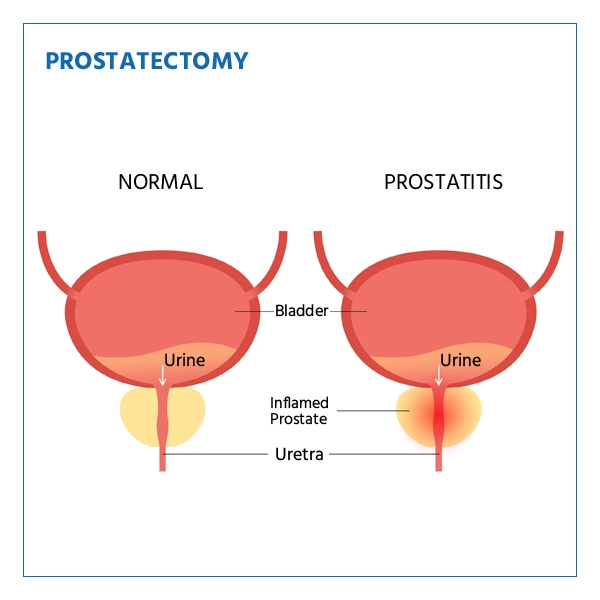
- Anaesthesia: The procedure is done under general anesthesia, ensuring the patient is asleep and pain-free.
- Incision: Depending on the type of surgery, the surgeon makes an incision in the lower abdomen or between the anus‚and scrotum.
- Prostate Removal: For radical prostatectomy, the entire prostate gland and sometimes nearby lymph nodes are removed (usually for prostate cancer). For simple prostatectomy or TURP, only the enlarged part of the prostate causing blockage is removed (mainly for BPH).
- Reconstruction: The bladder is reattached to the urethra to restore the normal flow of urine.
- Catheter Placement: A urinary catheter is placed to help drain urine while the area heals. This usually stays for 1-2 weeks.
- Closure: The surgeon sutures or staples the incision after it is removed.
- Postoperative Monitoring: After surgery, you'll be moved to the recovery area for observation, pain management, and further instructions.
Who Will Perform the Prostatectomy Surgery?
Prostatectomy surgery is performed by highly trained doctors who specialize in treating prostate and urinary tract conditions.
Urologists
- A urologist is the primary specialist who performs prostatectomy surgery.
- They are trained in diagnosing and treating conditions of the urinary tract and male reproductive system.
Urologic Oncologists
- For patients with prostate cancer, a urologic oncologist (a urologist with advanced training in cancer care) may perform the surgery.
- They specialize in removing cancerous tissue while preserving urinary and sexual function as much as possible.
Robotic or Laparoscopic Surgeons
- Some urologists are specially trained in robot-assisted or laparoscopic prostatectomy, which uses minimally invasive techniques for faster recovery and less pain.
Recovery After Prostatectomy Procedure
Recovery after prostatectomy surgery is a gradual process that involves healing, regaining strength, and returning to your normal activities. Here's an overview of what to expect during the recovery period after prostatectomy surgery:
- Hospital Stay: Most patients stay a few days for monitoring and pain management.
- Catheter Care: Learn how to care for the urinary catheter and drainage bag, which is usually placed during surgery.
- Physical Activity: Start walking once your doctor has cleared you, and gradually increase activity while avoiding strenuous activities.
- Pain Management: Pain around the incision is normal. Your doctor will prescribe medication to manage discomfort.
- Diet and Hydration: Stay hydrated and follow your healthcare provider's dietary recommendations for better healing.
- Return to Normal Activities: Light activities like walking can usually be resumed within 2-3 weeks. Heavy lifting, driving, and strenuous exercise should be avoided until your doctor allows.
- Full Recovery: Most men recover fully in about 6-8 weeks after minimally invasive surgery, and 10-12 weeks after open surgery.
- Possible Side Effects: Temporary urinary leakage and erectile difficulties are common after surgery, but these often improve over time with treatment and exercises.
- Follow-up Appointments: Regular follow-up visits are important to check healing, remove the catheter, and monitor PSA levels (for cancer patients).
Lifestyle Changes After Prostatectomy Procedure
Making healthy lifestyle changes after prostatectomy can speed up recovery, improve bladder control, and support overall well-being.
- Follow Medical Advice: Take medications as prescribed and attend all follow-up appointments. Practice pelvic floor (Kegel) exercises daily to strengthen bladder control.
- Maintain a Healthy Diet: Eat fiber-rich foods like fruits, vegetables, and whole grains to prevent constipation. Stay hydrated, but limit caffeine and alcohol as they may worsen urinary leakage.
- Stay Physically Active (Gradually): Begin with light walking soon after surgery to improve circulation and prevent clots. Avoid heavy lifting or strenuous workouts until cleared by your doctor.
- Manage Urinary Control: Use protective pads if needed in the early recovery stage. Be patient-bladder control usually improves within weeks to months.
- Support Sexual Health: Erectile function may take time to return; discuss available treatments with your doctor. Open communication with your partner can help reduce stress and improve intimacy.
- Quit Smoking and Limit Alcohol: Smoking slows healing and increases risks of complications. Alcohol may interfere with recovery and urinary control.
- Emotional and Mental Health: It's normal to feel anxious or stressed after surgery. Support groups, counseling, or relaxation techniques can be helpful.
Benefits of Prostatectomy Surgery
Prostatectomy offers several health advantages for men with prostate cancer or severe prostate enlargement. Understanding these benefits of prostatectomy surgery can help patients see how the procedure improves quality of life and prevents future complications.
- Cancer Treatment: In cases of prostate cancer, removing the prostate may eliminate the disease if it hasn't spread.
- Relief from Urinary Problems: Helps improve urine flow and reduces symptoms like frequent urination, weak stream, or incomplete emptying (common in BPH).
- Improved Quality of Life: Reduces discomfort, prevents complications, and restores normal bladder function.
- Prevents Further Complications: Can stop conditions like kidney damage, bladder stones, or repeated infections caused by an enlarged prostate.
- Long-Term Control: Offers a lasting solution compared to temporary relief from medications.
Risks and Complications of Prostatectomy Surgery
Like any major operation, prostatectomy also carries some risks. Being aware of the risks of prostatectomy surgery allows patients to prepare better, manage expectations, and discuss concerns with their doctor before undergoing the procedure.
- Bleeding
- Infection
- Urinary Incontinence
- Erectile Dysfunction
- Blood Clots
- Narrowing of the Urethra
- Reaction to Anesthesia
Cost of Prostatectomy Surgery in India
The cost of prostatectomy surgery in India depends on the type of surgery, the hospital, and the city. In Hyderabad, a standard open prostatectomy usually costs around Rs. 60,000 to Rs. 1,30,000, while a robot-assisted prostatectomy, which is more advanced, can cost Rs. 2,50,000 to Rs. 4,00,000. For cases like prostate cancer requiring radical prostatectomy, the cost may go up to Rs. 3,00,000 to Rs. 7,50,000.
The price can vary based on several factors. These include the type of surgery, hospital facilities, room type, length of stay, pre- and post-surgery tests, medications, and any complications that may occur. Robotic surgeries are generally more expensive due to the advanced technology used.
 040 68334455
 WhatsApp
 Patient Portal
 Home Care