
What Is IVF With Donor Eggs?
IVF with donor eggs is a procedure where the mature eggs are retrieved from an anonymous female donor’s ovary, who is first screened in a series of tests before qualifying as an egg donor, and once fertilised with the male partner’s sperm, the resulting embryo is transferred in the female partner’s uterus, where it gets implanted and results in Pregnancy.
Who Requires IVF with Egg Donation?
You may need IVF with donor eggs if:
- You have low ovarian reserve or poor egg quality
- You are over 40 and struggling to conceive
- You have had multiple failed IVF cycles
- You have a genetic condition that you don’t want to pass to your baby
Our specialists will guide you through the process with care and confidentiality.
What is the Process of IVF with Donor Eggs?
Visit By Patients For Medical Examination
Both the male and female partner visit the clinic for a thorough medical examination and blood tests. They also consult an embryologist.
Based on the blood investigation reports and Ultrasound scan, the fertility specialist determines the best IVF programme, appropriate for the couple and explains the treatment process in detail.
Selection Of Egg Donor
The couple is provided with a donor acquisition form. The specialist will help the couple select a donor from the profiles shared by the assisted reproductive technology (ART) bank.
The ART bank is registered with the Indian Council of Medical Research (ICMR) and only healthy donors who have passed all required tests are selected as egg donors.
At Medicover, we understand the importance of confidentiality and thus, the identity of patients and the donors are never disclosed and kept confidential.
Stimulation
The selected donor is monitored through blood investigations and an ultrasound on day two or three of the menstrual cycle. Based on the results, the ovaries are stimulated with fertility medication to promote the growth of follicles containing the eggs.This can last for up to 12 days.
The response of ovaries (quantity & quality of follicles) is monitored through ultrasonography and blood investigations at regular intervals. During this time period, the recipient also undergoes hormonal treatment to improve the uterus lining and to increase its receptivity.
Egg Collection
After eight to 12 days of taking the fertility medication, a trigger shot is administered to assist with final maturation of the egg.The egg donor then visits the clinic for the egg retrieval process, which will be performed 34 to 36 hours after the trigger administration.
Egg retrieval is a day care procedure that is performed with ultrasound guided aspiration, done under sedation to make it painless. The eggs are then retrieved and processed by embryologists in the ART laboratory.
Sperm Collection
On the same day, the male partner provides a fresh semen sample. If needed, sperms can be extracted from a testicle or epididymis in a separate procedure.
Fertilization
Different procedures can be used to fertilise the collected eggs. In this step, the sperms that were processed in the previous step are used to fertilise the donated eggs.
Each mature egg receives a single healthy sperm. Sixteen to 18 hours after the eggs and sperms have been brought together, they are checked to see if fertilisation has taken place.
The resulting embryo is then cultured in an incubator for up to 5 days.
Embryo Transfer
After evaluating the growth of the embryos, the embryologist decides upon the best embryo and the day for transfer into the uterus of the female partner.
After Transfer
After the embryo transfer, specialists may prescribe medicines which enhance the chances of embryo implantation. After the stipulated period, pregnancy tests are conducted to confirm pregnancy.
Why Choose Medicover Fertility

International Standards
in Fertility Care

Advanced
Embryology Lab

20+ Lakhs
Happy Patients

2900+ Babies
Born Every Year

3+ IVF Babies
Born Every Hour

1995
ESTD.IN
Preparing for IVF with Donor Egg
To improve your chances of success, we recommend:
- Eating a healthy, balanced diet
- Avoiding alcohol and smoking
- Managing stress with yoga or meditation
- Following your doctor's medication plan strictly
Our team will support you at every step for the best outcome.
Why Choose Medicover IVF Specialists in Hyderabad for Donor Egg IVF?
- Top IVF specialists in Hyderabad for donor eggs
- High donor egg IVF success rates in Hyderabad
- Advanced labs with world-class technology
- Affordable treatment packages with EMI options
- Complete privacy and ethical practices
When you choose Medicover, you choose care, transparency, and success.
Our Fertility Centers in Hyderabad
You don't have to navigate this journey alone. Schedule a compassionate, one-on-one consultation with our experts to discuss your options and create a personalized plan.

HITEC City
- Plot No 6/1, Sector 2, HUDA Techno enclave, Madhapur, 500081 Hyderabad
- 040 68334455
- 040 68334455
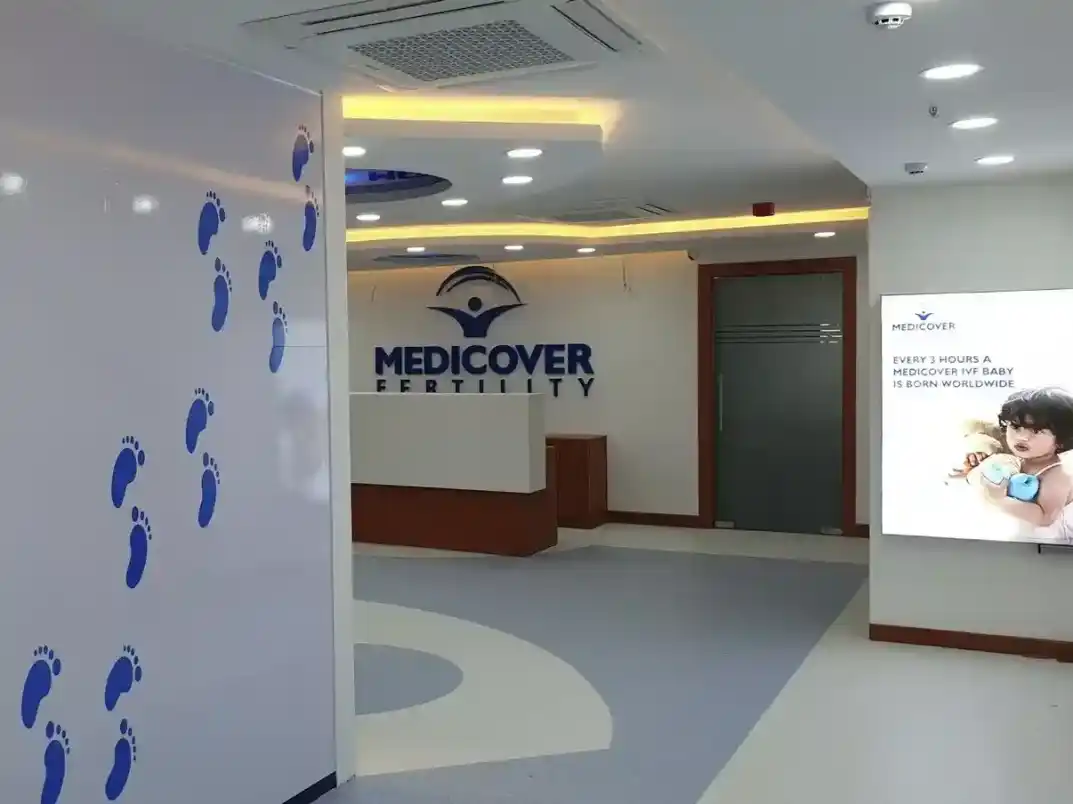
Miyapur
- Unit No 2, 4th Floor South Portion, MCR Ayodhya Building, 500050 Miyapur
- 040 68334455
- 040 68334455
Frequently Asked Questions
Yes, IVF using donor eggs can be highly successful, especially for women who cannot conceive with their own eggs. Success rates are often higher than with the woman's own eggs, particularly for older women or those with diminished ovarian reserve.
While IVF with donor eggs offers a solution for many, there are potential downsides to consider. These include emotional aspects, concerns about disclosing donor use, and higher costs compared to traditional IVF.
IVF procedures, including those with donor eggs, involve some discomfort but are typically not painful. Mild discomfort like bloating or cramping may occur during hormone injections, egg retrieval, and embryo transfer, but pain management options are available.
The success rate of IVF over 40 using donor eggs is generally higher than using one's own eggs because donor eggs usually come from younger, healthy women. This can significantly increase the chances of pregnancy even for women above 40.
IVF with donor eggs offers higher success rates compared to using older eggs, often ranging between moderate to high depending on the donor's age, egg quality, and the overall health of the recipient.
The cost of IVF with donor eggs varies widely depending on the clinic, location, and whether fresh or frozen donor eggs are used. It generally includes donor compensation, medications, and the IVF procedure itself.
Failure with donor eggs can happen due to factors like poor embryo implantation, uterine health issues, immune response, or underlying medical conditions in the recipient rather than the egg quality itself.
There is no universal age limit, but most clinics allow IVF with donor eggs for women up to their late 40s or early 50s, provided they are in good health and cleared medically for pregnancy.

Ready to take control of your journey to parenthood?
Book your Appointment and start your path towards Parenthood Today !
Get Assessment


