 040 68334455
 WhatsApp
 Patient Portal
 Home Care
What is Ringworm Infection (Tinea Corporis)?
Written by Medicover Team and Medically Reviewed by Dr Koppisetti Satya Naga Ravi Teja , Dermatologist
Ringworm (tinea corporis) is a fungal infection that causes a rash.The rash is frequently irritating and red, circular, itchy rash with clearer skin in the middle. The name is ringworm but there is no worm involved it's just a fungal infection.
Athlete's foot (tinea pedis), jock itch (tinea cruris), and scalp ringworm are all connected to ringworm (tinea capitis). Ringworm is most commonly transmitted by direct skin-to-skin contact with an infected person, animal, or contaminated object.
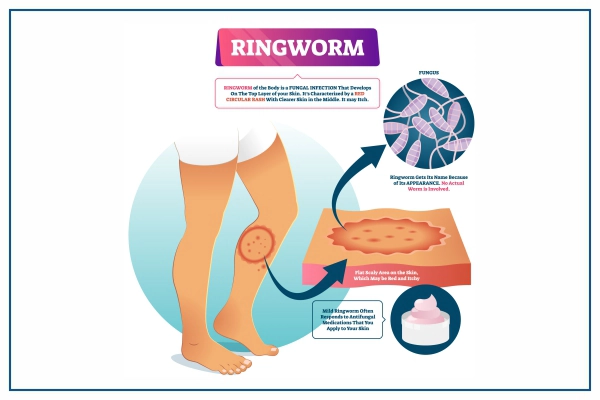
It's a common, contagious skin infection caused by a fungus that thrives in warm, humid environments like locker rooms and public showers.
Antifungal drugs administered to the skin can commonly cure mild ringworm. However, the risk of ringworm becoming more severe may require taking antifungal medicines for several weeks to ensure complete recovery.
What are the Types of Ringworm?
Ringworm can affect different parts of the body and is classified based on its location:
- Tinea corporis (Body): Affects the arms, legs, torso, or face. Characterized by red, circular, itchy patches.
- Tinea capitis (Scalp): Causes scaly, itchy bald spots. If untreated, it can cause permanent hair loss.
- Tinea pedis (Athlete's foot): Affects the feet, especially between the toes. Skin becomes cracked, scaly, and itchy.
- Tinea cruris (Jock itch): Appears in the groin, thighs, or buttocks. Itchy, red rash often with a defined edge.
- Tinea unguium or Onychomycosis (Nails): Causes nails to become thick, discolored, and deformed.
- Tinea manuum (Hands): Dry, cracked palms or ring-like patches.
- Tinea barbae (Beard): Affects the cheeks, chin, and neck with crusty, inflamed lesions or pus-filled bumps.
Each type has distinct symptoms but typically presents with itchy, scaly, and ring-shaped rashes.
Who Gets Ringworm?
Ringworm can affect anyone, but you're at higher risk if you:
- Use public showers or locker rooms.
- Sweat heavily.
- Play contact sports (like wrestling).
- Have a weakened immune system.
- Live in warm, humid climates.
- Work closely with animals.
Ringworm Symptoms
Symptoms can appear 4 to 14 days after contact with the fungus. It can cause the following signs and symptoms:
- A ring-shaped scaly area is found on the buttocks, trunk, arms, and legs.
- Itchiness
- Inside the ring is a transparent or scaly area with a scattering of bumps ranging in colour from red on white skin to reddish, purple, brown, or grey on black and brown skin.
- Expanding rings that are slightly elevated
- Itchy skin in a circular, flat spot
- Rings that get overlapped
Ringworm Infection Causes
Ringworm is a contagious fungus produced by common mold-like parasites that reside on the cells of your skin's outer layer. Ringworm disease is caused by a variety of ways:
- Human to human contact: Ringworm is most commonly transmitted through direct skin-to-skin contact with an infected person
- Animal to Human: Ringworm can be contracted by touching an infected animal. While caressing or grooming dogs or cats, ringworm can spread. In cows, it's also pretty prevalent.
- Object to Human: Ringworm can be spread by touching or rubbing against objects or surfaces that have recently been touched or rubbed by an infected person or animals, such as clothing, towels, beds and linens, combs, and brushes.
- Soil: Ringworm can be transmitted to people in rare situations by contact with infected soil. Infection would most certainly only occur after prolonged contact with infected soil.
Get a second opinion from trusted experts and makeconfident, informed decisions.
Get Second OpinionHow Ringworm Infection is Diagnosed?
Your doctor may be able to identify ringworm just by looking at it. Skin scrapings from the afflicted area may be taken by your doctor to be studied under a microscope.
Ringworm Treatment
Over-the-Counter Antifungal Treatments
Mild cases can be treated with OTC antifungal creams, powders, or sprays such as:
- Clotrimazole
- Miconazole
- Terbinafine
- Tolnaftate
Apply as directed for at least 2 weeks, even after symptoms clear.
If over-the-counter therapies don't work, you may need prescription-strength antifungal drugs, which are applied to the affected area as a lotion, cream, or ointment. Your doctor may prescribe oral medication for ringworm if your illness is especially severe or widespread.
Prescription Medications
For more severe or widespread infections (like scalp or nail ringworm), your doctor may prescribe:
- Oral antifungals: Terbinafine, Itraconazole, Fluconazole, or Griseofulvin.
- Antifungal shampoos: For scalp ringworm (e.g., Ketoconazole shampoo), often used alongside oral medications.
Avoid Steroid Creams Alone
Corticosteroids may reduce inflammation but can worsen fungal infections when used alone. Avoid unless prescribed in combination with antifungal treatment.
When To See a Doctor?
Consult your healthcare provider if:
- The infection is on your scalp, nails, or spreads quickly.
- Symptoms don't improve after 2 weeks of OTC treatment.
- You have fever, swelling, or pus-filled lesions.
- You're pregnant, have diabetes, or a weakened immune system.
Your health is everything - prioritize your well-being today.
 Consult Ringworm Infection Doctors Today
Ringworm Home Treatment and Lifestyle Tips
- Keep the area clean and dry.
- Wash your hands after touching the infected area.
- Avoid tight clothing and let skin breathe.
- Apply antifungal cream consistently.
- Avoid scratching to prevent spreading or secondary infections.
- Wash clothes, towels, and bedding in hot water.
Prevention from Ringworm Infection
Ringworm is a difficult infection to avoid. It is caused by a common fungus, and the disease is spread even before symptoms develop. Reduce your ringworm risk by following these steps:
- Educate yourself and others around you: Be cautious of the possibility of contracting ringworm from sick humans or animals. Inform your children about ringworm, including symptoms to look out for and how to avoid infection.
- Keep it clean: Hands should be washed frequently. Keep common areas, such as schools, child care facilities, gyms, and locker rooms, clean. Shower right after practice or a game if you play contact sports, and keep your uniform and equipment clean.
- Keep yourselfcool and dry: In hot, humid weather, avoid wearing heavy clothing for lengthy periods of time. Avoid sweating excessively.
- Stay away from sick animals: The infection often appears as a patch of skin with no fur. If you have pets or other animals, have them checked for ringworm by your veterinarian.
- Personal items should not be shared: Allow no one to use your clothes, towels, hairbrushes, sports equipment, or other personal belongings. Also, do not borrow such items.
Lifestyle changes and Self Care
Try these self-care tips if you have ringworm or a mild case. Clean and dry the afflicted area.
- Always stay hygienic.
- Apply an antifungal lotion, cream, or ointments to the affected area.
- Before going in the sun apply sunscreen.
Complications of Ringworm
If untreated, complications of ringworm may include:
- Secondary infections: Bacterial infections can develop from scratching.
- Spread to other areas: The infection can expand to other parts of the body.
- Permanent skin changes: Severe cases may cause scarring or discoloration.
- Nail deformities: In the case of nail ringworm, thickening or damage to the nails may occur.
Timely treatment with antifungal medications can prevent these complications.
Dos and Don'ts
When one person is infected with ringworm infection, there are certain things a person has to follow to cure it. Hygiene is the key to stopping the spread of this infection.
| Dos | Don'ts |
|---|---|
|
Wear cotton clothes. Try purchasing clothes that have 100% cotton linen. |
Wear synthetic clothes or a tight-fitting dress that does not allow air to pass. |
|
Bath 2 times a day. |
Scratch or rub the infection. |
|
Wash your clothes and towel properly. |
Share your clothes, towels or any other personal items. |
|
Use antifungal powders after bathing. |
Self-medicate for treating infections with over-the-counter medications. |
|
Keep your pets clean, maintain their hygiene and check if they have any infections. |
Try any home remedies that burn the infection and leave scars. |
|
Complete the full course of medications. |
Leave your infections untreated. |
Our Experience Treating Ringworm Infections
At Medicover Hospitals, we care for patients with ringworm and other skin infections every single day. We understand how frustrating and uncomfortable fungal infections can be, not just physically, but emotionally too.
Our team of experienced dermatologists and skilled medical professionals uses advanced diagnostic tools to accurately identify the type and severity of the infection. From topical treatments to oral medications, we tailor every care plan to suit your specific needs and lifestyle.
With a focus on compassionate care, hygiene education, and long-term prevention, we're here to help you heal comfortably and confidently. Here, you're not just receiving treatment, you're gaining a partner in your journey to healthier skin.


