 040 68334455
 WhatsApp
 Patient Portal
 Home Care
What is Hypothyroidism ?
Written by Medicover Team and Medically Reviewed by Dr Surendra Prasad G , Endocrinologist
Hypothyroidism is a condition in which the thyroid gland, located in the neck, fails to produce sufficient thyroid hormones. This affects the body's metabolism, energy levels, heart rate, and overall hormonal balance.
The normal thyroid levels are:
- T3: 100-200 nanograms per deciliter of blood (ng/dL)
- T4: 4.5-11.2 micrograms per deciliter of blood (mcg/dL)
- TSH: 0.4-5.0 milli-international units per litre (mIU/dL)
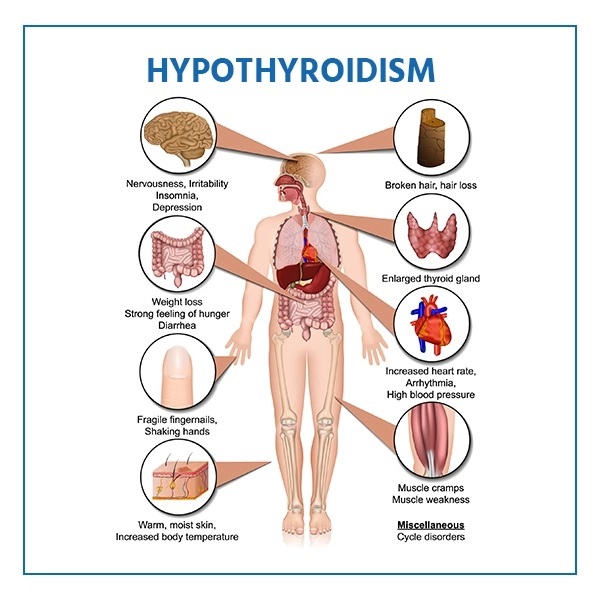
What are the Symptoms of Hypothyroidism?
Hypothyroidism develops slowly, and its early signs are often overlooked. Identifying symptoms early can help prevent complications. Here's a breakdown of standard and more severe warning signs you should be aware of.
Common Symptoms
- Weakness
- Irritability
- Depression
- Sensitivity to cold
- Dull facial expressions
- Hoarse voice
- Slow speech
- Droopy eyelids
- Puffy and swollen face
- Obesity
- Confusion
- Constipation
- Dry, coarse and sparse hair
- Coarse, dry, and thickened skin
- Carpal tunnel syndrome
- Slow pulse rate
- Muscle cramps
- Sides of eyebrows thin or fall out
What are the Different Types of Hypothyroidism?
Yes, hypothyroidism is classified into different types based on its cause and where the problem starts in the body. Understanding these types can help guide proper treatment.
Primary Hypothyroidism
This is the most common type. It occurs when the thyroid gland itself is damaged or unable to produce enough hormones.
Common cause: Hashimoto's thyroiditis (an autoimmune disease)
Secondary Hypothyroidism
Here, the thyroid is healthy, but the pituitary gland in the brain doesn't send the right signals (TSH) to trigger hormone production.
Common cause: Pituitary disorders or tumours
Tertiary Hypothyroidism
This rare type happens when the hypothalamus (another part of the brain) fails to produce TRH, which stimulates the pituitary gland.
Common cause: Brain injury or congenital issues
Congenital Hypothyroidism
This form is present at birth. Babies may be born with an underdeveloped or missing thyroid gland.
Importance: Early detection is crucial to prevent growth and mental development issues.
Subclinical Hypothyroidism
In this type, TSH levels are slightly elevated, but thyroid hormone (T3 and T4) levels remain normal.
Often found: During routine blood tests, with no apparent symptoms.
What are the Common Causes and Risk Factors of Hypothyroidism?
Hypothyroidism can develop for various reasons, and understanding what contributes to it can help with early detection and prevention. While some causes are unavoidable, being aware of the risk factors can guide timely medical consultation and healthier lifestyle choices.
Causes of Hypothyroidism
- Autoimmune diseases: In rare cases, the immune system can mistake thyroid cells and enzymes as invaders, leading to a shortage of cells to produce enough thyroid hormones. This condition is more common in females. The main forms of autoimmune thyroiditis are Hashimoto's and atrophic thyroiditis.
- Thyroidectomy: For conditions like goiter, thyroid cancer, nodules, or Graves' disease, thyroidectomy may be necessary. Complete removal leads to hypothyroidism, while partial removal allows the gland to maintain hormone levels.
- Radiotherapy: Some cancer patients need to undergo radiotherapy involving the head and neck. This cancer treatment can affect the functioning of the thyroid gland, causing hypothyroidism.
- Congenital hypothyroidism (CHT): Hypothyroidism arises from ineffective thyroid gland development or function. Some newborns are born without a thyroid gland or have an incomplete one, including cases of ectopic thyroid. Thyroiditis, inflammation of the gland, results from autoimmune attacks or viral infections.
Risk Factors for Hypothyroidism
- Being female, Women are more likely to develop thyroid disorders.
- Age over 60. Risk increases with age, particularly in older adults.
- Family history, having relatives with thyroid disease, increases the susceptibility to thyroid disease.
- Autoimmune conditions such as type 1 diabetes or rheumatoid arthritis.
- Previous thyroid issues, including goitre, nodules, or thyroiditis.
- Postpartum thyroiditis, hormonal shifts after pregnancy, may affect the thyroid.
- Poor dietary habits, Lack of iodine or selenium in the diet, can be a contributing factor.
Get a second opinion from trusted experts and makeconfident, informed decisions.
Get Second OpinionHow is Hypothyroidism Diagnosed?
Diagnosing hypothyroidism begins with a detailed review of symptoms and a physical examination. Since the signs can mimic other conditions, accurate testing is essential to confirm hormone levels and thyroid function.
Common Diagnostic Procedures
- TSH Test (Thyroid Stimulating Hormone): Measures how well the thyroid is being signaled by the brain. High levels typically indicate hypothyroidism.
- Free T3 and Free T4 Tests: Assess actual thyroid hormone production.
- Anti-Thyroid Antibody Test: Detects autoimmune conditions like Hashimoto's thyroiditis.
- Ultrasound or Thyroid Scan: Used if nodules, swelling, or structural changes are suspected.
What are the Treatment Options for Hypothyroidism?
Hypothyroidism can affect daily life in subtle yet significant ways, from constant fatigue to unexplained weight gain. The good news is, it's a manageable condition.
With the right treatment plan, most people can lead a healthy, everyday life.
Standard Treatment Options
Thyroid Hormone Replacement Therapy
This is the most common and effective treatment.
- Medication:Levothyroxine (synthetic T4) is taken daily to restore normal hormone levels.
- Timeline: Symptoms often improve within 2 to 3 weeks; complete stabilization may take 6-8 weeks.
- Monitoring: Regular TSH blood tests are needed to adjust the dosage.
Combination Therapy (T3 + T4)
In rare cases, a blend of T3 (liothyronine) and T4 is prescribed when symptoms persist despite normal lab results.
- Considered for: Individuals with persistent fatigue, brain fog, or depression.
- Requires: Close supervision due to stronger effects of T3.
Iodine Supplementation (if deficient)
If hypothyroidism is linked to low iodine intake:
- Treatment: Iodine-rich diet or supplements under supervision.
- Note: Over-supplementation can worsen thyroid function. Professional guidance is key.
Surgery (Rarely needed)
- Indicated for: Thyroid nodules causing obstruction, cancer, or severe goitre.
- Recovery: 2-3 weeks post-surgery with hormone therapy continued lifelong.
When to See a Doctor?
Some signs of hypothyroidism can feel subtle at first, like low energy or mood changes. But when these issues linger, it's time to take them seriously. Thyroid problems can't fix themselves, and early care makes a big difference.
Watch for These Signs
- Tiredness that doesn't improve with rest
- Gaining weight without changes in diet or activity
- Feeling cold all the time
- Dry skin, brittle hair, or hair loss
- Irregular or heavy menstrual cycles
- Swelling or tightness in the neck area
If these symptoms last for more than two weeks, it's best to book a thyroid check.
Your health is everything - prioritize your well-being today.
 Consult Hypothyroidism Doctors Today
What Precautions Can Help Prevent Hypothyroidism?
You can't always stop hypothyroidism from happening, especially if it runs in your family. But with a few smart habits, you can lower your risk or catch it early, before it affects your daily life.
Simple Precautions to Follow
- Maintain a Balanced Diet: Eat foods rich in iodine, selenium, and zinc, such as seafood, dairy, nuts, seeds, and whole grains, to support healthy thyroid function and help lower the risk of hypothyroidism.
- Manage Stress: Practice relaxation techniques like meditation, yoga, or enjoyable hobbies to reduce stress and support overall thyroid health.
- Exercise Regularly: Stay active with a mix of cardio, strength, and flexibility exercises to boost metabolism and promote well-being.
- Limit Environmental Toxins: Reduce exposure to pollutants, pesticides, and heavy metals by using natural cleaning products and filtering your drinking water.
- Monitor Thyroid Function: Get regular blood tests to catch thyroid issues early, especially if you have a family history or known risk factors.
- Avoid Smoking: Quit smoking or stay away from secondhand smoke to lower the risk of autoimmune thyroid diseases.
- Maintain a Healthy Weight: Follow a healthy lifestyle with balanced eating and regular activity to reach and maintain a healthy weight, which supports thyroid function.
What Can Happen If Hypothyroidism Is Left Untreated?
Ignoring thyroid problems can lead to more serious health issues over time.
- Heart problems: Like a slow heartbeat or high cholesterol
- Fertility issues: Irregular periods or trouble getting pregnant
- Goitre: Swelling in the neck from an enlarged thyroid gland
- Mental fog: Trouble thinking clearly or feeling down
- Severe cases: May lead to myxedema, a rare but serious condition
Our Experience in Treating Hypothyroidism
At our Medicover hospital, we understand how overwhelming thyroid issues can feel, especially when symptoms quietly affect your daily life. With years of experience in diagnosing and managing hypothyroidism, our team offers more than just treatment.
We offer reassurance, guidance, and steady support. Every person's journey is different. That's why we take time to listen, explain things clearly, and create care plans that truly fit your needs.


