 Call
Call Patient Reports
- Cardiology 84
- Dermatology 45
- Endocrinology 33
- ENT 16
- Fertility 190
- Gastroenterology 78
- General-Medicine 81
- Gynecology 80
- Hematology 19
- Infectious-Diseases 33
- Neurology 52
- Oncology 34
- Ophthalmology 23
- Orthopedics 69
- Pediatrics 31
- Procedure 23
- Public-Health 144
- Pulmonology 59
- Radiology 8
- Urology 68
- Wellness 161
- Woman-and-child 77
- 3147
- 3.5 Minute
What Happens When You Leave Varicose Veins Untreated?
Quite often, we hear about varicose veins, and many of us even suffer from this uncomfortable condition. When it is mild, it's easy to ignore it and live with it, but when it gets severe, this ignorance brings many associated complications.
When the veins are unable to keep the blood flowing, this causes the blood to pool down, leading to varicose veins. They are enlarged, twisted veins caused by elevated blood pressure in the veins. They most commonly occur in the legs and feet as standing and walking increase the pressure in the veins of the lower body. Genetics, pregnancy, being on the feet for longer durations, obesity, and age are common factors for developing varicose veins
Get a second opinion from trusted experts and makeconfident, informed decisions.
Get Second OpinionNot sure where to start?
Talk to a patient care advisor — free, confidential, 24/7. We'll match you to the right specialist and book your appointment in minutes.
10 Complications That Happen When Varicose Veins Are Left Untreated
It is a misconception that varicose veins are purely an aesthetic nuisance. They not only just give an unsightly appearance but may also be a serious health concern. If varicose veins are left untreated, they can cause:
Pain and Swelling
- Untreated varicose veins continue to get more damaged, leading to increased pain and swelling.
- Pain could occur due to increased pressure build-up in the veins. Swelling occurs due to leakage of blood from the fluid in the blood to the adjacent tissues.
Weakness and Tiredness
- Weakness in the legs due to varicose veins can affect an active lifestyle and day-to-day activities.
Venous Leg Ulcers
- Poor blood circulation due to damaged valves in the veins causes increased pressure.
- This compels the blood vessels to become fragile, leading to ulcers.
- Ulcers make it harder for wounds to heal and may cause spontaneous bleeding.
Bleeding
- As varicose veins occur in superficial skin, even a minor cut, scrape, or scratch can cause bleeding, leading to blood loss.
Venous Insufficiency:
The blood wall valves in varicose veins do not work properly, making it difficult for the blood to return to the heart from the legs. This causes the blood to pool in the legs.
Blood Clots
- Varicose veins increase the risk of developing blood clots.
- The formation of blood clots can cause obstruction to blood flow, leading to health complications.
Hyperpigmentation
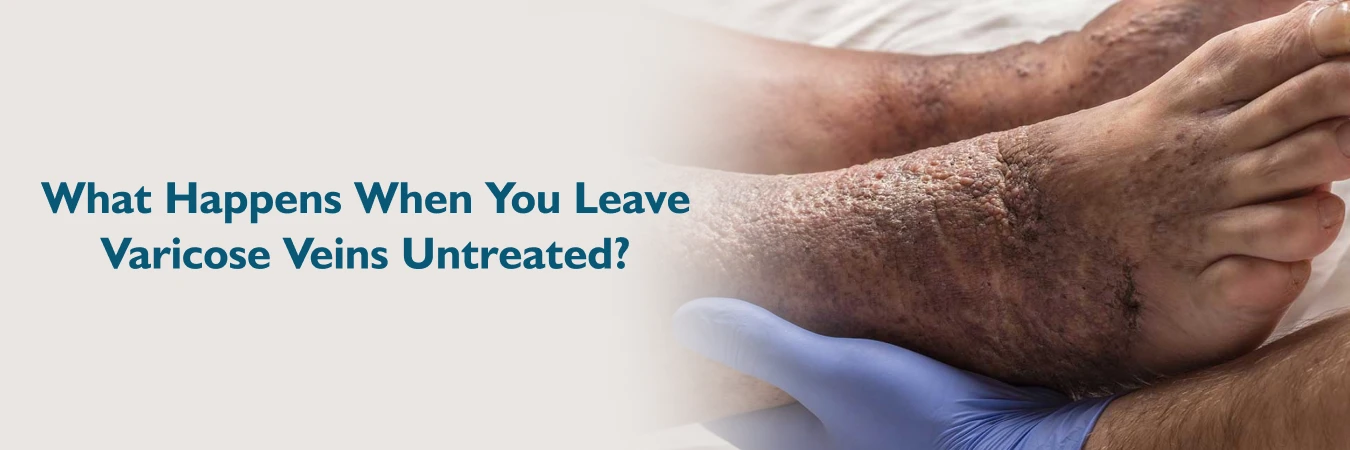
- Inflammation and swelling occurring due to varicose veins can cause the skin around it to appear dark and discolored.
- The discoloration is referred to as hyperpigmentation.
Your health is everything - prioritize your well-being today.
Schedule Your AppointmentLipodermatosclerosis
- Lipodermatosclerosis is the changes in the skin of the lower legs occurring due to the stiffening or hardening of leg tissues.
- Untreated varicose veins make the tissues in the legs firm and heavy, making it difficult for a person to move or relax.
Superficial Thrombophlebitis
- It is a condition involving the inflammation of the veins just beneath the surface of the skin resulting from decreased blood flow and weakening of the veins.
- This causes pain, inflammation, redness, and tenderness.
Deep Vein Thrombosis
- It is one of the most serious conditions related to varicose veins and could be life-threatening.
- Deep vein thrombosis occurs when a clot is formed in the deep veins of the body, usually the legs. Symptoms include increased swelling and redness.
The Best Treatment for Varicose Veins
The right treatment depends upon the severity of the condition, medical history, and doctor recommendations. Endovenous laser ablation, micro-phlebectomy, and sclerotherapy are the most effective treatments for varicose veins.
- Endovenous Laser Ablation: This procedure uses heat from the laser to reduce varicose veins.
- Micro-phlebectomy: Varicose veins are removed through minimally invasive surgery by making small, slit-like incisions.
- Sclerotherapy: The veins are injected with a solution that dissolves the blood.
Do not ignore the symptoms and seek treatment on time to avoid complications. Get the best treatment for varicose veins from our experienced doctors with a proven track record.
Frequently Asked Questions
Untreated varicose veins can cause pain, swelling, and skin changes over time.
Varicose veins usually don't go away without treatment and may get worse over time.
Not always, but treatment can prevent complications and relieve symptoms.
Symptoms include pain, itching, swelling, and skin discoloration around the veins.
Yes, untreated varicose veins increase the risk of blood clots, which can be dangerous.
Yes, varicose veins often worsen over time if left untreated, especially with factors like standing for long periods.
Preventive measures include staying active, elevating legs when resting, and avoiding long periods of sitting or standing.
Yes, severe varicose veins can lead to leg ulcers, which are painful sores that are slow to heal.
No, treatments can include lifestyle changes, compression stockings, and minimally invasive procedures.
- Cardiology
- Case Studies
- Dermatology
- Endocrinology
- ENT
- Fertility
- Gastroenterology
- General
- General-Medicine
- Gynecology
- Hematology
- Infectious-Diseases
- Medical News
- Neurology
- Oncology
- Ophthalmology
- Orthopedics
- Pediatrics
- Procedure
- Public-Health
- Pulmonology
- Radiology
- Second Opinion
- Urology
- Wellness
- Woman-and-child
Related Blogs
Still have questions? Speak with our experts now!
040-68334455


