 Call
Call Patient Reports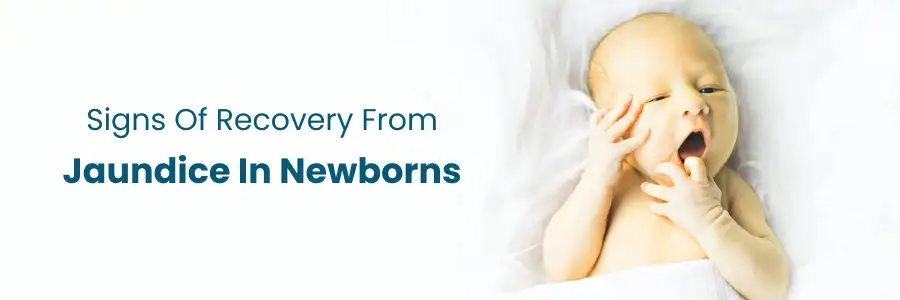
- 3704
- 3.7 Minute
Written by Medicover Team and Medically Reviewed by Dr Surendra Prasad G
Signs of Recovery From Jaundice in Newborns
Jaundice is a common condition in newborns, marked by the yellowing of the skin and eyes due to elevated bilirubin levels. While it is generally harmless and resolves on its own, monitoring the signs of recovery from jaundice in newborns is crucial for ensuring the health and well-being of your baby. In this article, we will delve into the critical markers of jaundice improvement, what to expect during the recovery process, and when to seek medical attention.
Understanding Newborn Jaundice
Newborn jaundice is primarily caused by an immature liver that cannot efficiently process bilirubin, a byproduct of the normal breakdown of red blood cells. This condition is prevalent in premature babies and those with a higher red blood cell turnover.
Causes of Newborn Jaundice
- Physiological jaundice: This is the most common type and typically appears 2 to 4 days after birth, resolving within 1 to 2 weeks.
- Breastfeeding jaundice: Occurs in breastfed babies, generally due to inadequate milk intake, leading to dehydration and reduced bilirubin excretion.
- Breast milk jaundice: A less common form that emerges after the first week and can persist longer but is usually benign.
- Hemolytic jaundice: Results from blood group incompatibility between the mother and baby, leading to increased red blood cell breakdown.
Get a second opinion from trusted experts and makeconfident, informed decisions.
Get Second OpinionNot sure where to start?
Talk to a patient care advisor — free, confidential, 24/7. We'll match you to the right specialist and book your appointment in minutes.
When Does Recovery Start?
The recovery timeline for newborn jaundice depends on the underlying cause and the baby’s overall health.
- Physiological jaundice usually peaks between days 3–5 and begins to improve by the end of the first week.
- Breastfeeding jaundice often resolves as feeding improves and the baby starts gaining weight.
- Breast milk jaundice may persist longer—sometimes up to 3–6 weeks—but is generally harmless.
- Premature babies or those with other medical conditions may take more time to recover.
Improvement is typically observed as bilirubin levels drop and the baby becomes more alert, active, and eager to feed.
Critical Signs of Recovery from Jaundice
Recognizing the signs of jaundice recovery in newborns is essential. Here are the primary markers indicating that your baby is on the mend:
Decreased Yellowing of Skin and Eyes
The most apparent sign of jaundice is the yellowing of the skin and the whites of the eyes (sclera). As bilirubin levels decrease, you will notice a gradual fading of this yellow tint. The skin will return to its natural color, and the eyes will become whiter.
Improved Feeding and Weight Gain
Newborns recovering from jaundice typically show an improved appetite. Effective feeding helps excrete bilirubin through stools, so consistent weight gain is a positive indicator of recovery.
Regular and Normal Stools
Bilirubin is excreted in the stool. Therefore, an increase in the frequency and normal coloration of stools is a good sign. Initially, stools may appear darker as bilirubin is flushed out, eventually transitioning to a mustard yellow color in breastfed babies.
Normal Sleep Patterns
Jaundiced babies may be lethargic and sleep excessively. As they recover, you will observe more regular sleep patterns and increased alertness during waking hours.
Reduction in Bilirubin Levels
Medical testing is the most reliable way to confirm jaundice recovery. Bilirubin levels are monitored through blood tests or non-invasive devices. A consistent decline in these levels indicates effective recovery.
Monitoring and Managing Jaundice at Home
While jaundice often resolves without intervention, several home care strategies can support recovery:
Ensuring Adequate Feeding
Frequent feeding promotes bowel movements, which help eliminate bilirubin. In the initial days, breastfeed your baby at least 8-12 times a day. If you are formula feeding, ensure the baby is consuming the recommended amount.
Sunlight Exposure
Exposure to natural sunlight can help break down bilirubin in the skin. Place your baby in indirect sunlight for about 10 minutes twice a day. Ensure the baby is clothed appropriately to avoid direct UV exposure, and always consult your pediatrician before starting this practice.
Medical Interventions
In some cases, home care might not be sufficient, and medical interventions may be necessary:
Phototherapy
Phototherapy is a common treatment involving blue-spectrum light that helps break down bilirubin in the skin. It can be done in a hospital setting or at home with a portable phototherapy unit.
Exchange Transfusion
In severe cases, an exchange transfusion might be required. This procedure involves replacing the baby's blood with donor blood to reduce bilirubin levels rapidly.
When to Worry: Signs Recovery Is Not Happening
While recovery is the norm, it’s important to know when to seek medical help:
- Jaundice appears after 5 days of life or worsens after initial improvement.
- Yellowing spreads to the palms and soles.
- Baby is difficult to wake, refuses to feed, or is overly lethargic.
- Urine is dark yellow or orange.
- Stools are pale, white, or clay-colored.
- Baby has a high-pitched cry, arching of the back, or signs of irritability.
- Lab tests show rising or persistently high bilirubin levels.
These symptoms may point to complications like kernicterus or biliary atresia, which require immediate medical attention.
Your health is everything - prioritize your well-being today.
Schedule Your AppointmentConclusion
Monitoring the signs of recovery from jaundice in newborns is essential for ensuring their health and development. Decreased yellowing, improved feeding, regular stools, standard sleep patterns, and lowered bilirubin levels are key indicators of recovery. While home care strategies such as adequate feeding and sunlight exposure can support this process, it is vital to seek medical attention for persistent or severe symptoms. With the proper care and monitoring, most newborns recover from jaundice without long-term effects.
By understanding the markers of jaundice improvement and knowing when to seek medical help, you can ensure the best care for your newborn and support their journey to total health.
Frequently Asked Questions
Yes, jaundice can return, especially in conditions like breast milk jaundice or unresolved liver immaturity. It is important for parents to continue monitoring the baby even after visible symptoms fade. A follow-up with a pediatrician is recommended if yellowing reappears.
Yes, stool color is a useful sign in monitoring bilirubin excretion. Bright yellow or mustard-colored stools usually indicate healthy digestion and bilirubin elimination. Pale, white, or clay-colored stools may point to liver or bile duct issues that need immediate attention.
The frequency of bilirubin monitoring depends on how high the levels were initially and how well the baby is recovering. For moderate to severe cases, doctors may recommend testing every 12–24 hours. As the condition improves, testing frequency is reduced or stopped.
Not every newborn with jaundice requires phototherapy treatment. Many babies recover through natural processes with adequate feeding and hydration. Phototherapy is used when bilirubin levels are significantly high or rising too quickly.
If bilirubin levels were dangerously high before recovery began, there is a risk of lingering effects like hearing loss or developmental delays. However, if treated on time, the risk of brain damage is extremely low. Continued developmental monitoring may be advised in high-risk cases.
Indirect sunlight exposure has been traditionally used to manage mild jaundice. Natural light can help break down bilirubin in the skin, though it is not a replacement for medical-grade phototherapy. Always consult a pediatrician before trying sunlight therapy.
Yes, premature babies often take longer to recover because their liver function is less mature. They may require extended phototherapy or monitoring depending on bilirubin levels. Extra care and feeding support are often needed to aid recovery.
Dehydration slows down bilirubin excretion through urine and stool, potentially worsening jaundice. Ensuring the baby feeds well and stays hydrated is key to promoting recovery. Poor feeding and fewer wet diapers should be reported to a doctor.
- Cardiology
- Case Studies
- Dermatology
- Endocrinology
- ENT
- Fertility
- Gastroenterology
- General
- General-Medicine
- Gynecology
- Hematology
- Infectious-Diseases
- Medical News
- Neurology
- Oncology
- Ophthalmology
- Orthopedics
- Pediatrics
- Procedure
- Public-Health
- Pulmonology
- Radiology
- Second Opinion
- Urology
- Wellness
- Woman-and-child
Related Blogs
Still have questions? Speak with our experts now!
040-68334455


