 Call
Call Patient Reports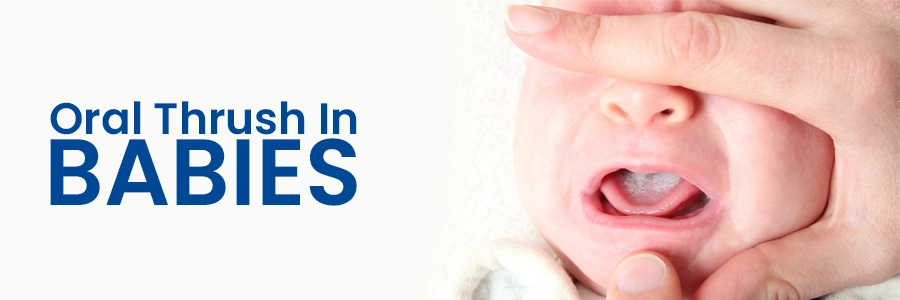
- 3759
- 3.5 Minute
Written by Medicover Team and Medically Reviewed by Dr Neha Mukhi, Pediatrician
Oral Thrush In Babies
A yeast called Candida causes an infection called thrush. The most common site for Candida to cause infection is the mouth, known as oral thrush. The vagina, nappy area, and nail folds are the other common sites for thrush to develop.
In about 1 in 7 babies, a bout of oral thrush develops at some point. A few of them suffer from recurrent bouts of oral thrush.
What Is Oral Thrush in Babies?
Oral thrush in babies is a common fungal infection caused by the overgrowth of Candida albicans in the mouth. It appears as white or yellow patches on the tongue, gums, and inner cheeks. While usually harmless, it can cause discomfort during feeding.
This infection is primarily observed in babies under 10 weeks of age, as well as in older individuals. Oral thrush in infants is not caused by poor oral hygiene, and it typically does not indicate that your kid is ill in any other way.
Get a second opinion from trusted experts and makeconfident, informed decisions.
Get Second OpinionNot sure where to start?
Talk to a patient care advisor — free, confidential, 24/7. We'll match you to the right specialist and book your appointment in minutes.
What Causes Oral Thrush in Babies?
- A few harmless Candida organisms are frequently found in a healthy mouth and on healthy skin.
- However, the overgrowth of candida in the mouth can cause oral thrush in babies.
- If the infant recently completed an antibiotic course, this could also be a reason why they may have oral thrush.
- The antibiotics have the potential to eradicate beneficial bacteria present in the mouth, which aids in reducing the amount of candida in a baby's mouth.
- If there are fewer beneficial bacteria, Candida overgrowth may occur.
- In addition, the healthy bacteria levels can be affected if the mother is breastfeeding and has recently been on antibiotics.
- This can make the mother and the baby more likely to develop thrush.
Symptoms of Oral Thrush in Babies:
- White spots or patches may combine to form more prominent, larger spots called plaques, which turn yellow or grey and resemble painful, cottage cheese-like lesions (spots) in the baby's mouth and on the tongue.
- As a result, some infants may dribble saliva or fail to eat properly due to pain.
- If the mother is breastfeeding, there is a chance of the baby passing on thrush infection from their mouth to the mother's nipples, which can be very painful.
- Cracked, painful, or occasionally red and glossy nipples are possible.
- If you suspect that you may have a nipple thrush infection, seek medical help.
- The doctor may suggest some cream to apply to the nipples to clear up the infection.
Treatment for Oral Thrush In Babies:
- Infants with mild episodes of oral thrush usually only experience symptoms for a few days or less and often resolve independently.
- If treatment is started, an antifungal gel medicine is usually prescribed by the Paediatrician.
- The gel is to be smeared using a clean finger onto the affected areas in your baby's mouth as prescribed by your Paediatrician.
- Instructions are to be followed carefully. The gel should be used after feeding the baby.
- Apply a little at a time, keeping it away from the back of the throat to reduce the minor chance of choking.
- The medication eliminates the candidal microbes that are present in the baby's mouth.
- Even after the thrush is cleared, the treatment prescribed by the Paediatrician should be continued for two days.
- If the thrush has not cleared after seven days, see your Paediatrician again.
- Oral Thrush Treatment for Children
- In older children, oral thrush treatment may include antifungal mouth rinses or lozenges instead of gels. Maintaining good oral hygiene and treating underlying causes, like recent antibiotic use or poor diet, is essential.
- For toddlers, avoiding sugary snacks and brushing their teeth after meals can help prevent recurrences.
Home Remedies for Oral Thrush in Babies
While it’s important to consult a doctor, some home remedies for oral thrush in babies can offer comfort alongside medical treatment:
- Sterilise all baby items regularly: Bottles, teats, pacifiers, and toys.
- Breastfeeding mothers: Wash nipples and apply antifungal cream as advised.
- Gentle coconut oil: Some parents use clean fingers to dab a small amount of organic coconut oil inside the baby’s mouth to soothe discomfort.
- Probiotic drops: May help balance the natural flora, but only use if recommended by your paediatrician
A commonly used medication for oral thrush in babies is Nystatin. It is usually prescribed in drop or gel form and applied several times a day to the affected areas. Always follow the paediatrician’s instructions regarding dosage and duration.
Your health is everything - prioritize your well-being today.
Schedule Your AppointmentHow to Prevent Oral Thrush
There is no reason why most oral thrush attacks occur in infants. Some of the tips to prevent oral thrush episodes are:
- All dummies and mouth toys used by your baby should be regularly sterilised.
- If you bottle-feed, regularly sterilise all feeding equipment, especially teats.
Frequently Asked Questions
Yes, oral thrush can make feeding uncomfortable due to soreness in the baby's mouth, leading to poor feeding, fussiness, or refusal to eat.
With proper antifungal treatment, symptoms of oral thrush usually begin to improve within a few days and often resolve completely in 7–10 days.
Yes, but both mother and baby may need treatment. The infection can pass back and forth, so treating both helps prevent reinfection.
It appears as white or yellowish patches on the tongue, inner cheeks, or roof of the mouth that don’t wipe off easily and may resemble cottage cheese.
Doctors diagnose oral thrush by examining the baby's mouth and sometimes by taking a swab of the affected area to test for yeast.
Yes, replacing or thoroughly sterilising pacifiers, bottle nipples, and teething toys is important to prevent reinfection.
- Cardiology
- Case Studies
- Dermatology
- Endocrinology
- ENT
- Fertility
- Gastroenterology
- General
- General-Medicine
- Gynecology
- Hematology
- Infectious-Diseases
- Medical News
- Neurology
- Oncology
- Ophthalmology
- Orthopedics
- Pediatrics
- Procedure
- Public-Health
- Pulmonology
- Radiology
- Second Opinion
- Urology
- Wellness
- Woman-and-child
Related Blogs
Still have questions? Speak with our experts now!
040-68334455


