 Call
Call Patient Reports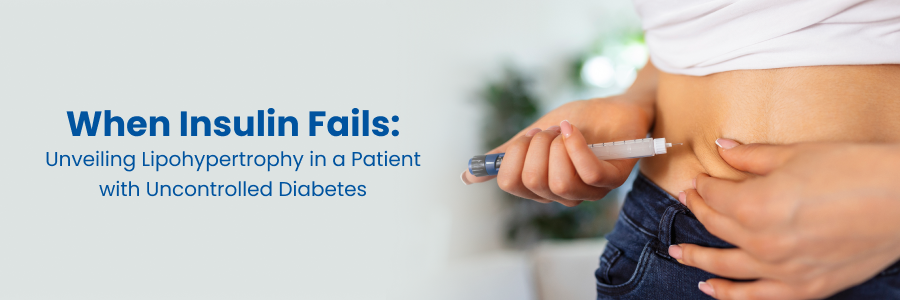
- 100
- 3.5 Minute
When Insulin Fails: Unveiling Lipohypertrophy in a Patient with Uncontrolled Diabetes
Glycemic control in patients with diabetes mellitus can be influenced by many factors, but one often overlooked complication is lipohypertrophy in diabetes, which results from repeated insulin injections into the same area.
This condition can lead to erratic insulin absorption and unexplained hyperglycemia. The following case highlights how recognizing and managing lipohypertrophy can significantly improve patient outcomes.
Case Summary: 31-Year-Old with Longstanding Type 1 Diabetes
A 31-year-old male presented to the OPD with complaints of poorly controlled blood sugars and epigastric discomfort. He had been diagnosed with Type 1 Diabetes Mellitus 16 years ago and was on a basal-bolus regimen using Human Actrapid and Insulin Glargine (Lantus).
Despite regular blood glucose monitoring, his sugar levels remained high for the past 3 months. He suspected a malfunction in his Glargine pen but had not consulted his diabetologist for over a year.
Critical Admission: Severely Elevated Blood Sugar Levels
Due to persistent hyperglycemia, the patient was admitted for evaluation and monitoring.
- Random Blood Sugar (RBS): 599 mg/dL
- HbA1c: 12.3%
- Urine Microalbumin: 2787 mcg/L
- No signs of infection or diabetic ketoacidosis (DKA)
Finding: Lipohypertrophy Detected on Physical Examination
On physical examination, two painless lumps were observed over the abdomen and thighs. The patient admitted to injecting insulin repeatedly into these areas, as the injections were less painful.
These findings were consistent with lipohypertrophy insulin injection sites, which are a common but often overlooked complication of insulin therapy.
Inpatient Management: Diabetes Lipohypertrophy Treatment
Patient was admitted for monitoring and better glycaemic control. Diabetic keto acidosis was ruled out. Initially he was started on Insulin infusion-short acting. After sugars were better, he was shifted to basal bolus regimen.
Key components of diabetes lipohypertrophy treatment included:
- Educating the patient on proper site rotation
- Avoiding needle reuse
- Avoiding injections into lipohypertrophic areas
- Emphasizing regular skin checks during follow-ups
Discussion
Lipohypertrophy results from repeated trauma and local anabolic effects of insulin. It can significantly impair insulin absorption, leading to erratic or suboptimal glycemic control. Clinical examination remains a simple but often neglected tool in diabetes care. Educating patients on proper injection techniques is essential to prevent this complication.
Get a second opinion from trusted experts and makeconfident, informed decisions.
Get Second OpinionNot sure where to start?
Talk to a patient care advisor — free, confidential, 24/7. We'll match you to the right specialist and book your appointment in minutes.
Lipohypertrophy Prevention Tips for Diabetic Patients
Effective lipohypertrophy prevention strategies include:
- Rotating injection sites consistently
- Using each injection site no more than once in 2–3 weeks
- Using a new needle for each injection
- Regular clinical examination of common injection sites
Although there is no guaranteed cure for lipohypertrophy, the affected areas often reduce in size or resolve over time when injections are discontinued at those sites and proper techniques are used.
Your health is everything - prioritize your well-being today.
Schedule Your AppointmentConclusion: A Simple Exam Can Improve Diabetes Outcomes
This case emphasizes the need for routine examination of insulin injection sites and regular patient education on injection practices. Recognition and management of lipohypertrophy can lead to rapid improvement in glycemic control without changes in pharmacologic therapy.
Frequently Asked Questions
Lipohypertrophy in diabetes is a buildup of fatty lumps under the skin caused by repeated insulin injections at the same site. It can interfere with insulin absorption and lead to poor blood sugar control.
To reduce diabetic lipohypertrophy, stop injecting into the lump and rotate sites regularly. Proper injection technique and needle hygiene help the area heal over time.
Avoiding injections at the site and following proper rotation allows lumps to gradually shrink over weeks to months. There is no quick fix or medication to dissolve them.
The area around the navel has less subcutaneous fat and more blood vessels, increasing the risk of erratic absorption or injury. Stay at least 2 inches away.
Mild lipohypertrophy can improve in 1–2 months with proper site rotation. Larger or longstanding lumps may take several months to resolve or may not fully disappear.
Lipohypertrophy is thickened, fatty tissue due to insulin’s anabolic effect, while lipoatrophy is localized fat loss, often caused by immune reactions to insulin.
Gentle massage may improve circulation but has limited effect on dissolving established lipohypertrophy. The best approach is to stop injecting into affected areas.
- Cardiology
- Case Studies
- Dermatology
- Endocrinology
- ENT
- Fertility
- Gastroenterology
- General
- General-Medicine
- Gynecology
- Hematology
- Infectious-Diseases
- Medical News
- Neurology
- Oncology
- Ophthalmology
- Orthopedics
- Pediatrics
- Procedure
- Public-Health
- Pulmonology
- Radiology
- Second Opinion
- Urology
- Wellness
- Woman-and-child
Related Blogs
Still have questions? Speak with our experts now!
040-68334455


